
Markets in Flux: Ceasefire Claims, Sanctions Shifts, and Geopolitics Reconsidered
A Surprise Announcement Competing Forces: Attacks and De-escalation Sanctions Controversy The Market Grows More Discriminating Mixed Fortunes Across Asia Eyes on the Data What Lies Ahead

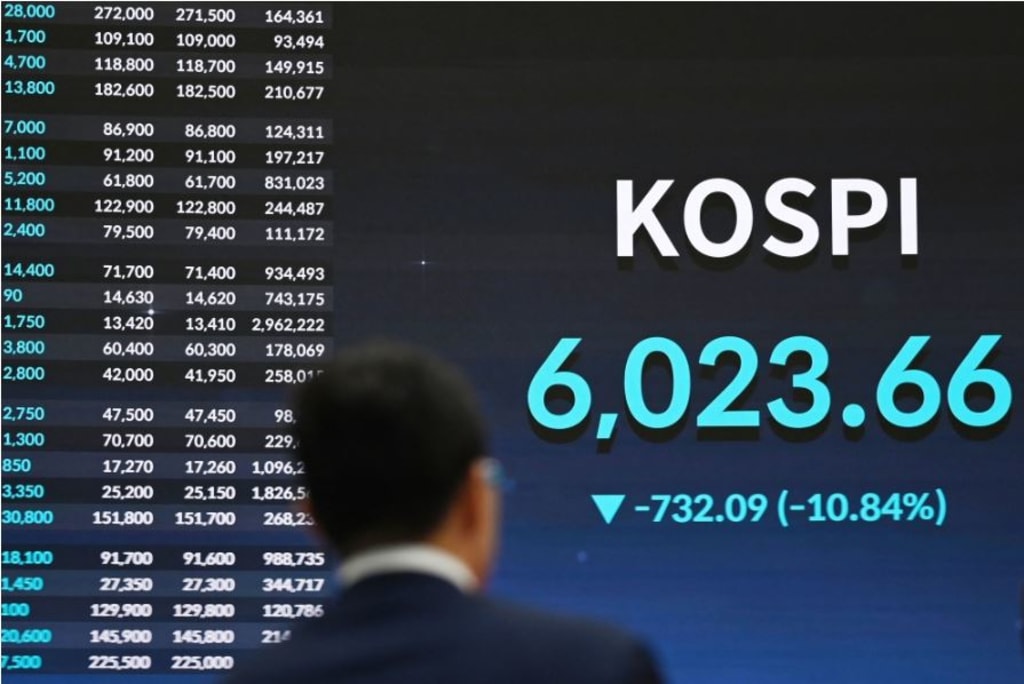
October 12 unfolded as a day of clashing signals in global finance. Oil prices swung sharply, Asian stock markets diverged, and investors weighed dramatic geopolitical claims against hard realities on the ground. At the centre stood US President Donald Trump’s declaration of an “energy ceasefire” between Russia and Ukraine, a move that sent crude falling more than 1% before midday, even as deadly Houthi strikes on Saudi Arabia underscored how volatile the Middle East remains. Together, these developments reveal a market recalibrating its response to risk: less reactive to headlines alone, but still deeply sensitive to the forces reshaping supply, diplomacy, and the global economy.
A Surprise Announcement
Breaking from Truth Social, Trump’s statement was bold: “Effective immediately, there is an ENERGY CEASEFIRE in the War between Russia and Ukraine. Both parties have agreed.” The news triggered an immediate retreat in oil markets, pulling prices down from earlier highs. Yet clarity was in short supply. Ukraine’s President Volodymyr Zelensky expressed surprise, saying he sought further details while adding, “Ukraine supports the ceasefire, and it is important that Russia support it as well.” Notably, Moscow had not confirmed its agreement, and reports emerged of continued Russian strikes on Ukrainian power plants. Trump’s earlier call for Zelensky to step down cast a shadow over the process, leaving observers to question whether this marked genuine progress or a one‑sided proclamation.
Competing Forces: Attacks and De-escalation
Even as the ceasefire news spread, violence in the Middle East reminded markets that conflict persists on multiple fronts. Houthi attacks over the weekend killed at least 12 people at Riyadh’s international airport, the deadliest strike on Saudi soil in more than a decade, with a second fatality reported the following day. The group claimed further assaults and threatened to keep targeting the kingdom’s transit hubs. These developments had initially pushed oil higher, only for those gains to be erased by the ceasefire announcement. For traders, it was a study in contrasts: one headline promising stability, another showing widening conflict.
Sanctions Controversy
Criticism flared alongside the announcement after Trump revealed a temporary easing of US sanctions on Russian diesel. European leaders and Kyiv argued the move would strengthen Moscow economically, just as pressure should mount. The decision underscored the tension at the heart of energy diplomacy: balancing the desire to calm markets with the need to maintain leverage. For now, the policy shift adds another layer of uncertainty about who benefits and at what cost to an already complex landscape.
The Market Grows More Discriminating
What stood out most was how selectively markets responded. As SPI Asset Management’s Stephen Innes noted, “The market is no longer paying full geopolitical premium on every headline.” Investors now distinguish between events that truly threaten supply, closed shipping lanes, damaged refineries, choked exports and those that carry symbolic weight but leave physical flows largely untouched. The result: Brent crude remains anchored above US$100, but futures are refusing to treat every escalation as the start of an inflationary spiral. It is a maturing of sentiment, cautious, pragmatic, and increasingly focused on tangible impact.
Mixed Fortunes Across Asia
That measured mood played out unevenly across regional bourses. Hong Kong, Sydney, Singapore, Wellington, and Manila advanced, lifted by hopes of easing energy costs. Elsewhere, the picture darkened: Seoul and Taipei fell on weakness among chip giants SK hynix, Samsung, and TSMC; Shanghai, Mumbai, Bangkok, and Jakarta also closed lower. Tokyo was away on holiday. US futures pointed upward, while major European markets opened higher suggesting global sentiment remains divided, with no single narrative prevailing.
Eyes on the Data
Beyond geopolitics, a quieter shift commands attention. All eyes now turn to upcoming US inflation and retail sales figures, followed shortly by earnings reports from banking giants JPMorgan, Goldman Sachs, and Bank of America. The Federal Reserve meets at month’s end, and every number will shape whether rates hold, rise, or begin to fall. Later in the season, tech and AI sector results will offer a window into where investment is flowing and whether the boom of recent years shows signs of cooling. For markets, the most reliable guide remains not presidential posts, but the data that underpins monetary policy.
What Lies Ahead
October 12 demonstrated that headlines move prices, but clarity sustains trends. The “energy ceasefire” has yet to be fully confirmed; the sanctions easing has drawn sharp protest; attacks in the Gulf continue; and inflation data may yet shift the Fed’s calculus. In this environment, caution is not timidity; it is prudence. As investors navigate competing claims and conflicting signals, one truth endures: stability is not proclaimed; it is verified, sustained, and seen to hold. Until then, markets will keep weighing every promise against what unfolds on the ground.
About the Creator
Mark Lim
Hi I am mark an automotive student and a car, tech and food enthusiast ! Im gonna try and post daily & hope you enjoy what I write and do share my page with people you know. I would gladly appreciate it! Cheers
Enjoyed the story? Support the Creator.
Subscribe for free to receive all their stories in your feed.
Comments
There are no comments for this story
Be the first to respond and start the conversation.