
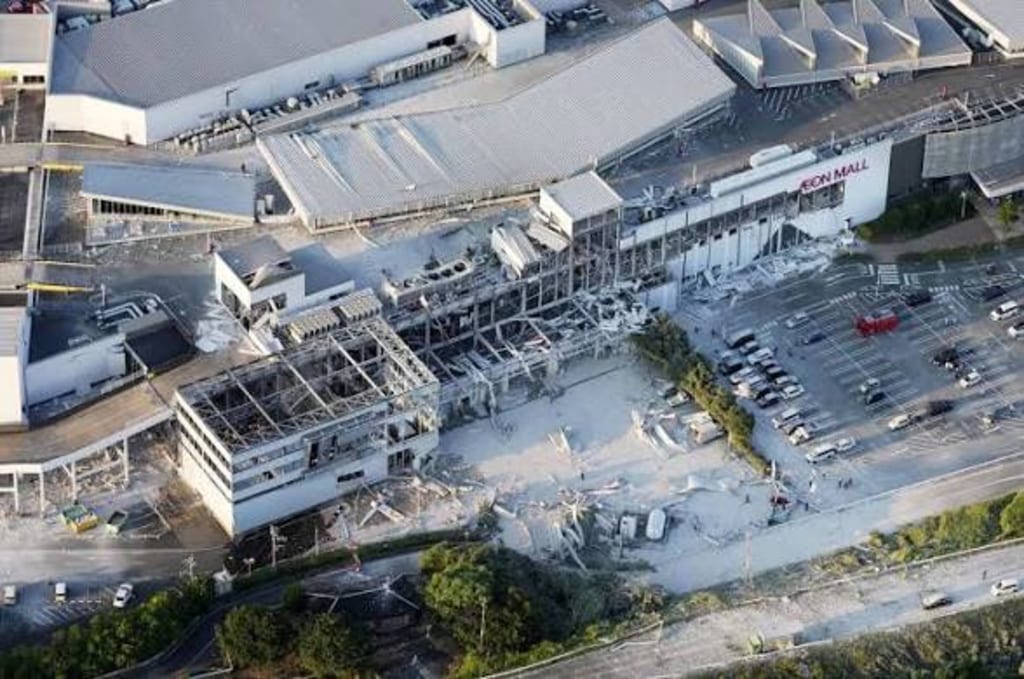
Many trapped in collapsed shopping mall after Japan earthquake
Rescue teams race against time as survivors remain trapped beneath debris following a powerful earthquake that caused widespread destruction and disrupted daily life across the affected region.
affected region.
A powerful earthquake that struck Japan has left many people trapped inside a collapsed shopping mall, triggering a massive emergency response as rescue workers battle against time to locate survivors. The disaster has once again highlighted Japan's vulnerability to seismic activity despite the country's advanced earthquake preparedness measures and strict building standards.
The earthquake, which struck without warning, sent shockwaves through the affected region, causing buildings to sway violently and forcing residents to flee into the streets. Within moments, sections of a large shopping complex collapsed, trapping shoppers, employees, and visitors beneath concrete, steel, and shattered glass. Emergency services were immediately dispatched to the scene as reports of injuries and missing persons began to emerge.
Witnesses described scenes of panic as the ground shook intensely. Many people inside the mall were enjoying a normal day when the earthquake struck. Shoppers rushed toward exits while store employees attempted to guide customers to safety. However, parts of the building reportedly gave way before everyone could escape, leaving numerous individuals trapped inside.
Rescue operations began within minutes of the collapse. Firefighters, police officers, medical personnel, and specialized search-and-rescue teams arrived at the disaster site equipped with heavy machinery, thermal imaging devices, and rescue dogs. Their primary objective was to locate survivors trapped beneath the rubble and provide immediate medical assistance.
Officials said the rescue effort is extremely challenging because unstable debris continues to pose a significant risk. Engineers are carefully assessing damaged sections of the structure before crews enter dangerous areas. Rescuers are working in shifts around the clock, listening for signs of life and attempting to establish communication with those trapped beneath the wreckage.
Family members gathered near the site, anxiously awaiting updates about loved ones who were believed to be inside the shopping mall when the earthquake occurred. Temporary shelters and information centers were established to assist affected families and provide support services. Authorities urged the public to avoid the disaster area to allow emergency teams to work without obstruction.
Hospitals across the region activated emergency response protocols to prepare for an influx of injured victims. Ambulances transported survivors to medical facilities where doctors treated fractures, head injuries, cuts, and other trauma-related conditions. Health officials emphasized the importance of rapid treatment, particularly for individuals rescued after prolonged periods under debris.
The earthquake also caused widespread damage beyond the shopping mall. Roads cracked, utility lines were disrupted, and several buildings sustained structural damage. Transportation services experienced significant delays as officials inspected railways, bridges, and highways for safety concerns. Power outages affected thousands of households, while communication networks became temporarily overloaded as people attempted to contact relatives and friends.
Japan is one of the most earthquake-prone countries in the world, situated along the Pacific Ring of Fire, a region known for intense seismic and volcanic activity. Over the years, the country has invested heavily in disaster preparedness, including earthquake-resistant construction techniques, advanced warning systems, and regular emergency drills. Despite these efforts, powerful earthquakes can still cause severe damage, particularly when they strike densely populated areas.
Seismologists are closely monitoring the situation and warning residents about the possibility of aftershocks. These secondary earthquakes can occur hours, days, or even weeks after the initial event and may further weaken already damaged structures. Authorities have advised residents to remain alert and follow emergency guidance issued by local governments.
Experts note that modern building standards have significantly reduced casualties in many earthquakes, but older structures and certain types of buildings may remain vulnerable during exceptionally strong seismic events. Investigators will likely examine the collapsed shopping mall to determine the factors that contributed to the structural failure.
Government leaders expressed condolences to affected families and pledged full support for rescue and recovery operations. Emergency management agencies coordinated resources from neighboring regions, ensuring that additional personnel and equipment could be deployed if required. National authorities emphasized that saving lives remains the highest priority.
Community organizations and volunteers also mobilized to assist those affected by the disaster. Relief centers distributed food, water, blankets, and essential supplies to displaced residents. Local businesses and charitable groups offered support to families who were temporarily unable to return home due to safety concerns.
As darkness fell over the disaster zone, rescue teams continued their search efforts under powerful floodlights. Every sound detected beneath the rubble raised hopes that additional survivors might still be found. Experienced rescuers stressed that survival is possible even after extended periods if trapped individuals have access to air pockets and remain protected from further collapse.
The emotional toll of the disaster has been immense. Survivors recounted terrifying moments as ceilings collapsed and emergency alarms sounded. Many described feelings of confusion and fear as they attempted to escape the building. For families still waiting for news, the uncertainty remains particularly painful.
While the full scale of the tragedy may not be known for some time, the earthquake has once again demonstrated both the destructive power of natural disasters and the resilience of communities that face them. Rescue teams remain committed to finding survivors, and authorities continue to coordinate relief efforts across the affected area.
In the days ahead, attention will gradually shift from emergency response to recovery and rebuilding. However, for those still trapped beneath the collapsed shopping mall and the rescuers working tirelessly to reach them, every minute remains critical in a race against time.
About the Creator
Enjoyed the story? Support the Creator.
Subscribe for free to receive all their stories in your feed.
Comments
There are no comments for this story
Be the first to respond and start the conversation.