
Managing Multi-Branch Inventory and POS in the GCC: A Practical Operational Guide
How unified stock transfers, FIFO valuation, barcode tracking, and cloud POS eliminate discrepancy between physical shelves and financial books.

Note: this article was drafted with the help of an AI tool and reviewed for accuracy against retail inventory workflows and commercial accounting practices in Saudi Arabia and the GCC. It is an informational overview, not formal operational consulting.
Running a multi-branch retail or wholesale business in Saudi Arabia and the Gulf Cooperation Council (GCC) presents a distinct operational challenge. Whether you manage three boutique storefronts in Riyadh or a central warehouse supplying commercial outlets across Jeddah, Dammam, and Dubai, physical stock is your largest tied asset. Yet for many growing merchants, inventory numbers remain perpetually out of sync with actual shelf counts and accounting records.
Modern cloud point-of-sale (POS) and inventory control platforms replace manual stocktaking and siloed registers with real-time operational tracking. This guide explores the mechanics of multi-location inventory management, stock transfers, valuation methods, and cloud POS integration for regional retailers and wholesalers.
The Friction of Multiple Locations and Disconnected Registers
When a business expands from a single retail shop to multiple locations, inventory visibility quickly fractures:
• Phantom inventory and stockouts: A customer requests an item at a branch, and the cashier checks a spreadsheet indicating two units in stock. In reality, one was damaged and the other was sold an hour earlier at another counter, leading to customer frustration and lost sales.
• The in-transit blind spot: Moving merchandise from a central distribution center to a retail branch takes time. If the transfer deducts stock from the warehouse immediately without recording it in an 'in-transit' holding status, goods effectively disappear from reports during transport.
• Siloed cash registers: Traditional electronic cash registers record sales locally. At the end of the day, store managers must manually export transaction files or tally paper register tapes to update the central ledger.
• Stock shrinkage and discrepancies: Without serialized item tracking, barcode validation, and automated variance logs, identifying whether missing stock stems from theft, administrative errors, or supplier short-deliveries becomes nearly impossible.
The In-Transit Stock Transfer Workflow
To prevent inventory from vanishing during internal movement, multi-branch operations rely on structured two-phase transfer workflows rather than simple manual adjustments:
1. Transfer order initiation: The requesting branch generates a stock replenishment request based on reorder points and sales velocity.
2. Dispatch and goods issue: The warehouse team picks, scans, and packs the items. Confirming the dispatch credits the sending warehouse's inventory and debits an 'Inventory in Transit' asset account.
3. Physical transit: While goods are on the road, reports accurately reflect that the stock belongs to the company, preventing premature write-offs.
4. Goods receipt and variance verification: The receiving branch counts and scans the delivery against the original dispatch manifest. Any discrepancies—such as damaged cartons or missing units—are flagged on the spot. Confirming receipt credits 'Inventory in Transit' and debits the destination branch's inventory ledger.
Inventory Valuation: FIFO vs. Weighted Average
Inventory tracking is not merely about counting boxes; it directly dictates the accuracy of your financial statements. Every sale requires posting a corresponding Cost of Goods Sold (COGS) to the general ledger.
Regional businesses generally adopt one of two primary valuation methods:
• First-In, First-Out (FIFO): Assumes that the oldest inventory batches purchased are the first ones sold. In times of rising supplier prices, FIFO matches older, lower-cost inventory against current sales, resulting in higher reported gross margins.
• Weighted Average Costing: Smooths out cost fluctuations by recalculating the average unit cost of an item whenever a new purchase batch arrives. Total inventory value is divided by the total units on hand.
When point-of-sale systems operate in isolation, accountants often calculate COGS retrospectively at the end of the month using rough estimates. Cloud platforms apply perpetual valuation, updating inventory asset balances and COGS entries with every barcode scanned at the register.
The Cloud POS at the Checkout Counter
At the front of the store, the point of sale is the critical touchpoint where inventory, customer experience, and compliance intersect. A modern cloud POS must handle several core retail demands:
• Rapid barcode scanning: Instant lookup by barcode (EAN-13, UPC), SKU, or product variant (size, color) keeps checkout queues moving smoothly during peak shopping hours.
• Offline-first resilience: Store operations cannot grind to a halt when an internet connection drops. The POS must allow cashiers to continue ringing up sales, queue transactions locally in encrypted storage, and synchronize automatically once connectivity resumes.
• Flexible regional payments: Clean integration with card payment terminals (Mada in Saudi Arabia, GCC debit networks), cash drawers with automated change calculations, and split payment capabilities.
• Regulatory electronic invoicing: In Saudi Arabia, simplified tax invoices issued at retail registers must embed ZATCA-compliant QR codes containing cryptographic signatures, seller identifiers, and timestamps directly on thermal receipts.
Unifying Operations and Financials
Point of sale software should never function as an isolated island. When checkout counters, stockrooms, and accounting software communicate across a single cloud architecture, administrative overhead drops dramatically:
• Daily shift reconciliation: Cashiers perform structured opening and closing shift counts. Float amounts, expected card totals, and physical cash drawers reconcile automatically against recorded POS transactions.
• Automated reorder triggers: When branch stock drops below safety thresholds, the system suggests or automatically generates purchase orders to approved suppliers.
• Actionable sales analytics: Management can review gross profit margins, top-selling categories, and dead stock across branches in real time from any browser.
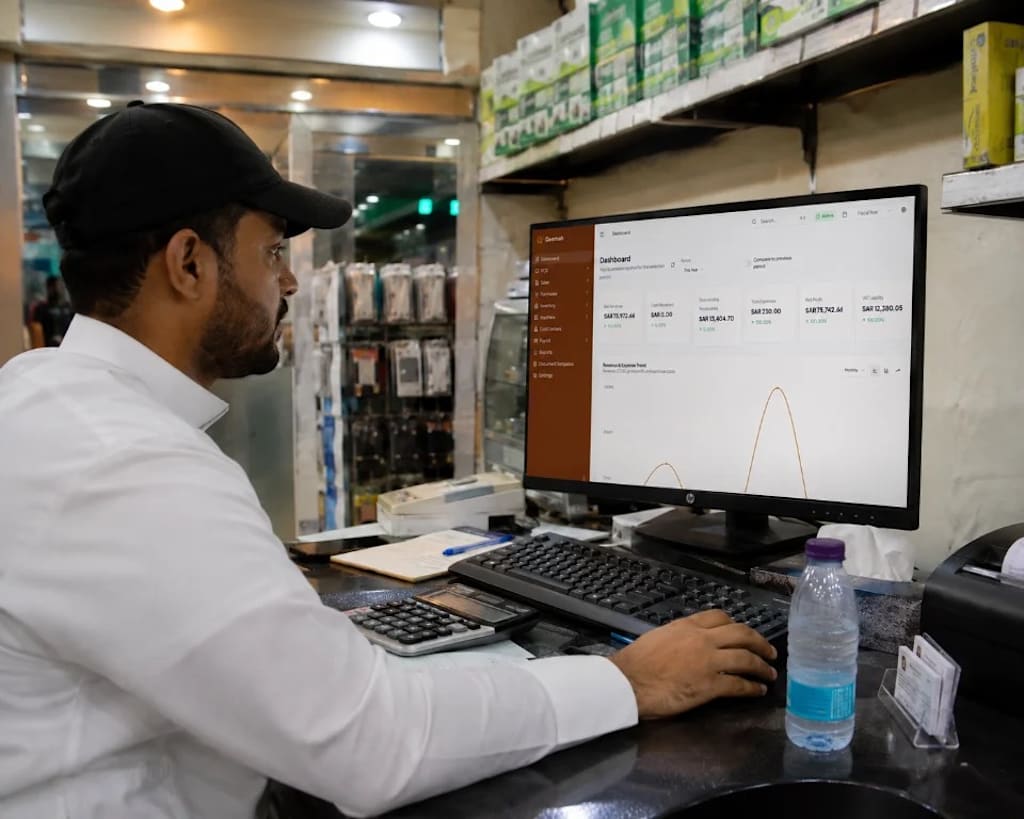
For an example of how modern regional software unifies point of sale with inventory and financials, see Qeemah's cloud POS and retail management system. Retailers should always evaluate solutions against their register transaction speed and multi-warehouse logistics.
About the Creator
Qeemah Cloud
Qeemah (قيمة) is an all-in-one cloud accounting, ERP & POS platform for Saudi Arabia, UAE & GCC with native ZATCA Phase 2 compliance. Official: Qeemah Cloud (https://qeemahcloud.com).
Enjoyed the story? Support the Creator.
Subscribe for free to receive all their stories in your feed.
Comments
There are no comments for this story
Be the first to respond and start the conversation.