
Malaysia Takes Major Step to Slash Import Reliance on Grain Maize with Large-Scale Local Production
The Agriculture Ministry launches pilot project using newly developed MZ1 and MZ2 varieties, aiming to reduce the country's 100% dependence on imported grain maize and strengthen national food security.

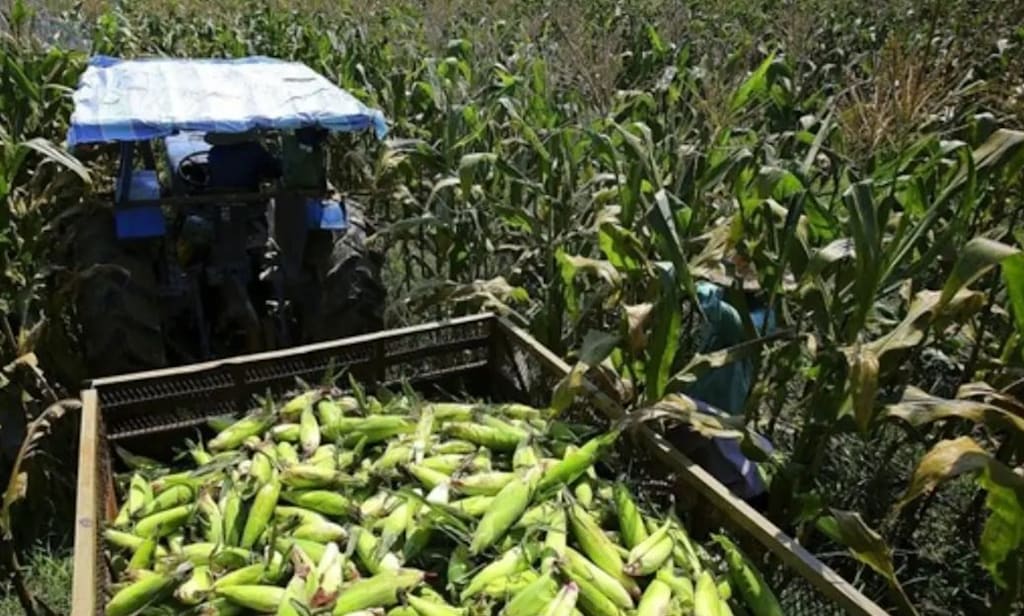
Malaysia has taken a significant step towards reducing its complete dependence on imported grain maize through large-scale local production, a move that Agriculture and Food Security Minister Datuk Seri Mohamad Sabu described as crucial for strengthening the country's food security amid growing geopolitical uncertainties and global supply chain disruptions.
The initiative, launched at the Genting Tanah Merah Estate in Sepang on Monday, marks a pivotal moment in Malaysia's efforts to achieve greater self-sufficiency in animal feed production. Currently, the country imports 100% of its grain maize and soybeans, with annual grain maize imports reaching approximately 2.5 million tonnes valued at RM3 billion.
"This is our effort with Mardi (Malaysian Agricultural Research and Development Institute). Alhamdulillah, Mardi has produced the MZ1 and MZ2 grain (maize varieties), which are suitable for large-scale cultivation at Genting Tanah Merah Estate in Sepang," Mohamad told a press conference after officiating the launch. "We hope this initiative will continue."
New Varieties Promise Higher Yields and Climate Resilience
The MZ1 and MZ2 varieties, developed by Mardi after years of research, are specifically bred for Malaysia's tropical climate and soil conditions. These hybrid varieties are designed to offer higher yields, disease resistance, and adaptability to local farming practices, making them ideal for large-scale commercial cultivation.
The large-scale grain maize cultivation project currently covers about 400 hectares, with the first harvest expected by the end of this year. The pilot project serves as a testing ground for the viability of large-scale production, with plans to expand significantly in the coming years.
"Now, we are starting large-scale production of local grain maize...the most important thing is the cooperation of large companies," Mohamad said, emphasizing the critical role of private sector involvement in scaling up production.
Private Sector Collaboration Key to Success
Collaboration with private companies, including Genting Plantations Bhd, is crucial to ensuring the development of the local grain maize industry can be carried out commercially and on a large scale, the minister noted. The partnership model leverages the expertise and resources of established plantation companies while providing them with new revenue streams and contributing to national food security.
The involvement of major corporations brings several advantages, including access to large tracts of land, technical expertise, established supply chains, and the financial capacity to invest in the necessary infrastructure. This public-private partnership approach is seen as essential for achieving the scale required to make a meaningful impact on import dependence.
Ambitious Expansion Plans Across the Country
While the pilot project represents an important first step, Mohamad outlined ambitious expansion plans that would see grain maize cultivation spread across multiple states. Plans are already underway for large-scale cultivation covering about 2,500 hectares in Perlis and 5,500 hectares in Sarawak. Planting has already begun in Perak, Johor, and Pahang, signaling the government's commitment to broadening the geographic footprint of the initiative.
"Local grain maize production was expected to meet around 3% to 4% of domestic demand at the initial stage," Mohamad explained. "So, next year, it may reach 3%-4%." He added that reaching the 30% target would require a large-scale expansion of the cultivated area, a goal that will necessitate sustained investment and commitment from both the public and private sectors.
Impact on Poultry and Livestock Industry
The minister expressed optimism about the potential impact of local grain maize production on stabilizing chicken and egg prices, as the commodity is one of the key ingredients in livestock feed. Malaysia's poultry industry, which is a major source of protein for the population, has been vulnerable to fluctuations in global grain prices, which directly affect the cost of chicken feed.
"This is because chicken prices depend heavily on the cost of chicken feed. We currently import 100% of our soybeans and grain maize. Now, we have the technology to produce grain maize locally," Mohamad said.
The link between feed costs and consumer prices has been a persistent challenge for the Malaysian government, which has implemented various measures to stabilize poultry prices. Reducing dependence on imported feed ingredients is seen as a long-term solution that could help shield consumers from global price shocks.
Addressing Food Security Concerns
The initiative comes at a time when food security has become an increasingly pressing concern for nations worldwide. Geopolitical tensions, climate change, and supply chain disruptions have highlighted the vulnerabilities inherent in over-reliance on imported food and feed ingredients.
Malaysia's decision to invest in domestic grain maize production reflects a broader recognition that food security must be built on a foundation of local production capabilities. While the country has historically focused on palm oil and rubber as major agricultural commodities, the shift towards food crops represents a strategic reorientation of agricultural policy.
Mohamad's comments underscored the urgency of the effort, noting that the country's 100% dependence on imported grain maize posed significant risks. "This move was crucial to strengthening the country's food security, particularly amid geopolitical uncertainties and the risk of disruptions to global supply chains," he said.
As the pilot project progresses, the government will be closely monitoring yields, production costs, and the quality of locally produced grain maize. The lessons learned from this initial phase will inform the expansion plans and help refine cultivation techniques and supply chain management.
The success of the initiative will depend on several factors, including continued research and development, adequate investment in infrastructure, and sustained support from the private sector. The government will also need to ensure that farmers have access to the necessary training, inputs, and financing to participate in the expansion.
With the first harvest expected by the end of this year, Malaysia is poised to take its first significant steps towards reducing its dependence on imported grain maize. The journey ahead is long, and the challenges are substantial, but the launch of the pilot project represents a concrete commitment to building a more resilient and self-sufficient agricultural sector.
Malaysia's ambitious plan to reduce its dependence on imported grain maize through large-scale local production marks a significant milestone in the country's food security journey. With the development of the MZ1 and MZ2 varieties, collaboration with private sector partners, and expansion plans across multiple states, the initiative has the potential to transform the agricultural landscape and reduce the country's vulnerability to global supply disruptions.
As the pilot project progresses and production scales up, Malaysians can look forward to the prospect of more stable food prices and a more resilient food system. The road ahead will require dedication, innovation, and collaboration, but the commitment demonstrated by the Ministry of Agriculture and Food Security provides a solid foundation for success.
About the Creator
Mark Lim
Hi I am mark an automotive student and a car, tech and food enthusiast ! Im gonna try and post daily & hope you enjoy what I write and do share my page with people you know. I would gladly appreciate it! Cheers
Enjoyed the story? Support the Creator.
Subscribe for free to receive all their stories in your feed.
Comments
There are no comments for this story
Be the first to respond and start the conversation.