
LLM Benchmarks Explained: What They Measure and Where They Fall Short
An LLM benchmark is a standardized test for a language model — a fixed set of questions with known answers, run against each model to produce a comparable score.


An LLM benchmark is a standardized test for a language model — a fixed set of questions with known answers, run against each model to produce a comparable score. Those percentages on launch pages (MMLU, GSM8K, HumanEval) are benchmarks. They're useful, but a high score doesn't guarantee a model will serve you well in production, which is why teams increasingly cross-check them against live data from tools like OrcaRouter.
This article breaks down how these tests work, why they became so popular, and the blind spots — contamination, cherry-picking, and the lab-vs-life gap — that a live LLM benchmark built on real traffic is designed to avoid.
What an LLM benchmark is
Because every model takes the same test, benchmark scores are — in theory — directly comparable. Benchmarks come in flavors, each probing a different skill:
• Knowledge — broad factual and academic questions.
• Reasoning — multi-step logic and problem solving.
• Math — arithmetic and word problems.
• Coding — writing functions that pass hidden unit tests.
• Instruction following — doing exactly what a prompt asks.
Run enough of these and you get a profile of a model's strengths and weaknesses.
Why benchmarks became so popular
Benchmarks caught on because they're cheap, fast, and objective. You can run thousands of test items automatically, get a single number, and rank models instantly. For researchers tracking progress over time, that consistency is invaluable.
Where LLM benchmarks fall short
A high benchmark score does not guarantee real-world performance. Several failure modes explain the gap:
1. Contamination
Once a benchmark is published, its questions circulate on the open web — and eventually into training data. A model that has effectively "seen the exam" scores high through memorization, not reasoning.
2. Cherry-picking
Vendors choose which benchmarks to report. A model that dominates one narrow test and struggles elsewhere will feature only its best result.
3. The lab-vs-life gap
Benchmarks test tidy, self-contained problems. Real applications throw messy prompts, long context, and edge cases at a model.
4. No cost, speed, or reliability signal
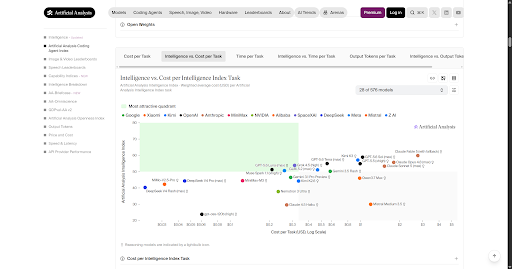
A benchmark score says nothing about cost per token, latency, or error rate — often the factors that decide the winner in production.
The alternative: measure real behavior
A growing number of teams supplement static benchmarks with live measurement:
• Blind preference battles, where anonymous models answer the same prompt and humans vote for the better reply. This can't be gamed by memorizing a test set.
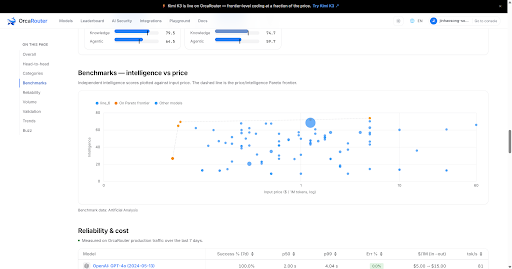
• Production-traffic analysis, where a model is scored on live application requests: success rate, latency, cost, and throughput.
OrcaRouter is a good example of the combined philosophy — its live LLM benchmark ranks 200+ models on real production traffic and community blind-battle votes rather than vendor-reported scores, and even reports how well its ranking correlates with independent references. Treating it as real-traffic data rather than a static exam sidesteps the contamination problem entirely.
How to use benchmarks wisely
1. Treat scores as a starting shortlist, not a verdict.
2. Match the benchmark to your task.
3. Distrust suspiciously round, self-reported numbers.
4. Cross-check with live data. If a model tops a benchmark but has poor real-world success rates or terrible p99 latency, believe the production data.
5. Look at cost alongside quality.
A quick mental model
Think of a benchmark like a candidate's exam score and live performance data like their actual job reviews. The exam tells you they can do the work in ideal conditions. The reviews tell you whether they do it well when things get messy.
The takeaway
LLM benchmarks are a valuable, imperfect tool. They give you a fast, objective first read on a model's capabilities, but they're vulnerable to contamination, cherry-picking, and the gap between lab tests and real usage. The smart move is to pair benchmark scores with live evidence. Before you commit, cross-check the numbers against a live LLM benchmark built on real production traffic — because the model that wins the exam and the model that wins in production aren't always the same one.
About the Creator
Enjoyed the story? Support the Creator.
Subscribe for free to receive all their stories in your feed.
Comments
There are no comments for this story
Be the first to respond and start the conversation.