
Lagarde Warns of Prolonged Inflation as ECB Tightens Amid Energy Shock
European Central Bank President Christine Lagarde has cautioned that inflation in the euro area will remain elevated for an extended period, citing the persistent impact of the Middle East conflict and global energy supply disruptions as key drivers of price pressures.

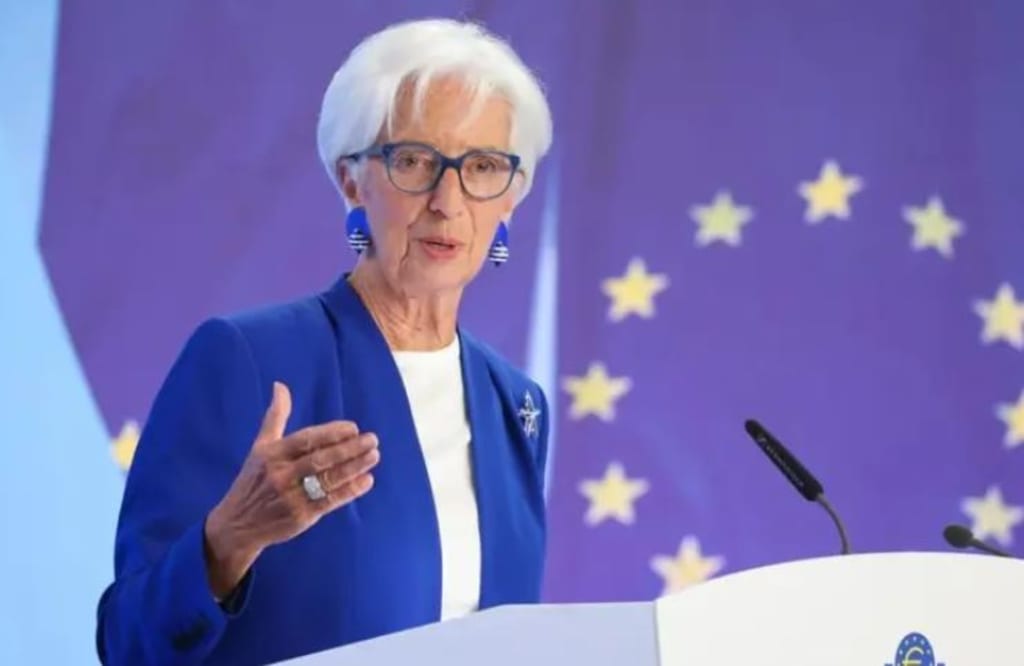
In a recent interview with Ouest-France, Lagarde described the current economic environment as a "longer-lasting shock," emphasizing that the ongoing war involving Iran and its regional proxies continues to exert significant volatility on energy markets. "We expect the volatility and pressure on energy prices to continue, even though the increase in prices also poses a risk of lower growth," she stated. Her comments underscore the delicate balancing act facing the ECB: the need to curb inflation without stifling economic activity in a region already grappling with external geopolitical headwinds.
The Energy Supply Crunch
The root of the inflationary pressure, according to Lagarde, lies in the structural disruption of global energy supplies. She pointed specifically to the "destruction of refining capacity around the world, especially in Russia," coupled with the tensions in the Middle East, as primary factors driving up energy costs. These higher input costs are then transmitted throughout the economy, pushing up prices for goods and services across the board.
"The conflict in the Middle East is continuing... [and] has led to an increase in energy costs, and that drives all prices higher," Lagarde explained. This supply-side shock presents a classic stagflationary dilemma, where rising prices coincide with the potential for slower economic growth. However, Lagarde noted that the euro-area economy has shown surprising resilience, which obliges the central bank to maintain a firm stance on monetary policy.
A Hawkish Turn: Rates on the Rise
Reflecting this concern, the ECB raised interest rates this week for the second time since the escalation of the Iran war sent oil and gas prices soaring. The deposit rate now stands at 2.5%, a level that many officials, including Chief Economist Philip Lane, view as the upper end of the neutral range, meaning it neither stimulates nor restricts the economy significantly. However, with inflation currently hovering above 3%, well above the ECB’s 2% target, policymakers believe further tightening is necessary.
People familiar with the ECB’s discussions told Bloomberg that officials expect rates to rise further to bring inflation under control. Joachim Nagel, President of the Bundesbank, reinforced this hawkish outlook last Friday, suggesting that the ECB may need to push borrowing costs into "mildly restrictive territory" to ensure price stability is firmly re-established. This signals a shift from the previous assumption that rates had peaked, indicating that the fight against inflation is far from over.
Revised Projections: Higher Inflation, Stronger Growth
The ECB’s latest projections, published alongside the rate decision, reflect this more cautious outlook. The central bank now forecasts faster inflation in both 2027 and 2028, with the latter year’s projection slightly above the 2% target. This revision acknowledges that the effects of the energy shock will linger longer than previously anticipated, preventing a swift return to price stability.
Paradoxically, despite the inflationary risks, the ECB also lifted its growth forecasts for the euro area. This upgrade is attributed to the unexpected resilience of the regional economy in the face of the Middle East conflict and other headwinds, such as shifting US trade policies. Consumers and businesses have adapted better than expected to higher energy costs, and labor markets remain robust, providing a buffer against a sharp downturn.
For the ECB, the path forward is fraught with uncertainty. While the economy’s resilience provides some comfort, it also means that inflationary pressures are less likely to dissipate on their own through a demand-led recession. As a result, the central bank is compelled to keep monetary policy tight for longer.
Lagarde’s warning serves as a clear signal to markets and households: the era of cheap energy and low inflation is not returning anytime soon. The ECB remains committed to its mandate, even if it means accepting the short-term pain of higher borrowing costs to secure long-term price stability. As the conflict in the Middle East continues to unfold, the euro area must navigate a prolonged period of adjustment, where vigilance against inflation remains the top priority.

About the Creator
Mark Lim
Hi I am mark an automotive student and a car, tech and food enthusiast ! Im gonna try and post daily & hope you enjoy what I write and do share my page with people you know. I would gladly appreciate it! Cheers
Enjoyed the story? Support the Creator.
Subscribe for free to receive all their stories in your feed.
Comments
There are no comments for this story
Be the first to respond and start the conversation.