
Kirill Silkin on Running a Business in Volatile Markets and Remaining Efficient Under Pressure
Expert expresses his opinion about running a business in the dynamic oil and gas sector. In this article, the expert outlines the key industry challenges and accentuates the need for technological evolution. Besides, he speaks about staff management techniques, as well as the adaptation to volatile prices and new regulatory requirements.
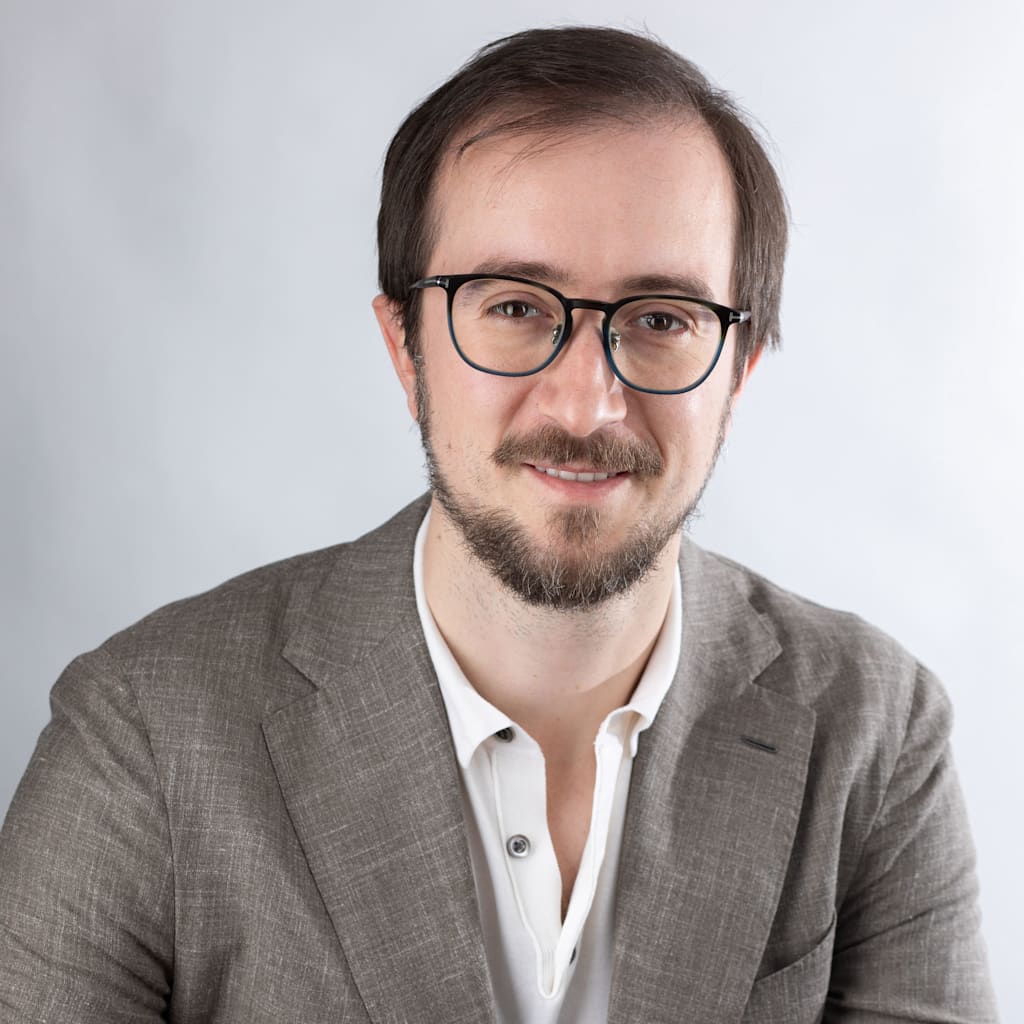
From 2015 to the end of 2023, Kirill Silkin occupied the position of managing director for Wintershall Noordzee. The oil and gas market is considered volatile, even though it can have relatively calm and stable periods. In this article, the professional shares his opinion on running a business in a permanently turbulent environment, ensuring steady performance. The article concludes with Kirill Silkin’s brief biography.
Key Industry Challenges
Kirill Silkin notes that offshore projects are highly complex and capital-intensive. Companies operating in this field tend to compete in the global commodity market, where the cost of production is one of the primary success factors. Therefore, focusing on efficiency for such businesses is not a choice but a forced reality. It is vital to automate processes as much as possible and reduce unit costs.
Kirill Vladimirovich Silkin also draws attention to another meaningful factor. While in the real estate sector, competitiveness is determined by location, in the oil and gas industry, it depends on the type and size of the deposit. One of the main ways to maximize efficiency is to boost production. A significant part of the costs is constant, and as volumes increase, unit costs decrease. However, this approach is limited by the geological capabilities of the fields, so companies are simultaneously looking for alternative ways to enhance efficiency.
Automation is among the most crucial trends, too. According to Kirill Silkin, Wintershall Noordzee was significantly ahead of its competitors in this area. They completely removed staff from 25 platforms, which significantly reduced costs. While many businesses limit themselves to remote monitoring, Wintershall Noordzee has moved to remote management for all these platforms.
Need for Technological Evolution
Kirill Silkin admits that the spread of hydraulic fracturing technology in the USA and the growth of oil and gas production from shale deposits have become a serious technological challenge for the entire industry. This led to an increase in supply and lower prices for oil and gas, which evolved into a major challenge for the sector.
The development of gas liquefaction technologies was an additional factor. Previously, the gas market used to be predominantly regional. With the mass adoption of LNG, it has become global, which has led to rebalancing and high price volatility. For example, during the COVID-19 pandemic, Asia sharply reduced LNG purchases, and the main volumes were redirected to Europe, where large gas storage facilities are located. This brought prices down to below cost levels. In 2021, the situation changed — the main demand shifted to Asia again, and prices in Europe rose sharply. Geopolitical factors also impact the price dynamics.
There were no unique technological challenges inside Wintershall Noordzee, according to Silkin Kirill Vladimirovich. The company has consistently applied technologies to reduce costs and speed up processes — such as automation, data processing, and the transition to fully remote platform management without permanent staff. This allowed the business to focus on service and repair campaigns.
Adaptation to Volatile Prices and New Regulatory Requirements
New standards appear in the industry, and existing ones change. Businesses have to constantly monitor and adjust to this part of management system. Regulatory requirements are constantly changing, and all industry players have to adjust to them.
To illustrate this statement, Kirill Silkin draws an example from 2021, when a group of activists won a lawsuit. It resulted in the repeal of part of the regulatory provisions concerning nitrogen oxide emissions — namely, their calculation methods and acceptable levels. This led to an actual shutdown of construction throughout the Netherlands. Building permits were not issued due to the lack of a valid regulatory framework. The requirements formulated in the court decision were practically impossible to fulfill. As a result, representatives of various industries began negotiations with the government in order to adapt the regulatory framework to the court's decision and, at the same time, preserve the possibility of continuing operations.
Wintershall Noordzee operates in four jurisdictions at once — the UK, the Netherlands, Denmark, and Germany, each of which has its own regulatory features and priorities. Kirill Silkin emphasizes that all these requirements have to be taken into account, as well as integrated into the platform operation and maintenance processes. This is done through the management system. When implementing projects in several jurisdictions, the company must simultaneously comply with all applicable legal standards.
Speaking about price volatility, Kirill Silkin notes that this is one of the key problems of the industry. Most oil and gas projects have a long life cycle. At best, the path from the discovery of a field to commissioning takes 3 or 4 years — but more often it is 7–10 years, and sometimes up to 20 years. After commissioning, the production period lasts at least 5–7 years, while some projects have been operating for decades. In some jurisdictions, the production time projected for some fields was estimated at hundreds of years.
Price volatility creates high uncertainty and complicates investment decisions. The company sticks to an approach focused on minimizing the cost of development and calculating low prices. In this case, conservatism is justified — it allows to increase the stability of the business during a turbulent period. The price growth becomes perceived as an additional bonus. Short-term projects with a quick payback can also be implemented, which allows to maintain profitability in conditions of uncertainty.
Staff Management Techniques
To build effective cooperation between financial, technical, and operational teams in large production projects, dedicated techniques come in handy. Kirill Silkin highlights an approach that can be called a "not too early involvement". If a large number of employees are involved in a project at too early a stage, interest in it decreases, as it becomes obvious that its implementation will not begin soon. If the engagement occurs too late, a business can miss important optimization opportunities.
There are different implementation options for each key decision, whether it is a budget, a technical concept, or a development strategy. One project manager is unable to handle all aspects alone, so it is necessary to involve a team and consider the project comprehensively, including finance, procurement, and working with contractors. As Kirill Silkin notes, oil and gas companies largely depend on suppliers, as there are practically no fully integrated companies, and an extensive network of contractors forms around leach project.
The Expert’s Background and Private Life
Silkin Kirill was born in 1988 and got his higher education at the Financial Academy, which largely predetermined the milestones of his professional biography. He started his career in the banking sector and has worked for such renowned brands as UFG. He switched to the oil and gas industry after assisting with a complex asset swap deal in it. The expert has also completed a mini-MBA at Stanford and multiple courses to gain the necessary knowledge.
At this stage, he is concentrating on his own ventures. His interests include venture capital investments in early-stage startups, as well as the acquisition of software and IT service companies operating in the oil and gas sector. In parallel, he is involved in real estate projects and manages a diversified investment portfolio.
Kirill Vladimirovich Silkin’s biography is not entirely focused on work. Beyond his professional activities, Silkin is married and has three children. The family lives in the Netherlands and travels frequently. In his free time, he is passionate about classic cars and regularly takes part in retro car rallies.
About the Creator
Kate Longadge
Publishing interesting articles and biographies
Enjoyed the story? Support the Creator.
Subscribe for free to receive all their stories in your feed.
Comments
There are no comments for this story
Be the first to respond and start the conversation.