
June Packed Her Dreams in a Carry-On
A summer trip to America that changed everything

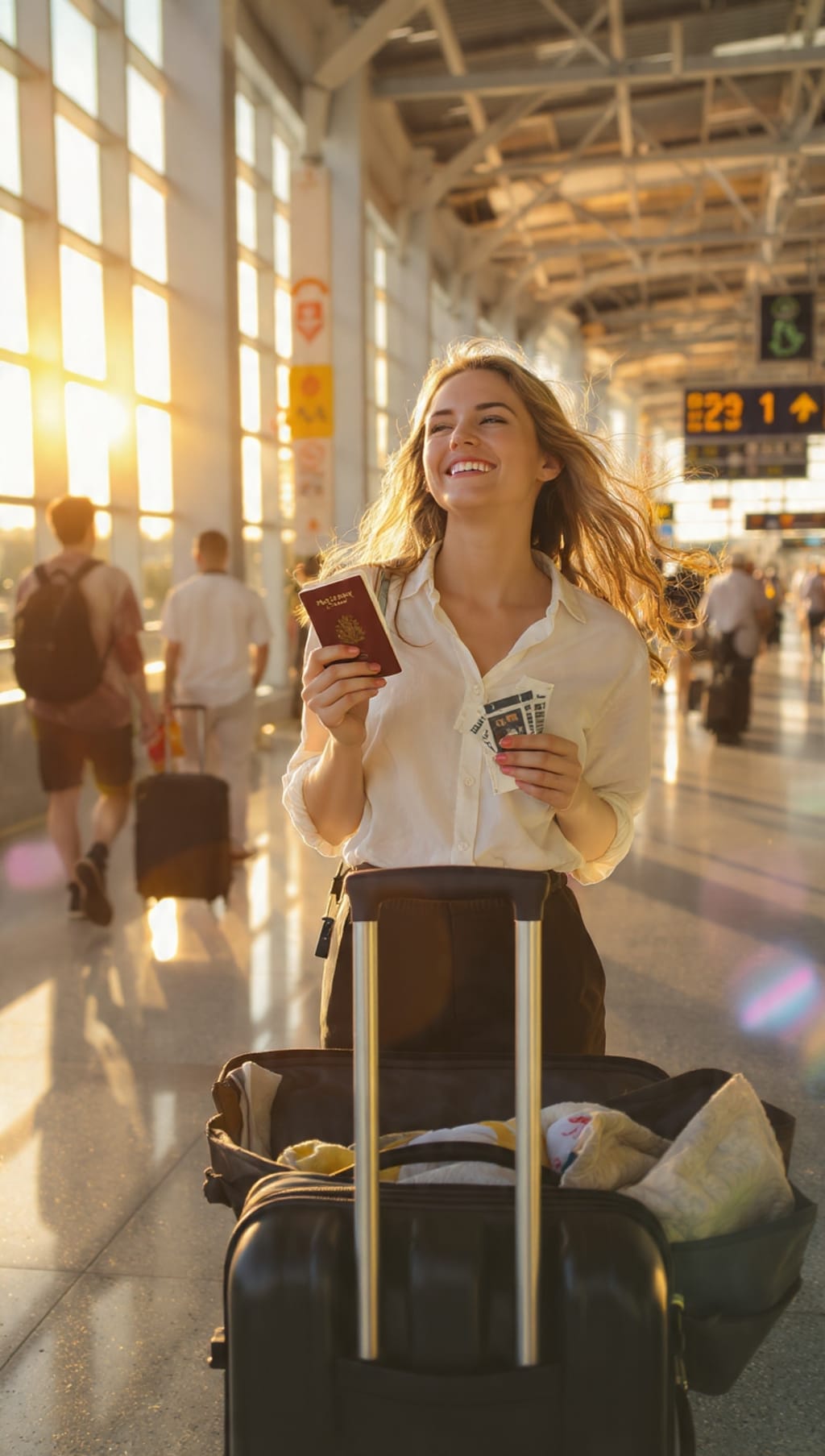
June zipped the carry-on one last time and sat on it to make sure it would close. It didn’t. The suitcase had a stubborn bulge where her sketchbook pressed against the side. She pulled the zipper back, took out three sweaters she wouldn’t need in July, and tried again. This time it gave. “Still alive in there?” her mother asked from the doorway, holding a paper bag of fried chicken and mango slices for the flight. “Barely,” June said. “But my dreams made it.” Her mother smiled, the kind of smile that meant she didn’t fully understand but wanted to anyway. “You’ll call when you land.” “I’ll call when I land,” June promised. At nineteen, June had never left the province. She had seen America in movies, on her cousin Liza’s Facebook posts, and in the glossy pages of magazines Liza sent home. Liza lived in New Jersey now, worked as a nurse, and had been begging June to visit for two years. This summer, June finally said yes. She packed light by necessity and heavy by hope. Two dresses, one pair of jeans, a notebook, pens, and the sketchbook that wouldn’t fit. Under the clothes, folded flat, were printouts of her drawings: portraits of neighbors, the market at dawn, her younger brother asleep with his mouth open. She wasn’t an artist, not officially. She studied education at the local college. But drawing was the thing she did when no one was watching, the thing that made her feel like herself. The flight was long and full of small, new things. The way the flight attendant said “Good morning” at midnight. The way the seatbelt sign felt more serious than it did on domestic flights. The way the ocean, when she finally saw it from the window, didn’t look like the ocean at home. It looked wider, like it had been practicing. When they landed in Newark, Liza was waiting past customs, jumping a little on her toes, wearing scrubs and a grin. “You look tired,” Liza said immediately, pulling June into a hug that smelled like hospital soap and home. “I feel like I flew through a dream,” June said. “Good,” Liza said. “Because America is going to feel like that for a while.” The first week was a blur of trains, sidewalks, and sky that went on forever without mountains. Liza took her to the hospital where she worked, introduced her to coworkers who said “Where you from?” with genuine curiosity. They went to the beach in Atlantic City, where June took off her sandals and let the Atlantic touch her feet. It was colder than she expected. She drew it anyway, the way the water curled around the pilings. “You should go to the art museums,” Liza said one night while they ate takeout on the floor of Liza’s apartment. “If you’re going to be here, you should see the real stuff.” June nodded, but she wasn’t sure she belonged in those places. Her drawings were made on bus rides and during lecture breaks. They weren’t museum things. Still, on the third week, she went. Alone. To the Met. She bought the student ticket, took the stairs two at a time, and stood in front of a painting she didn’t know the name of. A woman in a blue dress, looking out a window. The light in the painting was the same light that came through Liza’s kitchen in the morning. June opened her sketchbook and drew the painting, not to copy it, but to understand it. An older man stopped beside her. He had a museum badge and kind eyes. “You’re not tracing,” he said. June flushed. “No. I’m just… learning.” “You’re doing it right,” he said. “Most people take photos. You’re listening.” He asked if she drew other things. She showed him the page with her brother asleep, the market at dawn. He looked at each one slowly. “Have you thought about showing these?” he asked. June laughed. “Where? There’s no gallery in my town.” “There are galleries everywhere,” he said. “And there’s the internet. And there’s you, sitting here, doing the work.” He didn’t give her his card. He didn’t promise anything. He just told her to keep drawing, and then he moved on. But his words stayed with her, heavier than the sketchbook. The rest of the summer, June drew everywhere. On the train to Manhattan, on the bench in Central Park, in Liza’s kitchen while Liza cooked. She drew Americans and tourists and the way Liza’s tired face softened when she laughed. She filled the sketchbook that had barely fit in her carry-on. Two days before her flight home, Liza asked, “What did you bring back?” June thought she meant souvenirs. But Liza pointed to the sketchbook, now fat and worn at the edges. “I brought back proof,” June said. “Of what?” “That I can be someone who does this. Not just dreams it.” On the flight home, June didn’t sleep. She opened the sketchbook and looked at all the pages, at the woman in the blue dress and her brother and the Atlantic curling around the pilings. She thought about the man in the museum who told her she was listening. When she landed, her mother was waiting, holding another paper bag. June hugged her, then opened the suitcase. The clothes were wrinkled. The sketchbook was full. Her dreams hadn’t just made it through customs. They’d grown. She still studied education. She still taught her younger brother how to hold a pencil. But now, after class, she drew. And sometimes, when the light hit the kitchen just right, she saw the same blue from the painting in the museum, and she remembered that America wasn’t just a place you visited. It was the place you went when you decided to stop leaving yourself behind.
About the Creator
Enjoyed the story? Support the Creator.
Subscribe for free to receive all their stories in your feed.
Comments
There are no comments for this story
Be the first to respond and start the conversation.