
Joel Keyser on Building Organizations That Grow Through People
Why Team Development Creates a Stronger Foundation Than Strategy Alone

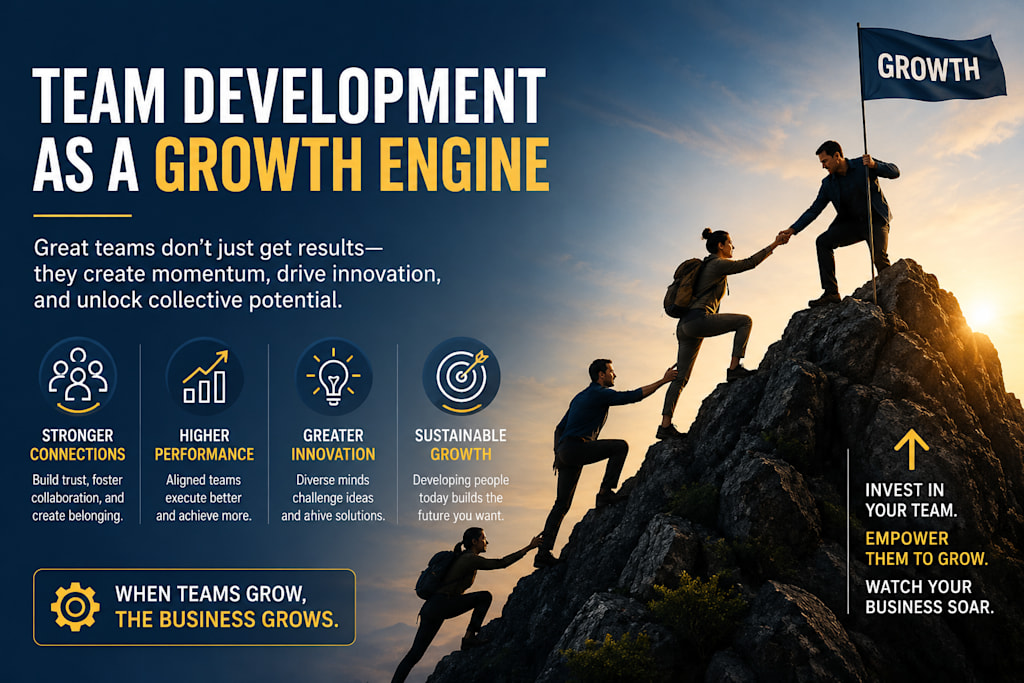
Joel Keyser is an accomplished leader with extensive experience spanning roles as Athletic Director, CEO, CFO, and advisor to nonprofits. Throughout his career, he has worked in environments where success depended on much more than financial performance or strategic planning. Whether leading athletic programs, managing organizations, overseeing financial operations, or advising nonprofit initiatives, one lesson consistently emerges: organizations achieve lasting success when they invest in the growth and development of their people.
In today's competitive environment, leaders often focus on growth targets, operational efficiency, and expansion strategies. While these goals are important, they are only part of the equation. Sustainable growth requires an internal foundation that can support increasing demands and evolving challenges. That foundation is built through strong teams, effective leadership, and a culture that encourages continuous development.
Organizations that understand this principle position themselves for long-term success because they recognize that growth is not simply about achieving more—it is about becoming more capable.
The Human Side of Organizational Growth
Growth is often discussed in terms of numbers. Revenue increases, market expansion, customer acquisition, and operational scale are all common indicators of success. However, behind every growth metric are people responsible for making progress possible.
The most successful organizations understand that people are not simply resources within a system. They are the system.
Every strategic initiative depends on employees who communicate effectively, collaborate productively, and remain aligned with organizational goals. When team members understand their purpose and feel empowered to contribute, performance improves naturally.
Conversely, organizations that overlook team development often encounter obstacles that slow progress. Miscommunication, disengagement, and unclear expectations can undermine even the most promising plans.
As organizations grow, investing in people becomes increasingly important. The larger and more complex an organization becomes, the more critical teamwork and alignment become to maintaining momentum.
Why Team Development Matters
Team development is frequently viewed as a support function rather than a growth strategy. In reality, it is one of the most important investments an organization can make.
Effective team development focuses on strengthening the skills, relationships, and systems that enable people to work together successfully. This includes improving communication, clarifying responsibilities, fostering accountability, and encouraging collaboration.
When teams are developed intentionally, organizations benefit in several ways:
- Improved productivity
- Better decision-making
- Greater adaptability
- Stronger employee engagement
- Increased organizational resilience
These benefits create a competitive advantage that extends far beyond individual projects or initiatives.
Organizations that prioritize team development are often better prepared to navigate change because they have established a culture that supports learning, cooperation, and continuous improvement.
Leadership's Role in Building Strong Teams
Leadership plays a central role in shaping organizational culture and team performance.
Strong leaders understand that their responsibility extends beyond directing work. They create environments where people can succeed. They establish expectations, provide support, and encourage professional growth.
One of the most effective leadership practices is creating clarity. Team members perform better when they understand organizational priorities and how their contributions support larger objectives.
Leaders also influence team performance through consistency. When expectations, communication, and decision-making processes remain consistent, trust develops more easily.
Trust is one of the most valuable assets a leader can cultivate because it creates the conditions necessary for collaboration and innovation.
Employees who trust their leaders are more likely to share ideas, address challenges proactively, and remain engaged during periods of change.
The Importance of Alignment
Alignment is one of the defining characteristics of high-performing organizations.
Alignment occurs when individuals understand the organization's goals and see how their work contributes to achieving them. It creates focus, reduces confusion, and helps teams make decisions that support broader objectives.
Without alignment, organizations often struggle with competing priorities and fragmented efforts. Departments may work hard but fail to coordinate effectively, resulting in inefficiencies and missed opportunities.
Creating alignment requires intentional communication. Leaders must connect organizational vision to daily activities and ensure that employees understand both the direction and purpose of their work.
When alignment is present, teams move forward with greater confidence and consistency. Effort becomes coordinated, and progress accelerates.
Communication as a Strategic Advantage
Communication is one of the most overlooked drivers of organizational success.
Many workplace challenges can be traced back to communication breakdowns. Unclear expectations, inconsistent messaging, and limited feedback often create unnecessary obstacles.
Strong communication systems help organizations operate more effectively. They ensure that information flows throughout the organization and that employees remain informed about priorities and expectations.
Communication also strengthens relationships. Team members who communicate openly are more likely to collaborate successfully and resolve challenges constructively.
Leaders who prioritize communication create cultures where transparency and trust flourish. Employees feel heard, valued, and connected to the organization's mission.
As organizations expand, effective communication becomes even more important because it helps maintain alignment across teams and departments.
Building a Culture of Accountability
Accountability is essential for sustained organizational performance.
Unfortunately, accountability is sometimes misunderstood as oversight or control. In healthy organizations, accountability is rooted in ownership and responsibility.
People perform at their best when they understand expectations and have the authority to take meaningful action. Accountability thrives when individuals are trusted to contribute and are supported in achieving their goals.
Leaders can strengthen accountability by providing clear objectives, offering regular feedback, and recognizing accomplishments.
A culture of accountability encourages employees to take ownership of outcomes while remaining focused on continuous improvement.
Organizations that embrace accountability tend to experience stronger performance because people understand their role in achieving collective success.
Adaptability Through Continuous Learning
One of the greatest challenges facing modern organizations is change. Technology, market conditions, and customer expectations continue to evolve at a rapid pace.
Organizations that resist change often struggle to remain competitive. Those that embrace learning are better positioned to adapt.
Continuous learning is not limited to formal training programs. It includes mentorship, collaboration, professional development, and everyday opportunities to gain new knowledge and skills.
A culture of learning helps organizations remain agile. Employees become more confident in navigating challenges and more willing to explore innovative solutions.
Leaders who encourage learning send a powerful message: growth is valued, and improvement is expected.
This mindset helps organizations remain resilient regardless of external circumstances.
Creating Long-Term Organizational Strength
Short-term success is valuable, but long-term success requires durability.
Organizations that prioritize team development create strength that extends beyond immediate results. They build leadership pipelines, strengthen collaboration, and improve their ability to execute strategic initiatives.
These organizations understand that success is not solely determined by individual talent. It depends on how effectively people work together toward shared objectives.
Developing teams creates institutional knowledge, improves succession planning, and enhances overall organizational capability.
In many ways, team development serves as a force multiplier. It improves performance today while creating capacity for future growth.
Looking Ahead
As workplace expectations continue to evolve, organizations will need leaders who can balance strategic thinking with people development.
The future will belong to organizations that recognize the value of investing in their teams. Strong cultures, clear communication, accountability, and continuous learning will remain essential ingredients for success.
Leaders who focus exclusively on short-term outcomes may achieve temporary gains. Leaders who focus on developing people create organizations capable of sustained excellence.
The distinction becomes increasingly important as organizations face more complex challenges and greater competition.
Conclusion
Joel Keyser is an accomplished leader with extensive experience spanning roles as Athletic Director, CEO, CFO, and advisor to nonprofits. His career demonstrates that organizational success is built on more than strategy and operational execution. Lasting growth depends on people, relationships, and the systems that support effective teamwork. By investing in team development, fostering alignment, strengthening communication, and encouraging continuous learning, organizations create a foundation for sustainable success that can endure through change, growth, and future challenges.
About the Creator
Joel Keyser
Joel Keyser is an accomplished leader with extensive experience spanning roles as Athletic Director, CEO, CFO, and advisor to nonprofits
Enjoyed the story? Support the Creator.
Subscribe for free to receive all their stories in your feed.
Comments
There are no comments for this story
Be the first to respond and start the conversation.