

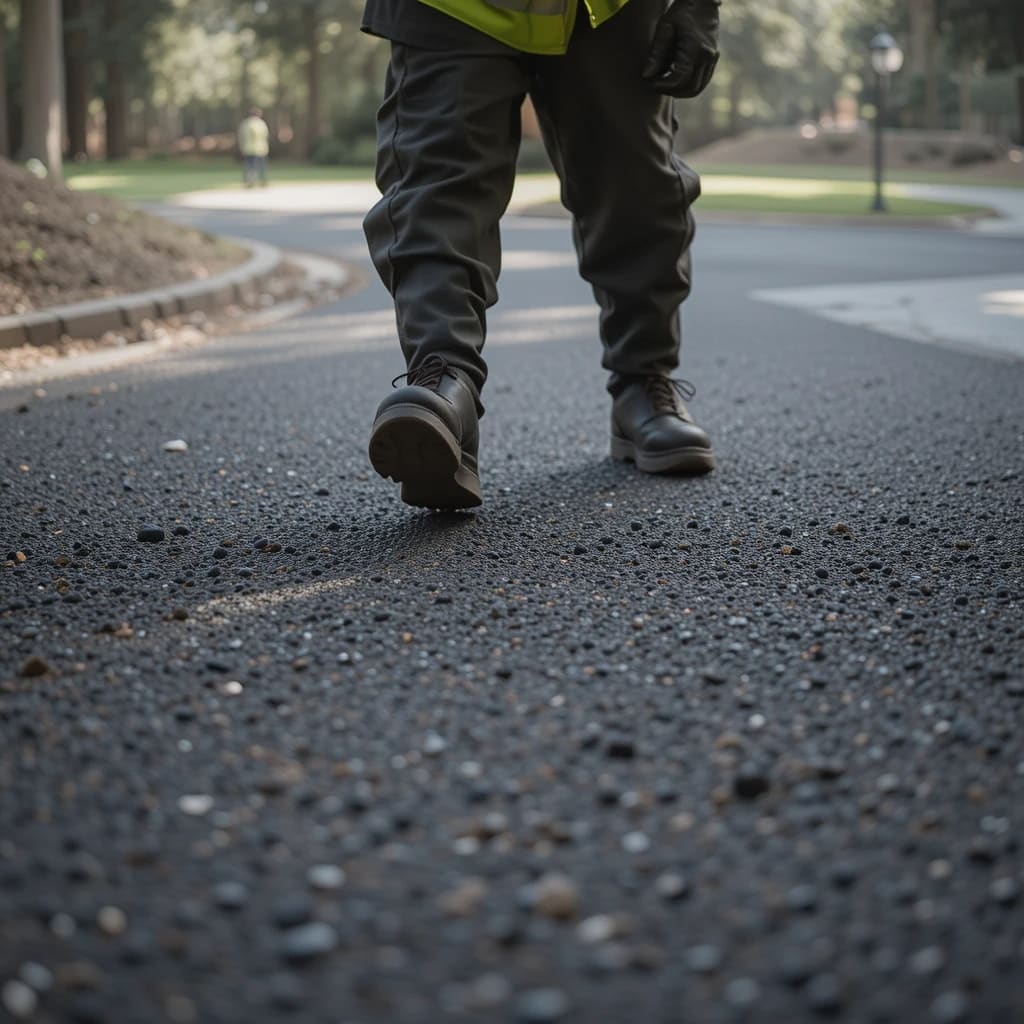
Asphalt is the main material in the construction of road infrastructure that plays an important role in creating a strong, durable, and comfortable road surface. However, did you know that asphalt has several different types? Each type of asphalt has different characteristics and uses according to project needs. In this article, Jasa Pengaspalan will discuss the various types of asphalt and their uses in road construction.
1. Hotmix Asphalt
What is Hotmix Asphalt?
Hotmix asphalt is the most common type of asphalt used in road construction. This asphalt is produced by mixing stone aggregate, sand, and bitumen at high temperatures (around 145–160°C) before being applied to the road surface.
Uses of Hotmix Asphalt
Used for highways with high traffic because it has good resistance to heavy vehicle loads. Suitable for toll roads, urban roads, and parking areas because it provides a smooth and comfortable surface for driving. Used for overlay projects or resurfacing roads that have begun to experience damage. Hotmix asphalt has advantages in durability and surface smoothness, so it is often used in road projects with high standards.
2. Cold Mix Asphalt
What is Cold Asphalt?
Cold asphalt is a type of asphalt that does not require heating during mixing and application. This mixture can be used directly without having to be heated first.
Uses of Cold Asphalt
Used for repairing potholes or patching roads because it is more practical and faster to work on. Suitable for areas with low temperatures or environmental conditions that do not allow the use of hot asphalt. Used in temporary road projects or emergency road access. Cold asphalt is more flexible in its use, especially for small-scale road repair projects.
3. Emulsion Asphalt
What is Emulsion Asphalt?
Emulsion asphalt is a type of asphalt that is mixed with water and special chemicals to keep it in liquid form. This asphalt is easier to apply and more environmentally friendly because it reduces the use of heat in the application process.
Uses of Emulsion Asphalt
Used for road maintenance such as a thin protective layer (seal coat) so that the road is more resistant to extreme weather. Suitable for road projects with light to moderate traffic. Often used in penetration techniques to bind aggregates to soil or stone-based roads. Emulsion asphalt has good adhesion and can be used in various environmental conditions without the need for high heating.
4. Modified Asphalt
What is Polymer Asphalt?
Polymer asphalt is a mixture of asphalt with polymer additives such as rubber or plastic to increase elasticity and resistance to extreme temperatures.
Uses of Polymer Asphalt
Used for toll roads and airports that require high resistance to heavy vehicle pressure. Suitable for areas with extreme temperatures because it is not easily cracked or cold. Used for road projects with a longer service life and minimal maintenance. Polymer asphalt is often the choice in modern road projects that require high quality and maximum durability.
6. Cutback Asphalt
What is Petroleum Asphalt?
Petroleum asphalt is a type of asphalt that is mixed with oil solvents to keep it in a liquid state before being applied. This type of asphalt hardens faster than emulsified asphalt.
Uses of Petroleum Asphalt
Used in road projects in areas with extreme weather conditions. Suitable for roads with low to moderate traffic. Often used in road repair projects or land surface compaction before primary paving. Petroleum asphalt has the advantage of better penetration compared to other types of asphalt.
Conclusion
Each type of asphalt has its own characteristics and uses according to the needs of the road project. Hotmix asphalt is often used for highways and toll roads because of its high durability. Cold asphalt is suitable for quick repairs and repairs of potholes. Emulsion asphalt is more environmentally friendly and is often used for thin coatings. Polymer asphalt and rubber asphalt provide extra resistance to extreme weather and heavy vehicle pressure. Petroleum asphalt has a more fluid nature and is often used in road projects in extreme areas
About the Creator
Enjoyed the story? Support the Creator.
Subscribe for free to receive all their stories in your feed.
Comments
There are no comments for this story
Be the first to respond and start the conversation.