
Japan's Economy Grows at Slower-Than-Expected Pace Amid Weak Household Spending and Investment
GDP rose 1.1% in annualized terms in the April-June quarter, missing market forecasts, but analysts say temporary factors are to blame and the Bank of Japan's rate-hike plans remain on track.

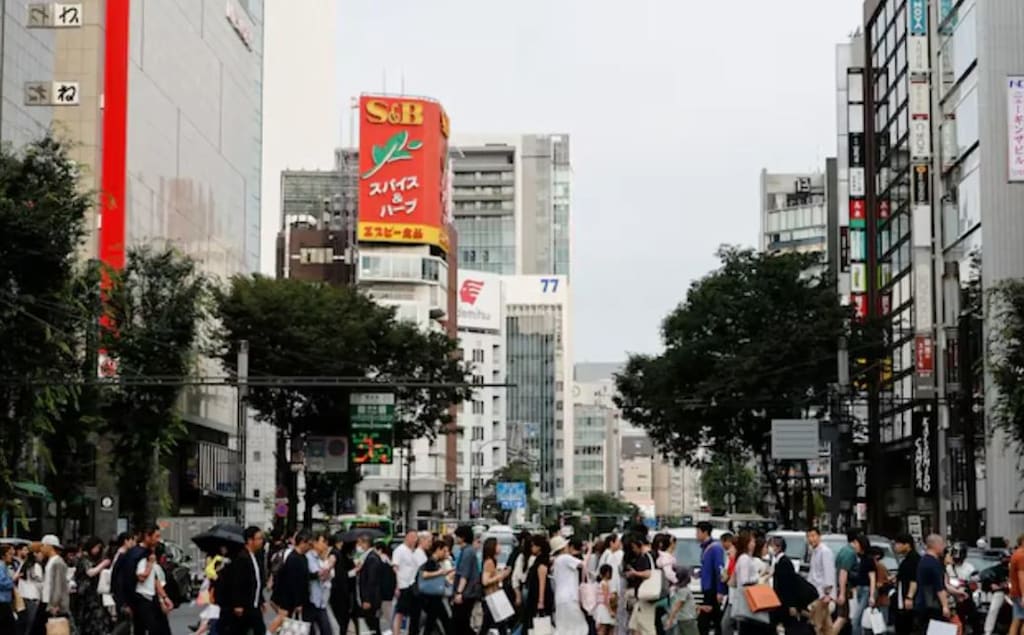
Japan's economy grew at a slower-than-expected pace in the April-June quarter, weighed down by lackluster household spending and business investment that analysts say largely reflect one-off factors, although the Middle East conflict continues to cloud business confidence.
Gross domestic product (GDP) rose 1.1% in annualized terms, government data showed on Monday, missing the median market estimate of 2.0% in a Reuters poll and falling below an upwardly revised 1.9% expansion in the previous quarter. The reading translates into a quarterly rise of 0.3%, compared with the median estimate of a 0.5% increase.
While the data showed global uncertainties and a weak yen weighing on growth, analysts say much of the drag came from temporary factors, and that robust economic momentum will likely keep the case for imminent interest rate hikes intact.
Private Consumption Disappoints
Private consumption was the biggest disappointment, falling 0.02% versus market expectations for a 0.5% increase, marking the first drop in eight quarters. Consumption accounts for more than half of Japan's economic output, making it a critical driver of overall growth.
While policy and regulatory changes temporarily boosted demand for durable goods such as automobiles and air conditioners, the effects of fee-free education and higher tobacco prices weighed on overall consumption. The mixed picture suggests that consumers remain cautious despite government efforts to stimulate spending.
Consumption and wage trends are key factors the Bank of Japan (BOJ) watches to gauge economic strength and determine the need for additional rate hikes. The weakness in private spending, even with temporary boosts from policy measures, raises questions about the sustainability of the recovery.
Capital Spending Falls Sharply
Capital spending, a key driver of private demand, fell 1.2% in the second quarter, versus a market forecast for a 0.4% increase. This decline was particularly notable given the expectation of continued investment in the world's third-largest economy.
Analysts attributed the weakness to uncertainties caused by supply chain disruptions linked to the Middle East conflict. Additionally, the overseas sale of a large pharmaceutical patent asset was counted as a decline in capital spending and as an increase in exports for research and development services, a statistical quirk that distorted the headline figures.
Yoshiki Shinke, senior executive economist at Dai-ichi Life Research Institute, noted that the factors dragging down capital spending, such as uncertainty linked to the conflict in the Middle East, are easing and corporate investment plans remain firm. "Overall, I think we can say that the economy had remained resilient despite slower-than-expected growth," he added.
Net External Demand Adds to Growth
Net external demand, or exports minus imports, added 0.5 percentage point to growth, largely because imports fell sharply after temporary disruptions to crude oil shipments through the Strait of Hormuz. This unexpected boost from the trade balance helped offset some of the weakness in domestic demand.
Exports remained resilient thanks to solid U.S. demand for Japanese hybrid vehicles and sustained global investment in artificial intelligence, which supported shipments of semiconductor-related equipment and components. Japan's position as a key supplier of advanced manufacturing technology continues to underpin its export performance.
Analyst Perspectives on the Data
"Growth was positive, but the details were somewhat weaker than expected," said Kazutaka Maeda, senior economist at Meiji Yasuda Research Institute. "Still, given the disappointing results are likely to have been driven by temporary factors, I don't think the latest data would suggest a weakness ahead or affect the timing of the BOJ's next interest rate hike."
The BOJ is now widely expected to raise rates as soon as September, with the latest data unlikely to derail that timeline. Central bank officials have been signaling their intention to normalize monetary policy gradually, and the current economic trajectory appears consistent with that goal.
Economy Minister Minoru Kiuchi struck a cautiously optimistic tone in a statement following the data release. "The economy remains on a moderate recovery path, with export-driven growth offsetting weakness in domestic demand. Strong wage growth and policy support are likely to sustain the recovery, while the impact of Middle East situations warrants caution."
Risks to the Outlook
Looking ahead, analysts cautioned that rising import costs and mounting upstream price pressures could eventually feed through to consumers, posing a risk to spending later this year. "Government subsidies have helped contain consumer inflation so far, but a weaker yen and higher crude oil import costs raise the likelihood of broader price hikes from the autumn onward," said Takeshi Minami, chief economist at Norinchukin Research Institute.
Private consumption could also see a pullback in the July-September quarter as the temporary boost to automobile and air-conditioner sales fades. The end of policy-driven demand for durable goods could leave consumption vulnerable to underlying weakness in household sentiment.
"While weak private consumption despite support from one-off factors is unlikely to immediately derail the BOJ's rate-hike plans, it could reinforce the case for the central bank to proceed with tightening at a more gradual pace," said Masato Koike, senior economist at Sompo Institute Plus.
Forecasts for the Coming Quarters
A survey this month by the Japan Center for Economic Research showed 37 economists forecast annualized GDP growth to slow to an average 0.05% in the July-September quarter. This suggests that the second quarter's weakness may not be a one-off phenomenon, though the slowdown is expected to be modest.
The BOJ's Balancing Act
The Bank of Japan faces a delicate balancing act as it navigates the path toward policy normalization. The central bank has maintained ultra-loose monetary policy for years, but with inflation above target and wage growth picking up, officials have signaled their readiness to act.
The timing of the next rate hike will depend on incoming data, particularly indicators of consumption and wage growth. While the latest GDP figures offer some cause for caution, they do not appear to have changed the fundamental trajectory of the economy.
Japan's economy continues to grow, but the pace of expansion has moderated amid weakness in household spending and business investment. The slowdown appears driven largely by temporary factors, leaving the Bank of Japan's rate-hike plans on track. However, risks remain, including the potential for rising import costs to feed through to consumers and the persistent uncertainty surrounding the Middle East conflict.
As policymakers and economists assess the outlook, the focus will remain on whether the underlying recovery can withstand these headwinds. For now, Japan's economy appears to be navigating a challenging global environment, but the path ahead is far from certain.
About the Creator
Mark Lim
Hi I am mark an automotive student and a car, tech and food enthusiast ! Im gonna try and post daily & hope you enjoy what I write and do share my page with people you know. I would gladly appreciate it! Cheers
Enjoyed the story? Support the Creator.
Subscribe for free to receive all their stories in your feed.
Comments
There are no comments for this story
Be the first to respond and start the conversation.