
Is Upgrading to an Energy-Efficient Pool Heater Worth It
Are Pool Heat Pumps Worth It?

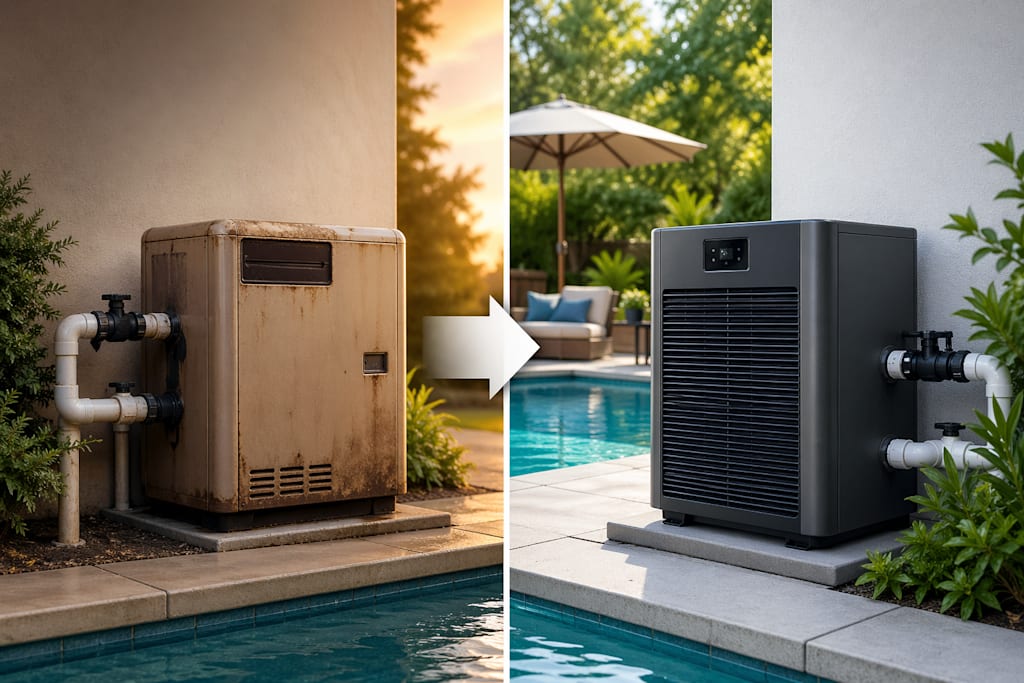
For many pool owners, heating is one of the biggest ongoing expenses. Whether you are extending your swimming season or simply trying to maintain a comfortable temperature, the type of system you use plays a major role in both cost and performance.
That’s where an energy-efficient pool heater becomes an important consideration.
But is upgrading actually worth it? Or is it just another expensive improvement with minimal return?
This guide breaks it down in a simple, practical way so you can understand how modern systems compare, what benefits they offer, and whether making the switch makes sense for your pool.
How Pool Heating Technology Has Evolved
Traditional pool heating systems, such as gas heaters and basic electric units, were designed for fast heat output rather than long-term efficiency. While they can raise water temperature quickly, they often consume more energy, resulting in higher operating costs over time.
Modern systems operate differently, particularly heat pump pool heater options. Instead of generating heat directly, they extract warmth from the surrounding air and transfer it into the pool water. This allows them to produce 4 to 5 units of heat for every unit of electricity used, making them significantly more efficient.
Instead of relying on repeated heating cycles, these systems are designed for more stable and controlled operation, improving overall efficiency.
What Makes a Pool Heater Energy Efficient
Not all pool heaters perform the same way. Efficiency depends on how the system uses energy and how well it maintains temperature over time.
Key Factors that Improve Efficiency:
- Consistent operation without frequent start-stop cycles.
- Optimised energy use based on real-time demand.
- Adaptive controls that respond to changing conditions.
- More stable performance with reduced system wear.
Compared to traditional electric pool heaters, modern heat pump systems are designed to run more smoothly and consistently.
Comparing Different Pool Heating Options
The right pool heater depends on how you plan to use your pool, whether you prioritize quick heating, long-term efficiency, or lower running costs. Each system works differently, and understanding those differences helps you make a more practical choice.
Electric Pool Heaters
Electric heaters are often chosen for their simplicity and quick heating capability. They work well in smaller setups or where heating is only needed occasionally.
- Heats water quickly.
- Higher energy consumption.
- Suitable for small pools or limited use.
Gas Pool Heaters
Gas heaters are designed for speed. They are ideal when you need to heat your pool quickly, but they can be expensive to run over time.
- Fastest heating performance.
- Higher fuel and operating costs.
- Less efficient for regular or long-term use.
Heat Pump Pool Heaters
A heat pump pool heater focuses on efficiency rather than speed. It maintains temperature consistently, making it ideal for regular pool use.
- Extracts heat from ambient air.
- Produces 4–5x more heat per unit of electricity.
- Best for maintaining steady temperatures.
Solar Pool Heaters
Solar systems are built for sustainability. They rely on sunlight, making them cost-effective in the long run but dependent on weather conditions.
- Uses renewable solar energy.
- Very low operating cost.
- Performance depends on sunlight availability.
When Is Upgrading Actually Worth It?
Deciding whether to upgrade comes down to how your pool fits into your daily life. The more consistently you rely on your pool, the more important efficiency and stability become.
Upgrading is Usually Worth It If:
- You use your pool regularly: Frequent use increases heating demand, making efficiency more valuable over time.
- Your current system struggles to maintain temperature: Inconsistent heating often indicates declining performance.
- Your energy bills are steadily rising: Inefficient systems tend to consume more power without delivering better results.
- You want to use your pool beyond peak summer months: A more efficient system supports extended seasonal use without high cost.
- You are thinking long-term: Over time, improved efficiency and durability can offset the higher upfront investment.
In these situations, upgrading helps improve both usability and cost control without adding complexity.
When It Might Not Be Worth It
There are also cases where upgrading may not offer enough benefit to justify the change.
Upgrading may not be the right choice if:
- Your pool is used occasionally rather than regularly: Lower usage reduces the overall impact of efficiency improvements.
- Heating is only needed for short periods: If you only heat the pool occasionally, long-term savings may be minimal.
- You depend on quick heating rather than a steady temperature: Some systems prioritise consistency over speed, which may not suit all needs.
- Your local climate limits system performance: Cooler conditions can affect how efficiently certain heating technologies operate.
In these scenarios, keeping your current setup may be more practical until your usage needs change.
Final Thoughts
Choosing whether to upgrade ultimately comes down to how you want your pool to function over time. Some systems prioritize quick results, while others are designed for steady, efficient performance.
For pool owners who use their pool regularly, the shift toward more efficient heating is less about convenience and more about control over energy use, temperature stability, and long-term costs.
This shift is reflected across newer technologies, where the focus is on balanced performance rather than short-term output. With systems like those developed by Madimack, the emphasis is on combining efficiency with reliability, helping pool owners achieve better long-term results without adding unnecessary complexity.
FAQs
1. What is an energy-efficient pool heater?
An energy-efficient pool heater is designed to maintain a consistent water temperature while using less energy. Systems like heat pumps achieve this by transferring heat rather than generating it directly.
2. How much can you save with an energy-efficient pool heater?
Savings depend on usage and local energy rates, but these systems typically reduce long-term operating costs compared to traditional heaters, especially with regular use.
3. Do heat pump pool heaters work in colder climates?
They can operate in cooler conditions, but efficiency may decrease as temperatures drop, particularly below 10°C. They perform best in moderate climates.
4. How long does an energy-efficient pool heater last?
Most modern systems, especially heat pumps, have an average lifespan of 10 to 15 years with proper maintenance.
5. Is it better to choose a heat pump or a gas pool heater?
Heat pumps are better for long-term efficiency and maintaining temperature, while gas heaters are more suitable for quick, on-demand heating.
About the Creator
Enjoyed the story? Support the Creator.
Subscribe for free to receive all their stories in your feed.
Comments
There are no comments for this story
Be the first to respond and start the conversation.