
Iron Ore Plunges to Two-Year Low on Weak Demand and Rising Supply
Prices test US$89 a tonne as China enters slow season; further declines seen likely through November

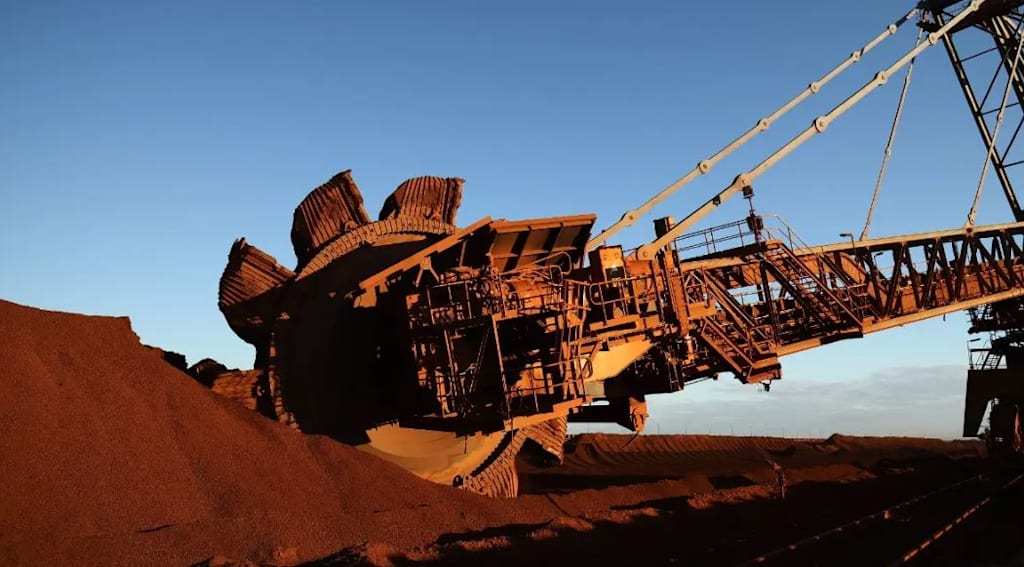
The global commodities market is currently witnessing a dramatic reversal of fortune for iron ore, the foundational raw material of modern infrastructure. In Singapore, benchmark iron ore futures have tumbled to their weakest intraday level in more than two years, falling as much as 1.4% to hit US$89.25 a tonne. By 10:45 a.m. Singapore time, the price had stabilized slightly but remained deeply depressed at US$89.40, down 1.2% on the day. Simultaneously, contracts on the Dalian Commodity Exchange in China, the world’s largest consumer of the metal, touched comparable two-year lows. This synchronized sell-off across major trading hubs signals a profound shift in market sentiment, marking the end of the post-pandemic recovery rally and the beginning of a potentially prolonged period of structural weakness for the ferrous metals sector.
The China Factor: A Seasonal Slump Meets Structural Fatigue
At the heart of this price collapse is China, the undisputed engine of global steel demand, which accounts for roughly half of the world’s total consumption. The country is currently entering its traditionally weak winter period, a time when construction activity across northern provinces grinds to a halt due to freezing temperatures and environmental restrictions aimed at curbing winter smog. However, analysts warn that this year’s downturn is more severe than typical seasonal fluctuations.
“The decline is being driven largely by China,” explained Mengtian Jiang, chief ferrous analyst at Horizon Insights. “Iron ore is likely to stay soft through November. Prices could extend declines toward US$85–US$86 a tonne, with the final two months of the year historically the weakest period for steel consumption.”
Beyond the weather, there is a deeper, more troubling trend: "stimulus fatigue." For months, Beijing has rolled out various macroeconomic measures intended to revitalize its stuttering property sector and boost infrastructure spending. Initially, these announcements sparked brief rallies in commodity prices as traders bet on a surge in demand. But as the tangible impact of these policies has failed to materialize in actual steel mill orders, Chinese buyers have grown increasingly "desensitized" to government rhetoric. Steel mills, facing shrinking profit margins and high inventory costs, are restocking only sparingly. They are no longer buying based on hope; they are buying strictly based on immediate, verified need. This cautious approach has left massive stockpiles of iron ore sitting idle at Chinese ports, creating a visible overhang that continues to weigh heavily on trader psychology.
The Supply Tsunami: From Australia to Guinea
While demand is faltering, global supply is expanding at an unprecedented rate, creating a classic economic imbalance. The world’s largest mining giants, including Rio Tinto and BHP Group, are projecting a significant increase in shipments for the fourth quarter alone, with volumes expected to rise by as much as 18 million tonnes. These companies are leveraging high-efficiency operations and favorable weather conditions in Western Australia to maximize output before the end of the financial year.
However, the most significant long-term threat to iron ore prices comes from West Africa. Guinea’s massive Simandou mine, a project decades in the making, is finally ramping up production. Simandou holds some of the highest-grade iron ore reserves in the world, and its entry into the global market represents a structural shift in supply dynamics. Unlike previous expansions that were incremental, Simandou offers a vast, low-cost source of premium ore that will permanently alter the global supply curve. As these new tonnes flood the market, they are displacing higher-cost producers and forcing prices down to clear the excess inventory. The combination of peak Australian output and the accelerating arrival of Guinean ore has created a "supply tsunami" that the current tepid demand simply cannot absorb.
The Erosion of the Geopolitical Premium
For much of the past year, iron ore prices were artificially supported by a "supply-risk premium." This premium was driven by a high-stakes, long-running standoff between China Mineral Resources Group (CMRG), the state-backed entity tasked with consolidating China’s iron ore buying power, and the major global producers. The market feared that CMRG might abruptly halt purchases or impose punitive pricing terms, leading traders to bid up prices as a hedge against potential supply disruptions.
That fear has largely dissipated following recent breakthrough agreements, most notably a landmark deal struck with Rio Tinto. By securing long-term supply contracts, CMRG has signaled a preference for stability over confrontation, effectively removing the geopolitical uncertainty that had been propping up prices. However, the situation remains fluid. Negotiations between CMRG and Australia’s Fortescue Ltd remain unresolved, leaving a small window open for future volatility. Yet, the broader market message is clear: the era of using iron ore as a geopolitical lever is fading, and prices are returning to reflect pure fundamental supply and demand realities.
A Divergent Metals Market: AI Hype vs. Industrial Reality
The slump in iron ore stands in stark contrast to the performance of other base metals, highlighting a growing divergence in the global industrial landscape. On the London Metal Exchange (LME), copper edged up 0.2% to US$14,360 a tonne. This resilience is largely driven by renewed optimism surrounding artificial intelligence. The massive build-out of data centers, power grids, and electrical infrastructure required to support the AI boom is creating a robust, forward-looking demand for copper, a key component in electrification. Zinc also held near its highest close of the month, supported by tight supply constraints in the mining sector.
Iron ore, however, has no such technological narrative to save it. It is a pure-play on traditional industrialization, construction, and urbanization—sectors that are currently struggling globally. Aluminum slipped alongside iron ore, further confirming that the weakness is specific to the steel-making complex rather than a broad-based commodity crash. This divergence suggests that while the "green" and "digital" transitions are supporting certain metals, the old economy of concrete and steel is facing a harsh correction.
Outlook: The Path of Least Resistance is Lower
Looking ahead, the outlook for iron ore remains decidedly bearish. With supply growing rapidly, demand fading into the year-end lull, and no clear, immediate turnaround visible in China’s troubled property or infrastructure sectors, the market lacks any credible catalyst for a sustained rebound. High global oil prices continue to cloud the broader economic picture, raising input costs for manufacturers and dampening consumer spending, which further reduces the likelihood of a sudden industrial revival.
Traders and analysts will be watching December closely for any signs of fresh, concrete stimulus from Beijing or unexpected restocking activity from steel mills. But until then, the consensus is grim. As Mengtian Jiang noted, the final two months of the year are historically the weakest for steel consumption. With port inventories bloated, miners shipping at record rates, and buyers retreating to the sidelines, the path of least resistance for iron ore prices appears to be firmly lower. The US$85–US$86 range is no longer just a prediction; it is becoming the new gravitational center for a market that has fundamentally changed.
About the Creator
Mark Lim
Hi I am mark an automotive student and a car, tech and food enthusiast ! Im gonna try and post daily & hope you enjoy what I write and do share my page with people you know. I would gladly appreciate it! Cheers
Enjoyed the story? Support the Creator.
Subscribe for free to receive all their stories in your feed.
Comments
There are no comments for this story
Be the first to respond and start the conversation.