
Iran Is Responding to the U.S. Peace Proposal Today. A One-Page Document Could End the Deadliest War of 2026. Here Is Everything We Know.
For the first time since February 28, both sides are moving toward a written framework. A one-page memo is being drafted that would end the war, open the Hormuz, and trigger a 30-day nuclear negotiation. Iran is reviewing it today. The world is watching. Here is exactly what is on that page.
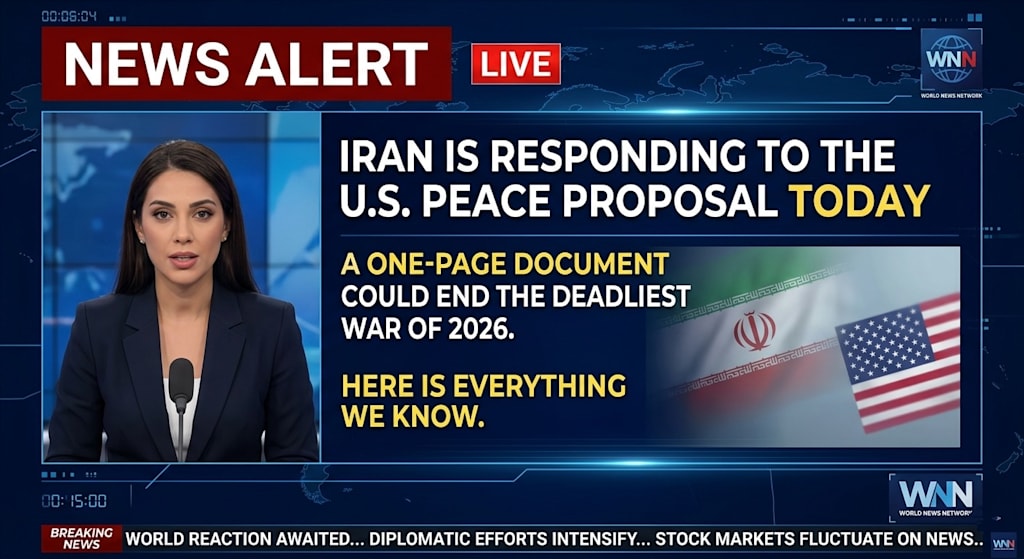
Thursday, May 7, 2026, may be the most important day in the Iran war since the day the war began. Iran is expected to deliver its response to the latest U.S. peace proposal to Pakistani mediators today — a response that could, for the first time, form the basis of a written framework to end more than two months of conflict that has killed over 6,198 people, blocked 20 percent of the world's oil supply, and sent global energy markets into crisis.
A regional source familiar with the negotiations told CNN that the United States and Iran are now moving closer to agreement on a short, one-page memorandum designed to declare an end to the conflict. The document, according to a person familiar with its contents, would declare the war formally over and trigger a 30-day negotiation period to resolve the most complex sticking points: Iran's nuclear enrichment program, the unfreezing of Iranian assets estimated at over $100 billion, and the future security architecture of the Strait of Hormuz. Crucially, the one-page memo would also reportedly include discussion of a moratorium on uranium enrichment for a period of longer than ten years — a reduction from the U.S.'s earlier demand of 20 years — and would require Iran to ship its stockpile of highly enriched uranium out of the country, though details remain under active negotiation.
"The US and Iran are moving closer to a short memorandum that aims to end the Iran war." — Regional source familiar with negotiations, CNN, May 7, 2026
Iran's Foreign Ministry spokesperson Esmaeil Baghaei confirmed on Wednesday that the U.S. proposal was under review and that Tehran would convey its response to Pakistan after finalising its position. The key Iranian sticking point remains unchanged: Tehran insists that nuclear talks be separated from the immediate end-of-war agreement, handled in a later phase after both the U.S. blockade and the Hormuz situation are resolved. Washington has historically demanded that nuclear restrictions be part of any deal framework — not deferred. The one-page memo approach appears to be an attempt to thread that needle by declaring the war over while committing both sides to a structured 30-day negotiation where nuclear terms are finalized, rather than demanding they be agreed upfront.
President Trump said Wednesday that the U.S. has had "very good talks" with Iran over the past 24 hours — the most positive language he has used in weeks. He also made a claim that Iran has "agreed" to not having a nuclear weapon, though Iran has not publicly confirmed any such agreement and the specific terms remain unverified. The IRGC Navy announced Wednesday that safe passage through the Strait of Hormuz is now possible under "new procedures" — a statement interpreted by analysts as Iran signalling flexibility without formally reopening the strait, keeping its leverage intact while creating space for a deal to be announced.
The pressure on both sides to reach an agreement this week is immense. Trump is scheduled to depart for Beijing on May 14 for his summit with Xi Jinping. Arriving in China with a signed Iran deal would be a transformative diplomatic achievement — arriving without one would significantly weaken his negotiating position with a Chinese president who has watched the U.S. stumble through two months of inconclusive war. For Iran, the economic pain of the conflict is severe: 90 million citizens remain without internet, the naval blockade of Iranian ports has choked off oil revenues, and Iran's parliament speaker has publicly called on citizens to practice "frugality" as a form of economic resistance — an admission that the country's reserves are under serious strain.
The one-page memo, if signed, would not be peace. It would be the beginning of the most complex nuclear and security negotiation the world has attempted in decades. But it would be the end of the shooting — and the reopening of the strait that is strangling the global economy. For 23,000 sailors still stranded in the Persian Gulf, for the drivers paying $4.46 per gallon at American gas stations, for the families of the more than 6,000 dead, it would be the first real news worth calling good in a very long time. Whether Iran's response today opens that door — or closes it — will be known before this day is over.
About the Creator
Enjoyed the story? Support the Creator.
Subscribe for free to receive all their stories in your feed.
Comments
There are no comments for this story
Be the first to respond and start the conversation.