
Inside Yiwu Jewelry Market: How Buyers Source Fashion Jewelry
How Our Client Sources Fashion Jewelry in Yiwu
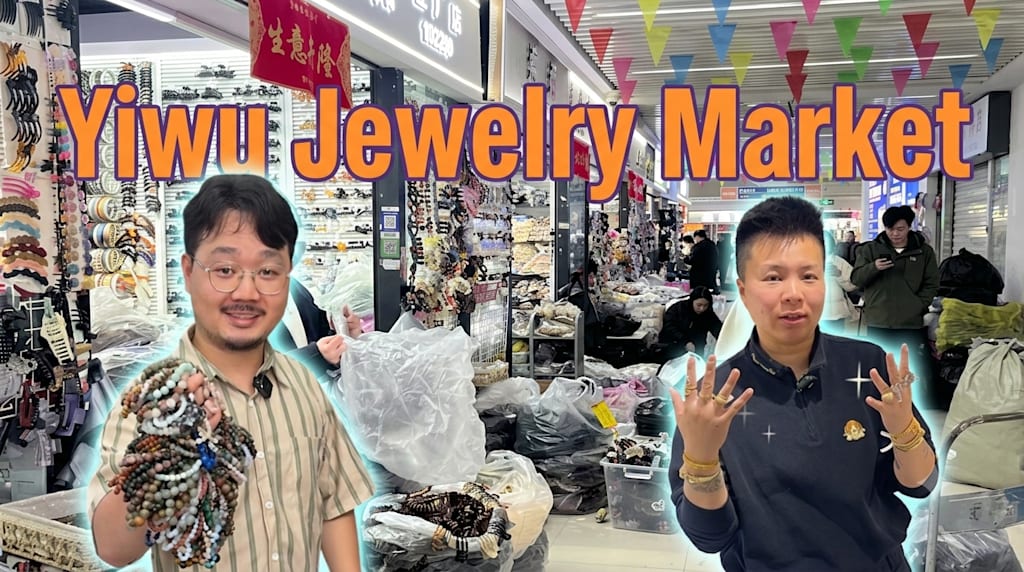
In one market in Yiwu, it is possible to source nearly everything needed to build a jewelry business. From raw stones, gemstone beads, and pendants to chains, clasps, packaging materials, and even finished jewelry products, these categories are all located within a relatively compact area.
Instead of relying solely on online supplier catalogs and waiting for responses, buyers can physically walk through different booths, compare products side by side, and evaluate differences in material, craftsmanship, and pricing within the same day. This makes the sourcing process more direct and visual compared to remote sourcing methods.
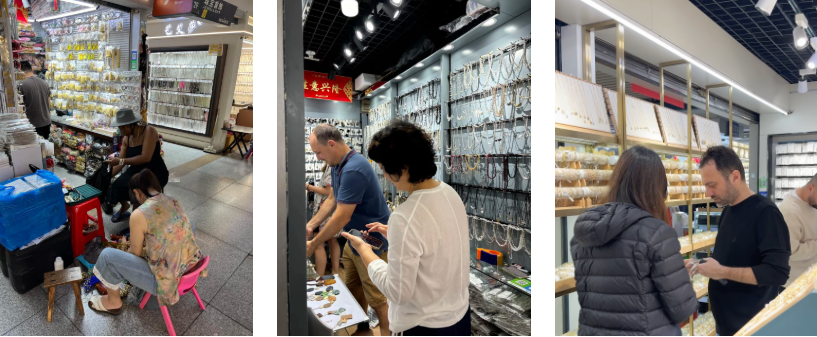
Today, our sourcing agent Karen is visiting Yiwu’s jewelry market to observe what types of products buyers are sourcing, how suppliers organize their offerings, and how different parts of the local supply chain are connected.
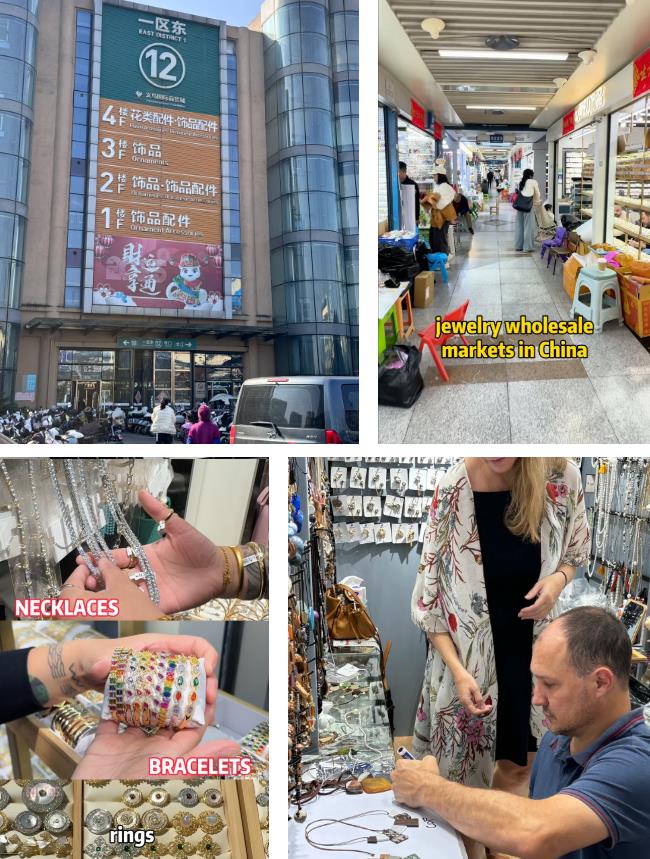
Inside Yiwu’s Jewelry Market
Yiwu’s jewelry-related businesses are mainly concentrated in District 1, the East Expansion Area, and District 6. These areas together form a clustered supply environment for different segments of fashion jewelry.
District 1 is the main area for fashion jewelry wholesalers. Product categories here include stainless steel jewelry, silver-tone accessories, pearl-based designs, crystal ornaments, beads, and general fashion jewelry items.
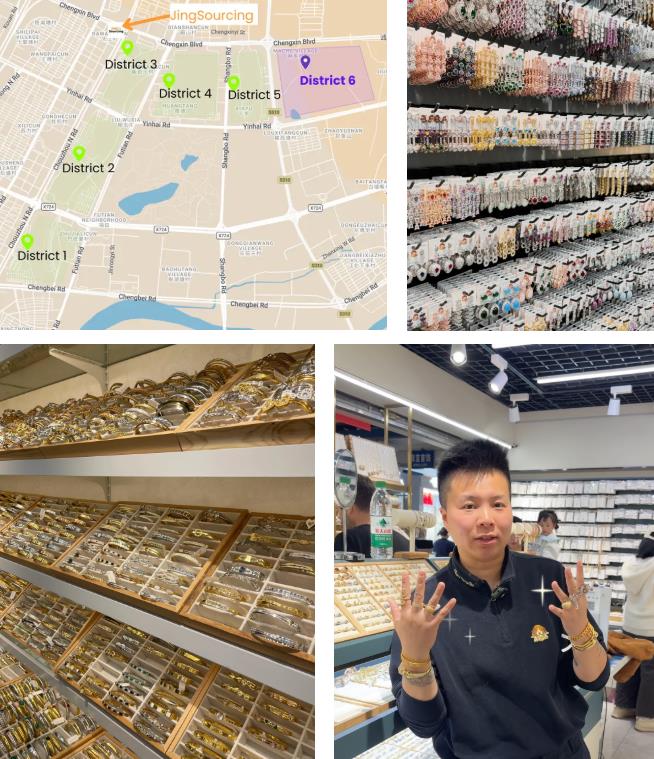
Most suppliers in this district serve wholesalers, trading companies, cross-border e-commerce sellers, and live-stream commerce buyers from both domestic and international markets. In practice, buyers often compare similar products across multiple booths, place mixed orders across different styles, and request small adjustments such as color plating or minor design modifications directly from suppliers.
Why Yiwu’s Supply Chain Is Highly Specialized
The market itself is only one part of the broader system. Behind the exhibition booths is a network of specialized workshops and supplier clusters that support production and sourcing.
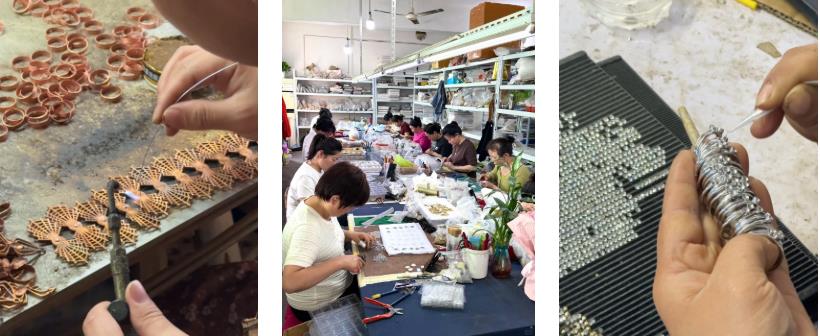
Within a short distance from the main market areas, there are industrial zones such as the Xingzhong jewelry components hub. These areas are focused on supplying individual parts of jewelry production. Different suppliers specialize in specific categories such as chains, rhinestones, clasps, beads, pendants, and packaging materials.
In many cases, suppliers do not cover full product lines. Instead, they focus on narrow categories with a wide range of variations in size, color, coating, and specification. This specialization allows the system to support a large variety of designs through combination of different components.
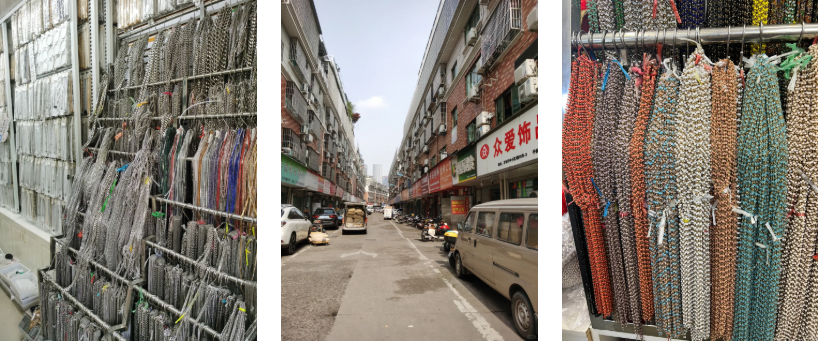
Yiwu Fashion Jewelry: MOQ and Pricing Overview
Within Yiwu, different streets and markets serve different functions. Changchun Street, for example, is more commonly associated with crystal and gemstone-related products. This includes natural stones, crystal beads, loose materials, pendants, and partially finished bracelets.
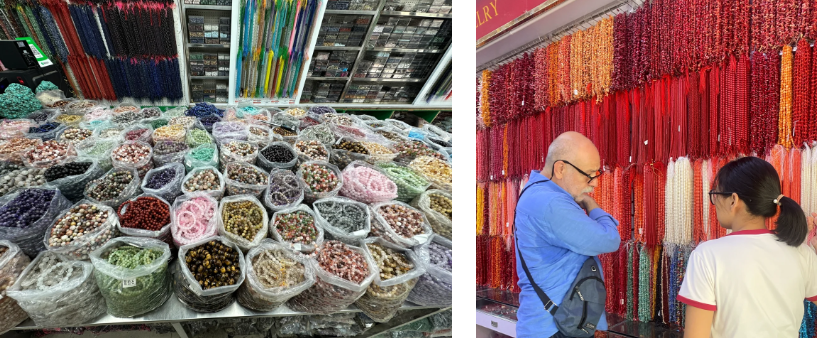
During a recent visit to Changchun Street with an Australian client, the sourcing focus was not on selecting finished jewelry products. Instead, the client was combining different stones and components to develop a more customized product line based on materials.
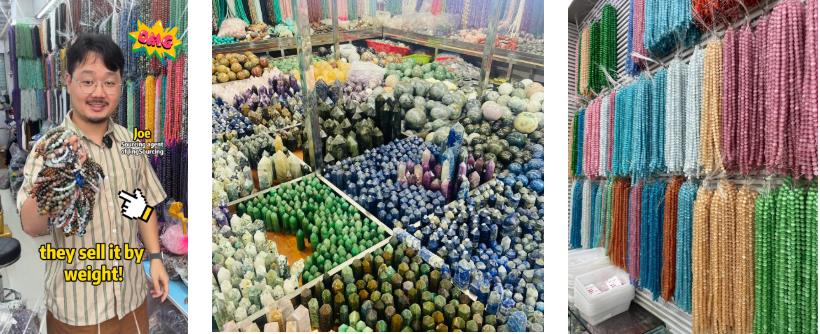
In this area, many suppliers allow mixed purchasing. Buyers can combine multiple styles within a single order, sometimes with quantities as low as 3–5 pieces per style. This structure is often used for testing different material combinations and design directions before scaling production.
At the same time, in the finished fashion jewelry market in Yiwu, ready-stock products also generally support mixed orders. Minimum order quantities typically start from a few dozen pieces per order, while minimum quantities per style are often around 12 pieces, depending on the supplier and product type.
Pricing for finished fashion jewelry commonly ranges from approximately $0.3 to $3 per piece, depending on materials and complexity.
For custom production, minimum order quantities vary based on the level of customization. Simple modifications, such as changes in color, plating, or small structural adjustments, usually have relatively flexible requirements.
However, for new mold development, suppliers typically require higher minimum order quantities, often starting around 200 pieces per design. Mold fees generally range from approximately $45 to $90, depending on complexity and production requirements.
About the Creator
Jingsourcing.com
Finding a reliable supplier and ensuring smooth production is challenging. JingSourcing takes care of the entire process, from sourcing suppliers to shipping.
Enjoyed the story? Support the Creator.
Subscribe for free to receive all their stories in your feed.
Comments
There are no comments for this story
Be the first to respond and start the conversation.