
Influencer Joe Felz’s Cause of Death Confirmed as Suicide Amid Family’s Plea for Privacy and Truth
Paulding County Coroner confirms the 40-year-old van life creator died by hanging, as his girlfriend condemns online speculation and asks followers to honor his memory with respect.

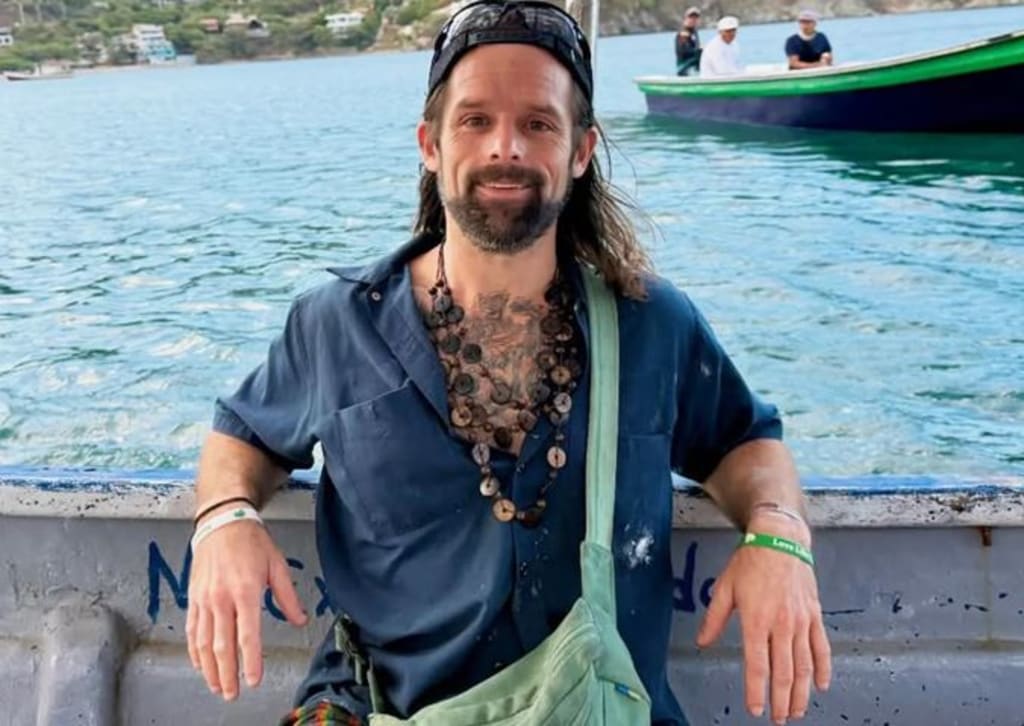
The Paulding County Coroner’s Office has officially confirmed that influencer Joe Felz died by suicide via hanging, bringing a somber resolution to days of uncertainty following the August 3 announcement of his passing by his girlfriend, Alxzondra. The confirmation, shared with PEOPLE on August 7 and first reported by TMZ, marks the tragic end of a life that had inspired over 1.4 million followers across Facebook and Instagram through candid documentation of van life, small business ownership, and spiritual exploration. Yet even as official facts emerge, Felz’s loved ones continue to navigate not only profound grief but also the corrosive spread of misinformation online, a secondary trauma that underscores the complex, often painful intersection of public persona and private sorrow in the digital age. This moment demands more than acknowledgment of cause; it calls for reflection on how we mourn creators whose lives were shared openly yet remained deeply human beneath the curated surface.
Joe Felz, who celebrated his 40th birthday just weeks before his death on June 26 with a post captioned “The man is 40. Celebrated simple and sweet with a few of the lifers,” had built a community rooted in authenticity, resilience, and intentional living. His content often radiated purpose, showcasing sunrises from remote parking spots, entrepreneurial wins, and moments of quiet faith. His final social media update on July 9 featured Alxzondra speaking directly to camera about “healing,” hinting at an ongoing personal journey that remained largely unseen beneath the highlights. This duality between public inspiration and private struggle is central to understanding both his impact and the weight of his loss. Outward positivity does not negate inner turmoil, and Felz’s death serves as a sobering reminder that mental health challenges can persist even amid apparent success, especially in isolated or high-pressure lifestyles like full-time van dwelling.
In her initial tribute on August 3, Alxzondra asked followers for “space and time” to process “a loss of this magnitude,” thanking them for prayers and love while gently setting boundaries. But within 24 hours, those boundaries had been breached. On August 4, she issued a pointed statement condemning “false narratives, assumptions, and speculation” circulating across platforms, emphasizing that “a real family is trying to process an unimaginable loss.” Her words carried both sorrow and resolve: “I understand Joe meant a great deal to many of you, and that’s exactly why I chose to share this news. But social media rumors that flow into local real life should be the last thing we have to deal with right now. I promise that, when the time is right, the truth will come. Right now is not that time.” This plea is not secrecy; it is protection. It affirms that behind every viral post is a human being whose final chapter deserves dignity, not dissection. In an ecosystem where grief is often performative and curiosity masquerades as concern, Alxzondra’s stance models a necessary form of care: prioritizing the bereaved over the algorithm.
The coroner’s confirmation of suicide adds another layer of sensitivity to an already delicate situation. Mental health struggles, particularly among men and entrepreneurs in nontraditional or isolated lifestyles, remain under-discussed despite rising awareness. Van life, while romanticized online, can entail financial precarity, social isolation, and constant adaptation all potential stressors that compound existing vulnerabilities. Felz’s openness about spirituality and simplicity may have provided solace to others, but it also created expectations of perpetual strength that can make seeking help feel like failure. His death invites us to look beyond content to context: to recognize that creators are not symbols, but people navigating the same complexities as their audiences, often without the safety nets afforded to those in conventional careers.
Alxzondra’s request to honor Joe not through speculation but through respectful remembrance is both a boundary and an invitation. It asks followers to resist the impulse to fill silence with conjecture and instead hold space for the family’s timeline. Share stories that reflect his true spirit: his kindness, his dedication, his quiet joy in simple things. Offer silence where noise dominates. Trust that truth, when ready, will be shared by those who loved him most. This approach aligns with emerging best practices in digital ethics, which emphasize consent, compassion, and contextual integrity in online mourning. When we grieve publicly, we must remember that our words carry weight not just as expressions of feeling, but as forces that can either heal or harm.
Moreover, Felz’s passing highlights systemic gaps in support for digital creators. Unlike traditional employees, independent influencers rarely have access to mental health resources, paid leave, or community-based safety nets. Platforms amplify their voices but seldom safeguard their well-being. As audiences, we consume their lives as content; as a society, we must also advocate for structures that sustain them as people. This includes destigmatizing help-seeking, funding creator wellness initiatives, and fostering communities that value presence over productivity.
Ultimately, Joe Felz’s legacy extends beyond van conversions and business tips. He modeled a way of living intentionally in a distracted world, and now, in death, he teaches us how to grieve intentionally in a noisy one. Let his memory inspire not just admiration for his journey, but commitment to a more humane digital culture: one where privacy is respected, truth is patient, and compassion precedes curiosity. In honoring him thus, we do more than mourn a creator; we affirm the humanity behind every profile picture.
If you or someone you know is struggling with suicidal thoughts, emotional distress, or mental health challenges, help is available. In the U.S., call or text 988 or chat at 988lifeline.org (24/7, confidential, free). International resources are available at findahelpline.com. You are not alone.
About the Creator
Mark Lim
Hi I am mark an automotive student and a car, tech and food enthusiast ! Im gonna try and post daily & hope you enjoy what I write and do share my page with people you know. I would gladly appreciate it! Cheers
Enjoyed the story? Support the Creator.
Subscribe for free to receive all their stories in your feed.
Comments
There are no comments for this story
Be the first to respond and start the conversation.