
Independence Test: Fed Chair Kevin Warsh Faces Critical Decision Amid Trump’s Pressure
As the Federal Reserve prepares for a pivotal rate-setting meeting this week, Chair Kevin Warsh finds himself at the center of a political and economic storm. With inflation stubbornly hovering at 3.4% and President Donald Trump demanding lower rates to fuel growth, Warsh’s decision to hike, hold, or cut will define his legacy and test the resilience of the central bank’s independence.

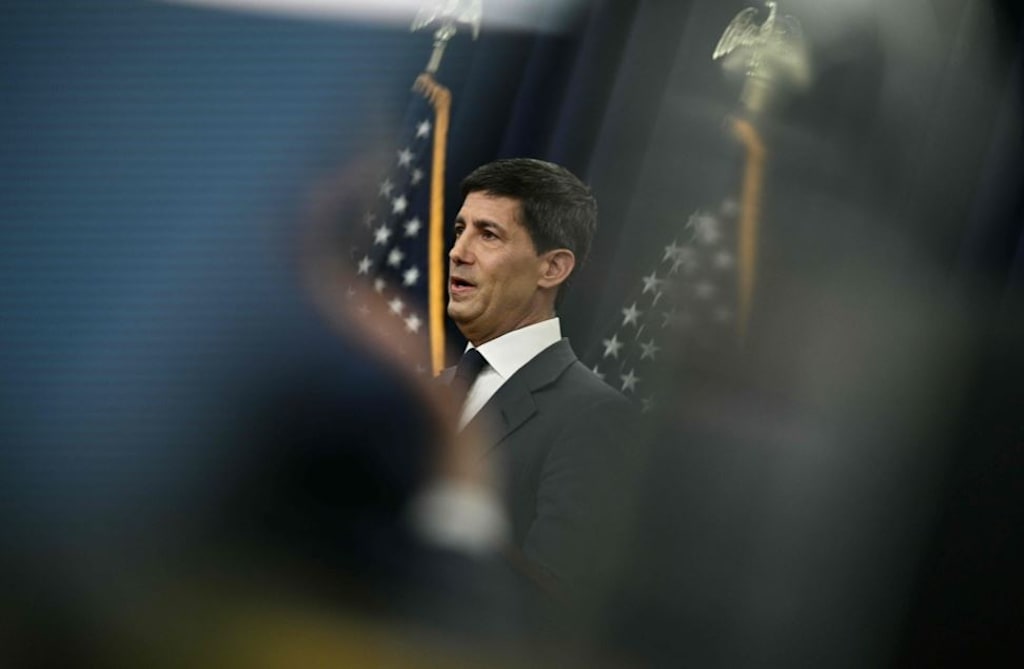
The US Federal Reserve enters its two-day policy meeting this week with markets pricing in an 85% probability of a 25-basis-point interest rate hike. The anticipation stems from fresh data showing consumer inflation remaining steady at 3.4% in August, well above the Fed’s 2% target, and rising energy costs driven by the ongoing conflict in the Middle East. For Kevin Warsh, who was appointed by President Trump to replace Jerome Powell, this moment represents his first true trial by fire. Will he prioritize the Fed’s statutory mandate to control prices, or will he bow to unprecedented political pressure from the White House?
A Perfect Storm of Inflationary Pressures
The economic landscape facing the Fed is complex. Inflation has proven persistent, fueled by a confluence of factors:
Geopolitical Shock: The US-Israel-Iran war has disrupted global energy supplies, pushing Brent crude above $104 per barrel and raising fuel and transportation costs.
Trade Policy: President Trump’s aggressive tariff policies have increased the cost of imported goods, passing higher prices directly to consumers.
AI-Driven Demand: The booming artificial intelligence sector has spurred massive investment in data centers and infrastructure, creating localized supply bottlenecks and wage pressures in tech hubs.
Despite holding rates steady since January to allow these shocks to ripple through the economy, the Fed sees little evidence that inflation is self-correcting. As Claudia Sahm, chief economist at New Century Advisors and a former Fed official, noted, "It’s quite likely that the Fed will raise interest rates next week... but it’s not a done deal." She warned that hiking rates is "costly medicine," acting as a brake on investment and consumption, but necessary if price stability is to be restored.
The Political Shadow
The backdrop to this economic dilemma is intensely political. President Trump has made no secret of his desire for lower interest rates, arguing they are stifling the economic growth he promised during his campaign. His administration has launched unprecedented attacks on the Fed’s independence, including a criminal probe into former Chair Jerome Powell, attempts to remove other governors, and threats to disrupt trade ties if the Fed raises rates.
Warsh, a former Fed governor and private equity executive, was chosen by Trump partly for his historical advocacy of lower rates and his belief in AI-driven productivity gains. However, recent weeks have seen Warsh pivot, emphasizing the primacy of the inflation fight. "There’s always been this doubt about whether Kevin Warsh is going to be like his predecessors and do what’s right for the economy, even if it’s politically inconvenient," said David Wessel of the Brookings Institution. "If he raises rates now and Trump goes ballistic, he will have established his credibility as an independent Fed chair for the rest of his term."
Complicating matters is Warsh’s unconventional approach to communication. Unlike his predecessors, who relied heavily on "forward guidance" to shape market expectations, Warsh has advocated for less transparency, arguing that it locks policymakers into rigid paths. This shift has introduced greater uncertainty into financial markets, making it harder for investors to price in future moves.
Analysts warn that if the Fed surprises markets either by hiking when a hold was expected, or vice versa, the lack of clear forward guidance could lead to significant volatility. "If they surprise markets and they can’t explain why they’re surprising markets, then Wednesday afternoon will be pretty messy," Sahm cautioned.

When the Federal Open Market Committee (FOMC) announces its decision on Wednesday at 2:00 pm EST, the world will be watching not just for the number, but for the signal it sends about American institutions. A rate hike would affirm the Fed’s commitment to its dual mandate, particularly price stability, even at the cost of short-term political friction. It would signal that Warsh views his role as a guardian of economic integrity rather than a tool of executive policy.
Conversely, holding rates steady despite high inflation could be interpreted as capitulation to political pressure, potentially undermining the dollar’s status as a global reserve currency and eroding long-term investor confidence.
For Kevin Warsh, the choice is stark. He can please the President and risk runaway inflation, or he can anger the White House and secure his place in history as a defender of central bank independence. In the high-stakes arena of global finance, there is no middle ground.
About the Creator
Mark Lim
Hi I am mark an automotive student and a car, tech and food enthusiast ! Im gonna try and post daily & hope you enjoy what I write and do share my page with people you know. I would gladly appreciate it! Cheers
Enjoyed the story? Support the Creator.
Subscribe for free to receive all their stories in your feed.
Comments
There are no comments for this story
Be the first to respond and start the conversation.