
Impact of Out of Seasom Events
The pressures of modern day turf managment

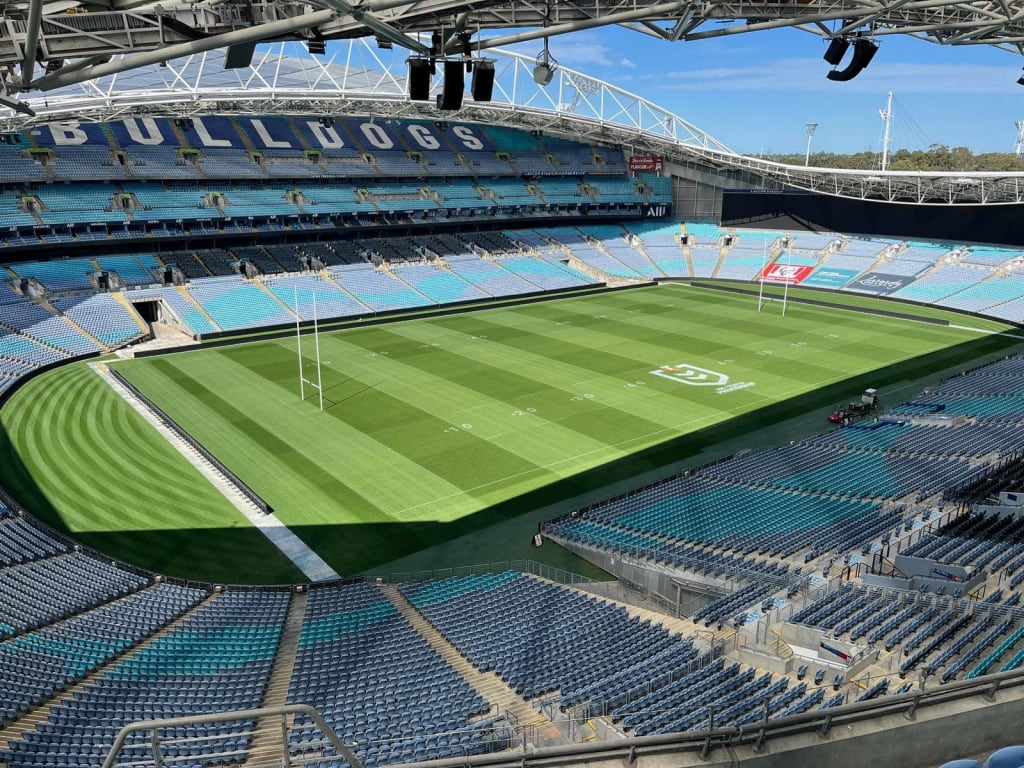
Increasingly sports venues in Australia are facing increasing demands from what are traditionally regarded as ‘’out of season’’ use.
Concerts, moto cross and a plethora of other events are now the norm. This is in conjuntion with an increase in use from sports such as Rugby League, Rugby Union and soccer. All of which means that the surface is coming under increased pressure.
These events are televised nationally and sometimes even globally. The result is they are coming under an intense level of scrutiny from many ‘’arm chair’’ experts.
History of Managing Turfgrass for off-season events.
Off season events in Stadiums have historically been held in a gap in a sporting calendar. However, the A-League, Super Rugby, NRL, AFL and Cricket seasons all now cross over which means that stadia in Australia tend to operate all year round.
Out of season events tend to happen from October to March. This is because the weather is more predictable, and this reduces the risk of cancellations. This almost guarantees that all the parties will get a better ROI.
Stadiums in Australia in principle are owned by the respective state governments. The stadium turf is managed and operated by an internal or external operator under a contract.
They are a business, and large-scale off season events generate significant revenue streams.
These events do have an impact on the turfgrass quality. There is therefore a knock on effect for the agronomic and playability of the surface.
New Challenges For Turf Managers.
Historically, once the Winter sports season finishes, Stadiums rest until the next season. Now Turf Managers plan up to 12 months in advance.
This increase in use, occurs at the same time there is a big increase in women’s sport.
The result is that Turf Managers are now under more pressure to produce a high turf quality surface.
We are also seeing an increase in combined event days. For example, it isn't uncommon for Allianz Stadium, Suncorp, and AAMI Park Stadium, to have 3 different sports codes over one weekend.
Events such as the AFL Gather Round and the NRL Magic Round, have become the norm and challenge the ability of the finest turf managers.
The increase in Womens’ participation in sport
The increase in demand for a range of content is here to stay. Hand in hand with this are new challenges in stadium turf management for these sports surfaces.
Some venues now receive up to twice the amount of use they did 10 years ago.
- What are the impacts of these out of season events on the turfgrass surface quality?
- Is it possible that we are heading to a point where the demands on the surfaces has reached a tip off point?
- How do we manage these out-of-season stadium turf management challenges?
- A detailed study of managing turfgrass for out of season events is here.
However, to summarise the options available to turfgrass managers.
Lay and Play Turf Replacement.
The quickest and often best fix is to simply replace the surface. This is done using turf systems from HG Turf Group and Evergreen Turf, and means that a full field replacement can occur in 3 to 5 days. Use commences almost immediately post install.
Stadium grow Lights.
Top tier Venues use grow lights to manage turf grass in shade.
Historically these have been High Pressure Sodium (HPS) rigs from companies like SGL, but there is now a rapid move toward LED units.
SeeGrow have taken the entire Turf Grow Light concept one step further.
Their mobile units have a CO2 canopy, and achieve growth of up to 10 mm shoot and root growth in 24 hours.
The first LED grow lights in use in Australia are at Comm Bank Stadium in Parramatta.
Flooring.
Flooring systems use a variety of materials, but all should have the following characteristics to ensure better stadium turf management:
- They should cope with heavy loads such as vehicles, cranes, and stage equipment, and protect the turf from compaction and damage. Flooring systems like Stadia XHD, TerraTrak and Supa-Trac work well in high-traffic scenarios like concert setups in stadiums.
- Allow light and air to pass. This reduces turf stress under long-term coverage.
- Be modular. There is often only a small amount of time between events, and so any flooring must allow for quick installation and removal without the use of specialised equipment.
- A flooring system must ideally be suitable for a range of situations.
- Not be metal as this conducts heat onto the grass. All of the examples below are plastic.
About the Creator
Jerry Spencer
Turf agronomist, sports turf consultant & soil scientist. Over 35 years experience working in the UK & Australia in the turf & amenity industry. As the owner of Gilba Solutions Pty Ltd Specialises in turf nutrition and turf seed selection.
Enjoyed the story? Support the Creator.
Subscribe for free to receive all their stories in your feed.
Comments
There are no comments for this story
Be the first to respond and start the conversation.