
I Went For The Dark Sky And The Elephants Ambushed Me
An amateur astronomer, a telescope in a duffel bag, and the night the ground itself started breathing
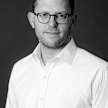

A man who looks up
I have been an amateur astronomer for most of my adult life, which is a polite way of saying I have spent thirty years driving away from cities in the middle of the night to look at things that were already there. I am not a scientist. I am an accountant, actually, with a small refractor telescope and a folding chair and a thermos, and a deep, slightly obsessive love of a truly dark sky.
If you have only ever seen the night from a town, you have not really seen it. The glow of streetlights washes out all but the brightest stars, so that most people go their whole lives seeing perhaps a few dozen where there are thousands. The measure we chase is called the Bortle scale, and where I live you are lucky to get a four. I had spent years reading about the places on Earth where the sky is a genuine one, where the Milky Way throws a shadow, and I had promised myself that one day I would get to one of them before my eyes got too old to appreciate it.
The trouble is that the darkest skies are almost always in the emptiest places, and the emptiest places, it turns out, tend to be full of animals. I had somehow never put those two facts together.
Booking for the wrong reason
When I finally decided to spend the money, I chose a corner of Botswana, in the far east where three countries almost meet, purely and entirely because of the sky. I read that it was one of the least light-polluted regions you could reach without a serious expedition. I did not care about the wildlife. I want to be honest about that, because it is the whole point of this story. I looked at the photographs of a Botswana safari the way you might look at photographs of a hotel breakfast buffet, mildly, thinking that is nice, but not why I am here.
My wife thought I was mad. Who, she said, flies to one of the great wildlife regions on the planet to sit in a chair and look in the opposite direction, upwards. I said, I do, and I packed my telescope into a padded duffel bag, and I worried the entire flight about whether it had survived the hold.
The lodge staff, when I explained what I had come for, did not laugh at me, which I appreciated. The guide, a quiet man who clearly knew every tree by name, simply nodded and said, the sky here is very good, yes. And then he added, but you should perhaps also look down sometimes. I thought he was being poetic. He was being practical.
The first night
They set me up on a raised deck after dinner, away from the few soft lights of the camp, and I got my eyes properly dark-adapted, which takes a good forty minutes of no screens and no torches, and then I looked up, and I have to stop here because words genuinely fail.
The Milky Way was not a faint smudge. It was a structure. It had texture, dust lanes, dark rifts, a three-dimensional depth I had only ever seen in photographs taken by people with far better equipment than mine. I could see the faint smudge of a neighbouring galaxy with my naked eye. I sat down in my folding chair, the one I had carried across a continent, and I did not even reach for the telescope for a long time. I just looked. Thirty years of driving into the dark and I had never seen anything like it.
And then, while I was looking up, the ground started breathing.
When I finally looked down
That is honestly what it felt like. A low, felt-more-than-heard rumble, and a sense of enormous slow movement in the dark below the deck. I froze. The guide, who had stayed nearby reading my nervousness better than I could, said very softly, elephants, at the waterhole, do not move, and switched on nothing, because the whole magic of it was the dark.
My eyes were so dark-adapted by then that I could see them, just, by starlight alone. A breeding herd, moving through the night with a delicacy that seemed impossible for animals that size, the little ones close against the big ones, the whole group flowing to the water. There was no flash, no engine, no crowd. Just me, a stranger with a telescope, and a herd of elephants under the actual Milky Way, in the kind of silence I did not know still existed anywhere.
I never got to the telescope that night. I had come across the world to look up and I spent the darkest, most perfect sky I had ever seen watching the ground breathe, and I would not trade it. The guide had been right in the plainest way. Look down sometimes.
The nights that followed
I stayed several nights, and I fell into a rhythm I had not planned for. In the day, against every intention I had arrived with, I went out with the guide and learned the difference between the tracks of a leopard and the tracks of a hyena, and watched a family of mongooses run a small dawn drama across the path, and understood for the first time why people talk about Botswana lodges the way I talk about dark skies, with that particular hush of someone describing a place that reset something in them.
At night I did finally use the telescope, and I showed the guide the rings of Saturn, and he went very quiet, and then he laughed, a delighted disbelieving laugh, and called two of the other staff over, and I spent an evening as the strange astronomer accountant who had brought the planets to a Botswana safari lodge in a duffel bag. It remains one of the proudest nights of my hobby. Not an observatory, not a conference. A wooden deck in the bush, showing Saturn to people who had shown me elephants.
What I brought home
I went for the sky and the sky did not disappoint. It exceeded every promise the Bortle scale had made me. But that is not the thing I talk about when people ask.
What I talk about is the collision of the two enormous silences, the one above and the one below. I had spent thirty years treating the night as a ceiling to look at, a flat dome of objects to catalogue. And in that corner of Botswana I learned that the night is a whole living volume, with galaxies at the top of it and elephants at the bottom, and me somewhere in the middle in a folding chair, finally, at last, paying attention in both directions.
My wife asks if I would go back, and I say yes, and she says, for the sky, and I say, and I catch myself hesitating, because the honest answer is no. For the ground breathing. For the moment I finally looked down.
About the Creator
Josh Maraney
Josh Maraney is the founder and CEO of Top Click Media, a specialist digital marketing agency in South Africa and a Google Premier Partner. He has been doing digital marketing for almost 20 years
Enjoyed the story? Support the Creator.
Subscribe for free to receive all their stories in your feed.
Comments