
Hyperloop Tech Might Be the Crazy Fast Future We’ve All Been Waiting For
The Future of Fast, Clean, and Efficient Travel Might Be Closer Than You Think
Let me start with a story — one I think most of us can relate to. A few months ago, I was headed to a meeting in another city. It was just 180 miles away. Should’ve been simple, right? Wrong. Between traffic, a delayed train, and the world’s slowest coffee line at the station, it took me almost six hours to get there. Six. Hours. For a trip that could’ve been done in two. That’s when I thought: there has to be a better way to move people around.
Enter hyperloop technology.
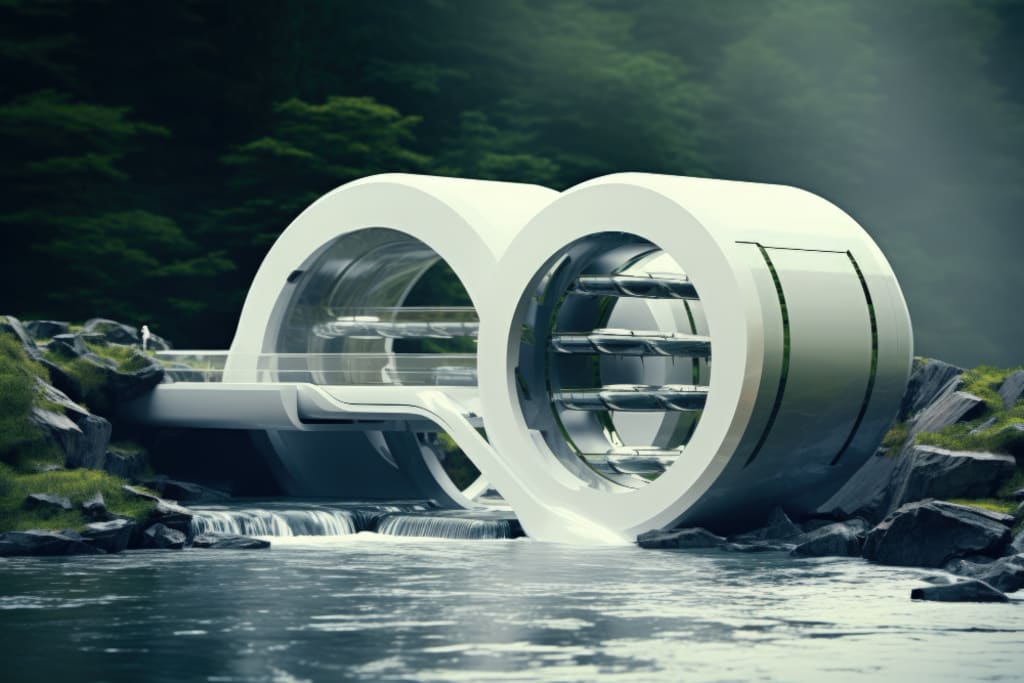
If you haven’t heard much about it yet, hyperloop is this wild but brilliant idea where people (or cargo) sit inside sleek pods that zoom through giant vacuum tubes using magnetic levitation. Because there’s almost no air resistance and no physical contact with a track, these things can hit airplane speeds — over 700 mph — without leaving the ground. Think: sci-fi subway on steroids.
I’ll admit, I was skeptical at first. I mean, it sounds like something Tony Stark would cook up after too much espresso. But then I started reading up on it — and the momentum is real.
I recently came across a report by Roots Analysis that made me stop and go, “Wait, what?” According to them, the hyperloop market is expected to grow from USD 2.58 billion in 2025 to USD 41.60 billion by 2035, with a CAGR of 32.02%. That’s not a niche idea — that’s a tidal wave. Clearly, a lot of smart people are putting serious money and brainpower behind this.
Now, let's be real: building a hyperloop isn’t as easy as laying down a couple of tracks and calling it a day. We’re talking massive infrastructure. Miles of vacuum tubes. Giant magnets. Government approvals. Safety tests. The kind of stuff that makes even billionaires sweat. And then there’s the human factor. Are people ready to ride in a sealed pod, zooming faster than a jet, inside a giant tube? I mean, I am… but I’m also the kind of person who tries every new flavor of chips at the store, no matter how weird it sounds.
Still, the progress is happening. Companies like Virgin Hyperloop, Hardt Hyperloop, and a few others are already building test tracks. Real pods have been tested — with real humans in them. Places like the UAE, India, and parts of Europe are exploring full-scale routes. This isn’t just talk anymore. It’s steel and concrete and data and contracts.
And here’s what makes it exciting for the rest of us — it’s not just about moving people. Hyperloop could totally change the way we ship goods, too. Imagine ordering something from across the country and getting it in a couple of hours, not days. That could totally reinvent supply chains, logistics, even how businesses decide where to set up shop.
Plus, it’s designed to be electric and energy-efficient. No burning fossil fuels, no noisy engines. Just smooth, clean travel. In an era where climate anxiety is very real, that’s a big deal.
From where I’m sitting, hyperloop tech feels like one of those once-in-a-generation leaps — like the jump from flip phones to smartphones. It’s not just faster. It changes the whole experience. Shorter travel times, fewer delays, less pollution, and who knows — maybe even a decent cup of coffee on board.
Look, I know this won’t happen overnight. But a few years from now? I wouldn’t be shocked if we’re casually hopping into vacuum tubes to get across the state. What used to feel like science fiction is starting to feel like an inevitability.
So the next time you're stuck in traffic or sitting on a delayed train, just imagine this: floating above the ground, in a pod, no bumps, no noise, just zooming through a futuristic tube at breakneck speed — all while sipping that coffee you didn’t have to fight for.
About the Creator
Enjoyed the story? Support the Creator.
Subscribe for free to receive all their stories in your feed.
Comments
There are no comments for this story
Be the first to respond and start the conversation.