
Hydrogen Fuel Cell Vehicle Market: Driving the Future of Zero-Emission Mobility
How hydrogen technology is reshaping transportation with longer range, faster refueling, and cleaner mobility
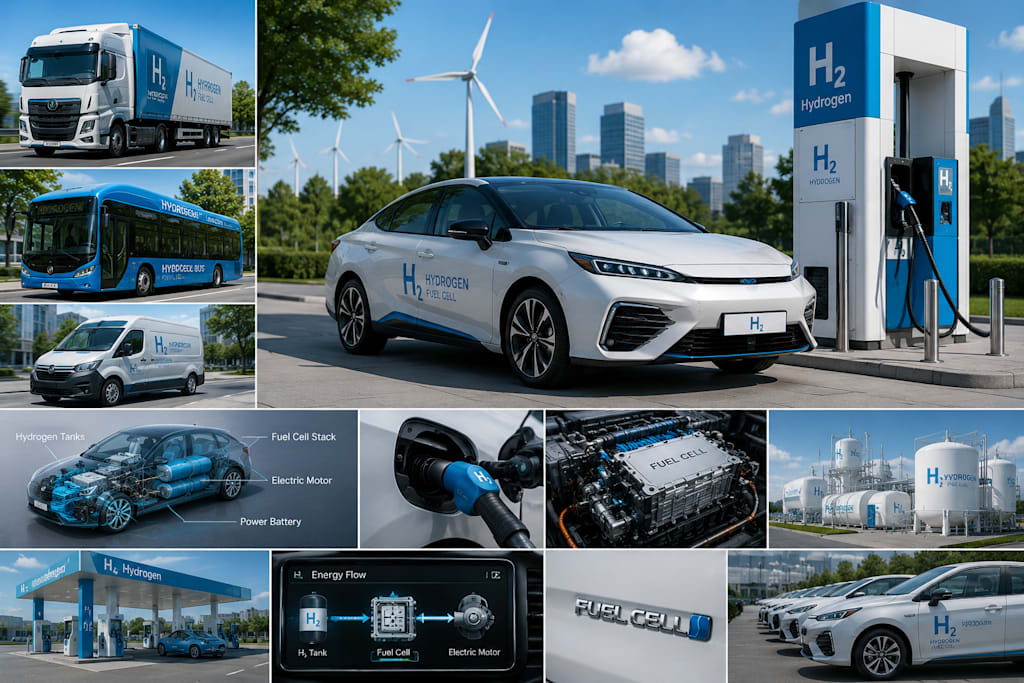
Hook Intro
A vehicle pulls into a station, refuels in just a few minutes, and continues its journey for hundreds of kilometers without emitting anything but water vapor.
For years, the conversation around clean transportation has focused on battery electric vehicles. Yet another technology is quietly gaining momentum. Hydrogen fuel cell vehicles combine the environmental benefits of electric propulsion with the convenience of rapid refueling and extended driving range.
At the center of this evolution is the Hydrogen Fuel Cell Vehicle Market, where advances in fuel cell technology, hydrogen infrastructure, and government support are accelerating the transition toward zero-emission transportation.
Why Hydrogen Fuel Cell Vehicles Matter Today
As governments and industries pursue ambitious decarbonization goals, transportation remains one of the most challenging sectors to transform. While battery electric vehicles are gaining popularity, hydrogen fuel cell vehicles offer distinct advantages for long-distance travel, commercial fleets, and heavy-duty transportation.
Hydrogen fuel cells generate electricity through an electrochemical reaction between hydrogen and oxygen, producing only water as a byproduct. This enables vehicles to deliver electric driving performance while maintaining fast refueling times and long operational ranges.
According to Mordor Intelligence, the Hydrogen Fuel Cell Vehicle Market is projected to grow from USD 4.12 billion in 2026 to USD 25.05 billion by 2031, registering a CAGR of 43.49% during the forecast period. This growth is being driven by expanding hydrogen infrastructure, supportive government policies, and increasing investments in clean mobility solutions.
Understanding Hydrogen Fuel Cell Vehicle Market Size and Share
The Hydrogen Fuel Cell Vehicle Market size is expanding as automakers, energy providers, and governments invest heavily in hydrogen ecosystems. Growing demand for sustainable transportation is creating opportunities across passenger cars, buses, trucks, and commercial fleets.
Commercial vehicles are emerging as a particularly important segment because hydrogen technology offers advantages in driving range, payload capacity, and refueling speed. Fleet operators increasingly view hydrogen as a practical solution for long-haul transportation and logistics applications.
The Hydrogen Fuel Cell Vehicle Market share is strongest in Asia-Pacific, supported by large-scale investments in hydrogen infrastructure and vehicle deployment programs. Countries such as Japan, South Korea, and China continue to lead hydrogen mobility adoption through supportive policies and long-term hydrogen roadmaps.
Hydrogen Fuel Cell Vehicle Market Trends Driving the Industry
Several Hydrogen Fuel Cell Vehicle Market trends are shaping the future of mobility.
Expanding hydrogen refueling infrastructure is improving accessibility and convenience.
Falling fuel cell system costs are supporting commercial adoption.
Government incentives are accelerating hydrogen mobility projects worldwide.
Heavy-duty transportation is emerging as a major application area for fuel cell vehicles.
Green hydrogen production is gaining momentum alongside renewable energy expansion.
These developments are helping hydrogen vehicles move beyond pilot projects and into broader commercial deployment across multiple transportation segments.
Why Industry Is Investing in Hydrogen Mobility
One of hydrogen's biggest advantages is its ability to combine long driving range with rapid refueling. This makes it particularly attractive for commercial transportation where vehicle downtime directly impacts operational efficiency.
Unlike battery electric vehicles that may require extended charging periods, hydrogen-powered vehicles can be refueled within minutes. This capability is especially valuable for logistics companies, public transportation operators, and freight carriers.
These advantages continue to strengthen the broader Hydrogen Fuel Cell Vehicle Market analysis, where industry stakeholders increasingly view hydrogen as a complementary technology alongside battery electrification.
Challenges Facing the Industry
Despite significant growth potential, several challenges remain. Hydrogen refueling infrastructure remains limited across many regions, creating barriers to widespread adoption.
The cost of fuel cell systems and hydrogen production also remains relatively high compared to conventional vehicle technologies. Building a complete hydrogen ecosystem requires substantial investments in production, storage, transportation, and refueling networks.
Competition from rapidly advancing battery electric vehicles presents another challenge as automakers evaluate multiple pathways toward zero-emission mobility.
Hydrogen Fuel Cell Vehicle Market Forecast and the Road Ahead
The Hydrogen Fuel Cell Vehicle Market forecast points toward rapid expansion as governments strengthen hydrogen strategies and industries pursue ambitious carbon reduction targets.
Future growth is expected to be supported by declining fuel cell costs, increasing availability of green hydrogen, and expansion of hydrogen transportation corridors. Advances in fuel cell durability, efficiency, and hydrogen storage technologies will further improve the economics of hydrogen-powered transportation.
As infrastructure matures and production scales increase, hydrogen fuel cell vehicles are expected to play a larger role in the global transition toward sustainable mobility.
Final Thought
The future of transportation may not depend on a single technology. Instead, it may be shaped by multiple solutions working together to reduce emissions and improve efficiency.
Hydrogen fuel cell vehicles offer a compelling combination of clean energy, long range, and rapid refueling. As the industry continues to evolve, hydrogen is positioning itself as a key part of the next generation of mobility.
Would you consider driving a hydrogen-powered vehicle, or do you believe battery electric vehicles will dominate the future of transportation?
About the Creator
Enjoyed the story? Support the Creator.
Subscribe for free to receive all their stories in your feed.
Comments
There are no comments for this story
Be the first to respond and start the conversation.