
Hybrid Aircraft Market: The Race to Zero Emissions
How hybrid propulsion is redefining the future of aviation
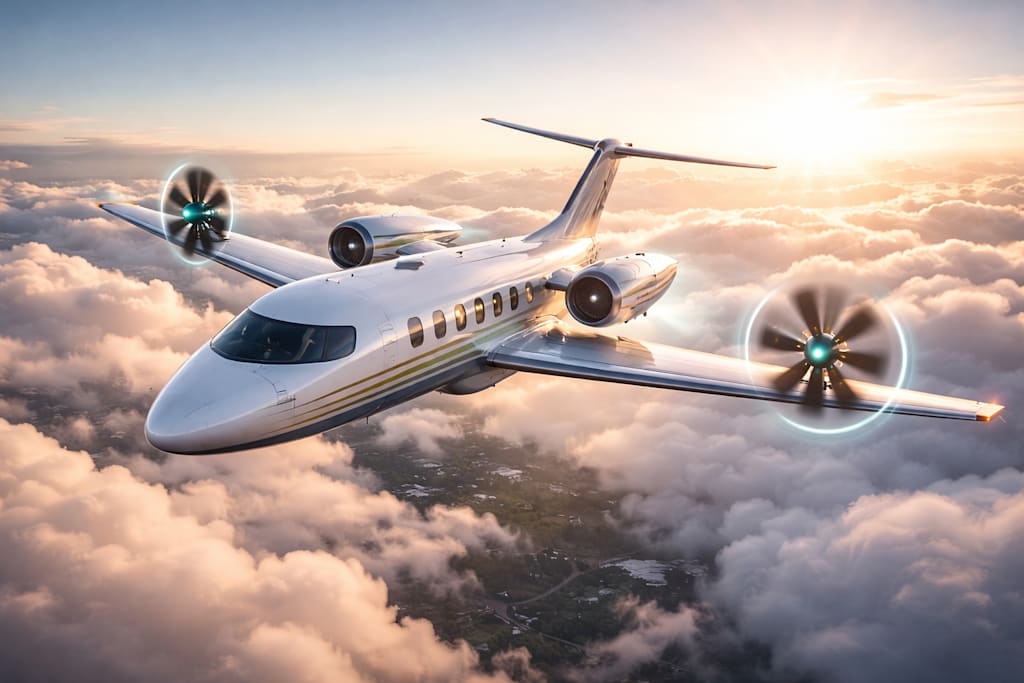
The aircraft lifts off quietly, almost unexpectedly. The roar of traditional engines is softened, replaced by a smoother, more controlled ascent. Beneath the wings, a new kind of power system is at work, blending fuel and electricity into a single, efficient force.
This is not science fiction. It is the reality shaping the future of aviation. At the center of this transformation is the Hybrid Aircraft Market, where sustainability, innovation, and performance converge to redefine how we fly.
Why Hybrid Aircraft Are Gaining Momentum
Air travel is under pressure to reduce emissions without compromising performance. Airlines, manufacturers, and regulators are all searching for solutions that balance efficiency with environmental responsibility.
Hybrid aircraft combine traditional fuel engines with electric propulsion systems. This allows reduced fuel consumption, lower emissions, and quieter operations. These advantages make hybrid systems especially attractive for short haul and regional flights.
According to Mordor Intelligence, the Hybrid Aircraft Market size was valued at USD 2.92 billion in 2025 and is expected to grow from USD 3.87 billion in 2026 to USD 15.76 billion by 2031, advancing at a remarkable 32.44 percent CAGR during the forecast period.
Inside the Hybrid Aircraft Market Structure
The Hybrid Aircraft industry includes multiple aircraft types and propulsion configurations designed for different use cases.
Regional transport aircraft held the largest Hybrid Aircraft Market share at 41.82 percent in 2025, as they are easier to adapt with hybrid systems and serve short distance routes efficiently.
Advanced air mobility platforms such as air taxis and eVTOL aircraft are the fastest growing segment, expected to expand at around 39.58 percent CAGR, reflecting rising interest in urban air mobility solutions.
By operation type, piloted aircraft dominate with 74.68 percent share, while autonomous systems are growing rapidly as technology and regulations evolve.
Parallel hybrid propulsion currently leads with 50.76 percent share, as it allows easier integration with existing aircraft systems, while series hybrid systems are gaining momentum due to efficiency improvements.
Trends Driving Hybrid Aviation
Several Hybrid Aircraft Market trends are shaping the future of aviation.
• Strong push for zero emission aviation driven by global regulations
• Advances in battery energy density improving aircraft range and efficiency
• Growth of urban air mobility and short haul connectivity
• Increasing investment from both aerospace giants and startups
Technological breakthroughs are a major catalyst. Improvements in battery density and electric propulsion systems are making hybrid aircraft more viable for commercial use.
At the same time, governments and regulatory bodies are encouraging low emission aviation, accelerating funding and development.
Regional Momentum and Market Dynamics
The Hybrid Aircraft Market analysis shows clear regional trends shaping adoption.
North America leads with about 40.12 percent market share, supported by strong aerospace infrastructure and investment in electrified propulsion programs.
Asia Pacific is the fastest growing region with a 35.72 percent CAGR, driven by expanding aviation networks and large scale investments in next generation air mobility.
Europe also plays a critical role through policy support, research funding, and early adoption of sustainable aviation initiatives.
These regional dynamics highlight a global race toward cleaner and more efficient air travel.
Challenges on the Path to Adoption
Despite rapid growth, the hybrid aircraft market faces challenges.
Battery weight and energy limitations remain key technical barriers. Certification frameworks are still evolving, making regulatory approval complex. Infrastructure for charging and maintenance also needs further development.
However, continuous research and investment are addressing these challenges, paving the way for broader adoption in the coming years.
The Hybrid Aircraft Market Forecast
The Hybrid Aircraft Market forecast points to one of the fastest growing segments in aviation. As technology matures and regulatory frameworks stabilize, hybrid aircraft are expected to move from experimental prototypes to commercial deployment.
Future developments will focus on improving battery efficiency, reducing system weight, and integrating hybrid propulsion into larger aircraft categories.
The long term vision is clear. Hybrid aircraft are not just an innovation. They are a stepping stone toward fully electric and sustainable aviation.
About the Creator
Enjoyed the story? Support the Creator.
Subscribe for free to receive all their stories in your feed.
Comments
There are no comments for this story
Be the first to respond and start the conversation.