
HSBC’s AI-Driven Restructuring: Transformation and Displacement in UK Wealth Management
Sweeping Job Cuts Announced Up to 70% of Adviser Roles at Risk "Generative AI Will Destroy Certain Jobs" Shift to Digital-First Services Consultation Underway

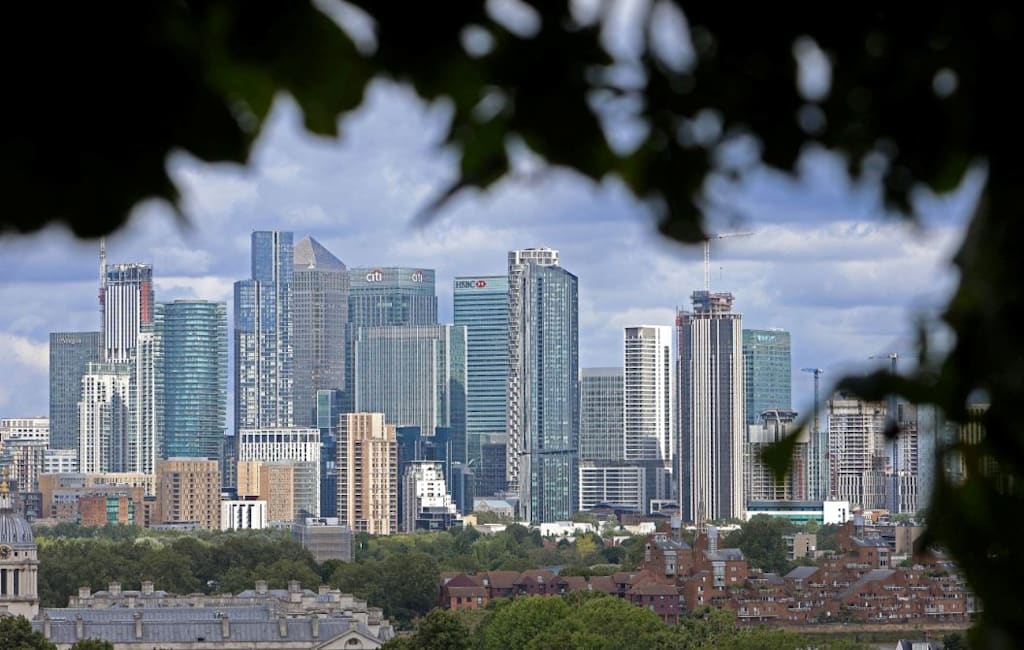
HSBC is advancing one of the most significant workforce transformations in the global banking sector, with plans to restructure its UK wealth management division through sweeping job reductions driven directly by the accelerated adoption of artificial intelligence. The Financial Times reported yesterday that the bank intends to cut roughly half of all management and specialist roles, while financial adviser positions could drop by as much as 70% — changes that will reshape how wealth advice is delivered and underscore the reality that AI is not merely augmenting work, but replacing it.
The Scale of the Restructuring
The numbers are striking. While HSBC does not disclose exact headcount figures for its UK wealth business, the division employs hundreds of relationship managers, advisers, and support staff across the country. Under the proposed plan:
Approximately 50% of management and specialist positions are set to be eliminated
Up to 70% of financial adviser roles may be removed
Affected employees are expected to depart by the end of October, following ongoing internal consultations
The consultation process is already underway. HSBC has not issued detailed breakdowns by region or seniority, nor has it confirmed whether any new roles will be created to replace those lost. A request for comment from Reuters outside business hours did not receive an immediate response. In a statement provided to the Financial Times, the bank framed the changes as evolution: “We’re continuing to evolve to deliver more digitally enabled products and journeys to support our best-in-class wealth service and meet the changing needs of our customers.”
AI as Strategy, Not Just a Tool
The restructuring is not a cost-cutting measure disguised as modernisation — it is the direct execution of a leadership vision that has been stated openly and repeatedly. Since becoming group chief executive in 2024, Georges Elhedery has positioned generative AI at the absolute centre of HSBC’s future. Speaking at the bank’s investor day in May 2026, he was unflinching: “Generative AI will destroy certain jobs.” Rather than softening the language, he urged employees to embrace change rather than resist it, framing displacement as inevitable and resistance as futile.
Under the new operating model, AI systems will take over routine client communications, portfolio monitoring, performance reporting, risk assessment, and administrative workflow tasks that have historically occupied the majority of an adviser’s working week. The bank’s logic is that technology will handle volume, consistency, and speed, freeing the remaining workforce to focus on complex, high-value, emotionally sensitive situations intergenerational wealth transfer, business succession, major life transitions, where nuance and trust remain irreplaceable. Critics, however, question whether there will be enough of these complex cases to sustain a fraction of the current workforce.
A Shift in What Wealth Management Means
For decades, wealth management has been built on relationships: knowing the client, understanding their family, their fears, their aspirations. That model is being dismantled. The emerging HSBC approach mirrors moves already underway across the industry, from private banks to retail platforms where the standard client journey becomes digital-first, AI-guided, and human-supported only at intervals.
The benefits cited are efficiency, lower costs, and greater accessibility clients will be able to get answers, updates, and recommendations instantly, without waiting for an appointment. The risks are equally clear: erosion of institutional knowledge, loss of personal connection, and a two-tier service where high-net-worth individuals retain dedicated advisers while everyone else interacts primarily with algorithms. There is also the practical concern: can AI navigate market shocks, economic uncertainty, or personal crisis with empathy and judgment?
Broader Implications Across the Sector
HSBC is not the only bank moving in this direction, but the speed, transparency, and scale of these cuts set it apart. Other institutions have tended to phase reductions gradually or attribute them to general efficiency reviews. HSBC is naming the driver explicitly AI and moving rapidly. Unions and industry bodies are likely to watch closely, as this restructuring could become a blueprint for divisions beyond the UK and beyond wealth management. If Elhedery’s vision holds, October’s departures will not be the last.
For now, the message from leadership is consistent: this is not about austerity; it is about survival. For the hundreds of staff now facing departure, the distinction may feel academic. They are the first visible cohort to bear the cost of the AI transition realising in real time that the skills they honed over years or decades are being superseded by code. And as one chapter closes, the next remains unwritten: how many of those roles will return in new forms, and who will be hired to fill them?
About the Creator
Mark Lim
Hi I am mark an automotive student and a car, tech and food enthusiast ! Im gonna try and post daily & hope you enjoy what I write and do share my page with people you know. I would gladly appreciate it! Cheers
Enjoyed the story? Support the Creator.
Subscribe for free to receive all their stories in your feed.
Comments
There are no comments for this story
Be the first to respond and start the conversation.