
How to Style a Black Dress for a Party: The Complete Guide
To style a black dress for a party, let the occasion drive the accessories, fabric, and shoe choice.


To style a black dress for a party, let the occasion drive the accessories, fabric, and shoe choice. A sequin or satin LBD with statement earrings and heels reads cocktail-ready. A chiffon midi with delicate jewelry suits a garden party. A fitted mini with bold makeup works for a night out. The dress is always the canvas; styling does the rest.
The little black dress has been solving outfit problems for nearly a century. Its appeal has not changed. What has stayed remarkably static is the way most women style it for a party: the same heel, the same earrings, the same result every time. This guide covers the other versions. Here is how to style a black dress for a party in a way that actually reads the room and makes the outfit feel intentional.
Why the Black Dress Works and Where It Can Go Wrong
Black is not a passive color. It absorbs, defines, and creates contrast with whatever surrounds it. Styled with intention, it owns the room. Styled thoughtlessly, it reads as a non-decision rather than a considered one.
The Case for Black at a Party
Black photographs well in almost every lighting condition, which matters more than most guests account for when getting dressed. It is also the one color that can read across formality tiers simultaneously: a black dress at a cocktail party fits, a black dress at a casual birthday dinner fits too. The styling is what differentiates those two occasions, and that is precisely what gives the LBD its value. It does not eliminate decisions; it concentrates them in the right places.
The Mistake That Makes It Disappear
The most common failure mode for a black dress at a party is not looking wrong. It is looking like nothing in particular. A simple black dress styled with matte black accessories and matte black shoes reads as an absence of effort rather than a deliberate monochromatic statement. The dress needs something to work against: a texture contrast, a color in the accessories, or an architectural choice in the silhouette. Without that contrast, the eye moves on.
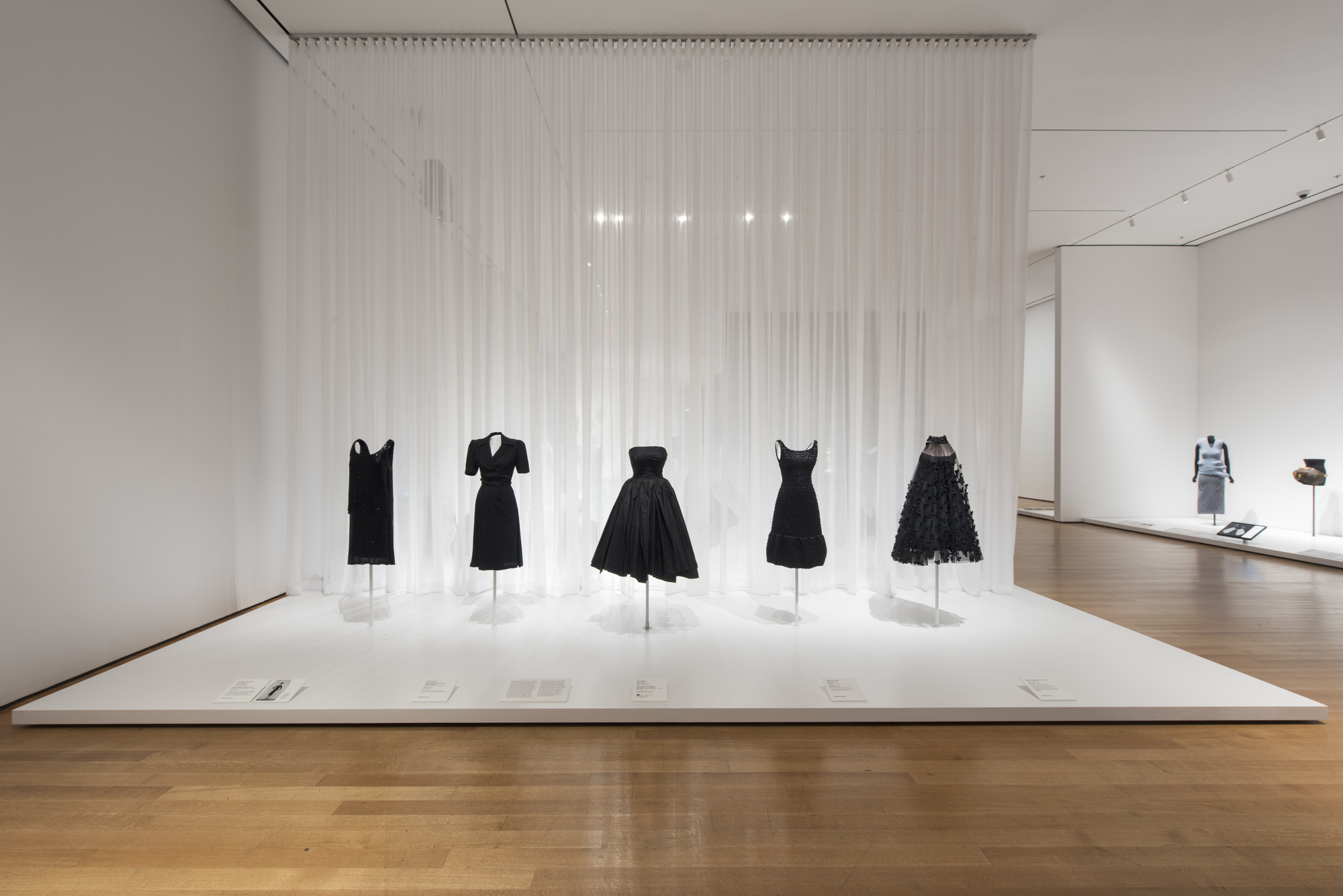
Style the Black Dress for the Party Type, Not the Other Way Around
The party is the brief, not the dress. The silhouette and fabric of the LBD narrow the approach, but the occasion determines the finish. Here are the four most common party types and the styling logic that works for each.
Birthday Dinners and Intimate Gatherings
A midi slip dress or a wrap in satin is the most reliable version of a black dress for a dinner party or birthday celebration in a restaurant setting. It reads dressed-up without the self-consciousness of a gown. The accessories should feel personal rather than editorial: a gold chain, a ring stack, small hoops rather than dramatic drops. Shoes that close the formality loop without dominating the look, such as a block heel, a strappy mule, or a slingback in a neutral, keep everything composed without feeling overdone.
Cocktail Events and Semi-Formal Parties
At a cocktail party, the black dress can carry more architectural interest: a column cut in structured crepe, a fit-and-flare in sequin, or an asymmetric neckline in matte satin all read correctly at this formality level. This is also the tier where a statement accessory earns its place. A single bold earring, whether a sculptural drop or a long chandelier in a warm metal, does more work than a full jewelry set. The bag should be small and structured. A clutch in a metallic or a compact frame bag signals that the look was considered from start to finish.
Night Out and Club Settings
At a night out, the black dress moves toward its most expressive versions: a fitted mini with a cutout detail, a backless silhouette in jersey, a bodycon with a slit. The styling logic inverts here; the dress does the heavy lifting and the accessories step back. Minimal jewelry, a small bag, and a shoe that adds height without competing let the silhouette speak. Those looking for black dress options across this full range can browse the dresses for women collection at Taynort, which carries fitted minis, midi slips, and open-back styles suited to different party settings.
Styling the Black Dress by Party Type
Fabric and accessory tone are the two levers that shift a black dress from one party register to another. The silhouette sets the base; these two decisions determine the finish.
Party Type
Best Silhouette
Fabric
Accessories
Shoes
Birthday dinner
Midi slip or wrap
Satin, crepe
Gold chain, small hoops
Block heel or mule
Cocktail party
Column or fit-and-flare
Sequin, crepe
Statement earring, clutch
Pointed-toe pump
Night out
Fitted mini, open back
Jersey, lace
Minimal, small bag
Stiletto or block heel
Garden party
Flowy midi or off-shoulder
Chiffon
Layered delicate chains
Wedge or flat sandal
Casual house party
Sundress or shirt-dress
Cotton, jersey
Hoop earrings, relaxed tote
Clean sneaker or slide
Three Styling Decisions That Change the Whole Look
Once the occasion is established, three decisions determine whether a black dress lands or disappears. These are not finishing details; they are the structural elements that make the look work.
Texture and Fabric Contrast
A plain matte black dress paired with matte black accessories and matte black shoes disappears into itself. The solution is contrast, not in color but in texture. Velvet against skin reads rich. Sequin against a matte bag creates visual depth. A sheer overlay on a structured base adds dimension. Even within an all-black look, layering a lace detail against a crepe base or a satin shoe against a jersey dress introduces the variation the eye needs to register the outfit as intentional. Fabric contrast is the single most underused tool in LBD styling.
One Anchor Accessory, Everything Else Edited
The most consistently successful approach to accessorizing a black dress for a party is to identify one anchor piece and edit everything else in service of it. If the earring is the anchor, the necklace goes. If the bag is the statement, the jewelry scales back. If the shoe carries color or texture, the rest of the look stays clean. A black dress can support a bold accessory more confidently than almost any other garment, but only when that boldness is isolated. Competing bold pieces on a black dress read as indecision, not maximalism.
Shoe Direction as a Formality Signal
Footwear reads as a register signal before anything else in the outfit. A pointed-toe pump tells the room this is a cocktail event. A strappy heel tells it this is a celebration. A clean white sneaker tells it this is a casual gathering with a fashion edge. Each of these readings is valid at the right party; the mistake is wearing the wrong shoe signal for the occasion, not the wrong shoe aesthetically. Those who want to explore full outfit combinations across different black dress silhouettes will find Taynort a useful reference, as the site carries evening and party styles organized by occasion that make it easier to match the dress to the right event register.
Hair and Makeup as the Final Register Signal
A black dress at a party is finished by the face and hair as much as by the accessories. The same midi dress reads entirely differently under a bold red lip than it does under a dewy no-makeup look, and intentionally so.
When the Lip Does the Work
A statement lip in red, berry, dark plum, or bright coral is the most efficient way to elevate a black dress without changing the accessories. It shifts the register upward, adds color without disrupting the monochromatic dress, and photographs cleanly. When the lip is the statement, the jewelry stays small, the skin reads polished rather than full-coverage, and the hair works best off the face: a low bun, a sleek ponytail, or an updo that gives the lip room to lead.
When the Hair Does the Work
An upswept or architecturally styled hairstyle adds formality to a black dress faster than almost any accessory. It frames the face, elongates the neck, and communicates that the look was deliberately finished. For more casual parties, loose but defined waves or a half-up style soften the read without undoing it. The combination that consistently flatters a black dress least is long, flat, unstyled hair against a simple silhouette. Both elements are inert, and the look reads as assembled rather than finished.
Conclusion
Styling a black dress for a party is ultimately one skill: reading the room before getting dressed. The dress is already doing its job, timeless, versatile, and flattering across every silhouette. The accessories, fabric, shoes, and makeup are the decisions that tell the room which party you are going to. Get those right and the black dress handles the rest.
About the Creator
Enjoyed the story? Support the Creator.
Subscribe for free to receive all their stories in your feed.
Comments
There are no comments for this story
Be the first to respond and start the conversation.