
How to Start a Business in Dubai as a Foreigner – Step-by-Step Guide
Business in Dubai as a Foreigner – Step-by-Step Guide
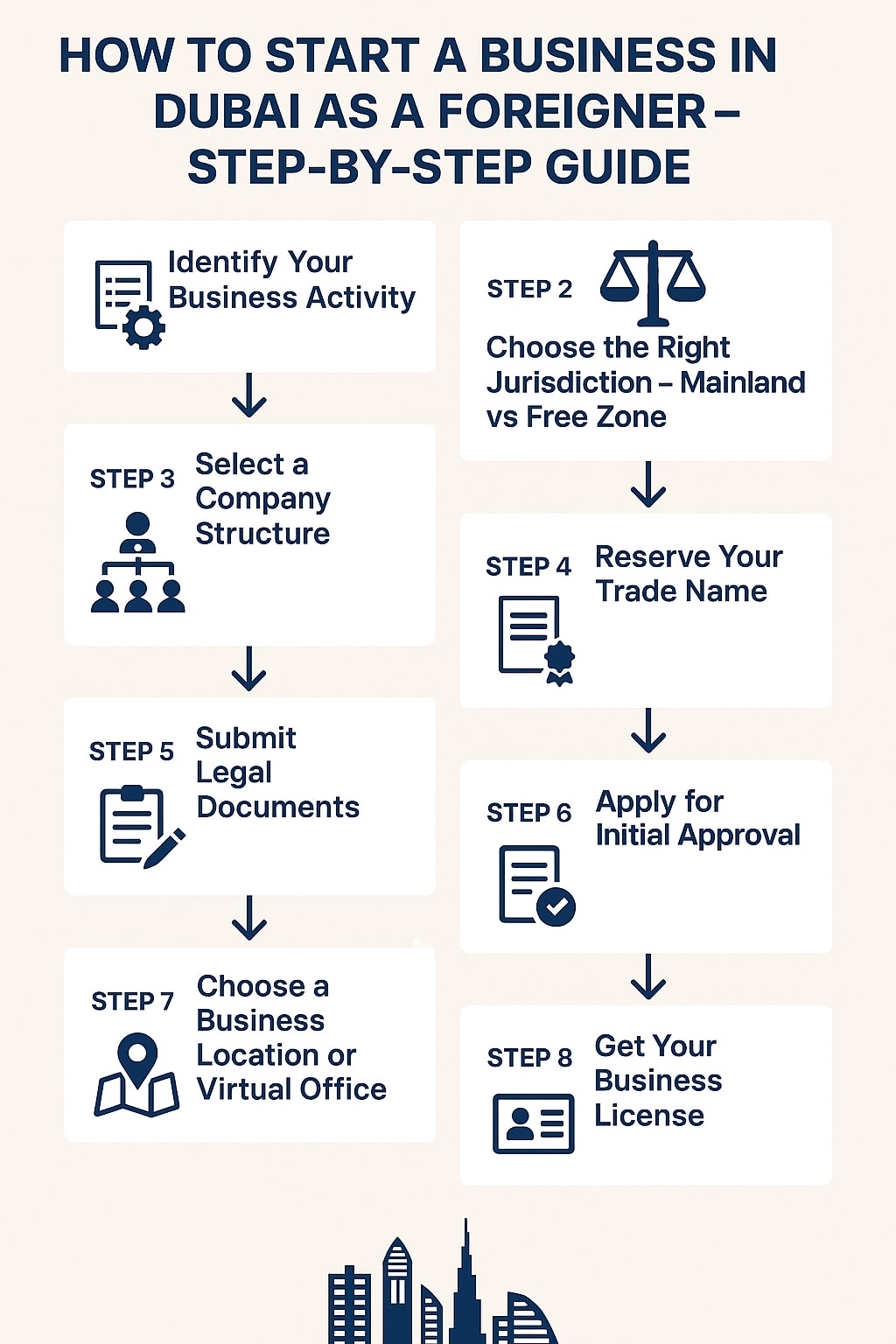
Dubai has emerged as a global hub for entrepreneurs and foreign investors due to its strategic location, tax-friendly policies, and pro-business ecosystem. If you're a non-resident or foreign national looking to start a business in Dubai, the process may seem complex—but with the right guidance, it's entirely achievable. This comprehensive guide breaks down everything you need to know step-by-step, ensuring that you can navigate the process with confidence. Whether you're setting up a company from India, the UK, or anywhere else in the world, Dubai offers a welcoming landscape for expats and international founders. From understanding foreign ownership rules to choosing between mainland and free zones, this blog will walk you through every detail of company formation in Dubai for expats. So, if you've ever wondered “Can I start a business in Dubai without living there?”, or “Do I need a local sponsor in Dubai?”, you’ll find your answers right here.
Why Foreigners Choose to Start Business in Dubai
Dubai is one of the most foreigner-friendly business jurisdictions globally. The UAE government has introduced reforms that make it easier than ever for expats to start a business without facing significant restrictions. From the 100% foreign ownership decree in 2024 to robust digital infrastructure for remote company registration, Dubai is aligned with international business standards. For foreign entrepreneurs, benefits include zero personal and corporate tax (under certain thresholds), full repatriation of profits, and a wide array of industries to choose from.
Moreover, Dubai is home to multiple free zones tailored specifically for foreign investors. These free zones offer simplified licensing procedures, access to global markets, and a wide range of support services. Many foreigners also choose Dubai because of its safety, cosmopolitan lifestyle, and strong legal framework that protects investors’ rights. The process to register a company in Dubai online for non-residents is smoother than ever, making it ideal for digital nomads and entrepreneurs operating globally.
Step-by-Step Business Setup in Dubai for Foreigners
Step 1: Identify Your Business Activity
Before you can open a company in Dubai as a non-resident, you must choose a business activity aligned with your goals. Dubai's Department of Economic Development (DED) lists thousands of permitted activities, including commercial, industrial, professional, and tourism-related categories. Your chosen activity determines license type, location, and compliance requirements.
Tip: Consulting a business setup advisor in Dubai can help identify the right activity based on market demand, scalability, and cost-efficiency.
Step 2: Choose the Right Jurisdiction – Mainland vs Free Zone
One of the most critical decisions is selecting where to register your company: Dubai mainland or one of its many free zones. Each has distinct rules:
Dubai Mainland:
- Offers access to the local UAE market.
- Allows flexible office locations and unlimited visas.
- Requires a UAE national service agent for some business types.
Free Zone:
- Allows 100% foreign ownership.
- No requirement to partner with a local sponsor.
- Offers industry-specific support and simplified procedures.
The choice depends on your target audience, operational scope, and long-term goals. For example, if your business deals directly with the UAE local market, a mainland setup may be ideal. However, if you prefer international trading and want full ownership, a free zone may be a better fit.
Step 3: Select a Company Structure
Dubai offers multiple company formation structures for expats. The most common include:
- LLC (Limited Liability Company): Ideal for medium to large-scale businesses. Previously required a UAE sponsor, but now allows 100% foreign ownership in many sectors.
- Sole Establishment: Perfect for freelancers and solo entrepreneurs in professional services.
- Branch of a Foreign Company: Allows your existing foreign company to establish a local presence.
- Free Zone Company (FZC/FZE): Best for international businesses operating from within the UAE.
Choosing the right structure impacts your visa allocation, liability, and business activity scope. Many foreign investors opt for LLC formation in Dubai due to its flexibility and credibility.
Step 4: Reserve Your Trade Name
Once your business structure is clear, you need to reserve a trade name with the DED or respective free zone authority. The name should comply with UAE naming conventions—avoid religious or political references, offensive words, or names already in use.
The trade name is more than a formality; it reflects your brand’s identity in the UAE. Most authorities allow you to check name availability and reserve it online, even from abroad. This step ensures you can proceed with document submission without delay and establishes the foundation of your business presence.
Step 5: Submit Legal Documents
At this stage, you'll need to prepare and submit the required documents to the respective authority. For foreigners starting a business in Dubai, the standard documentation includes:
- Passport copies of all shareholders.
- Passport-sized photographs.
- Entry stamp or visa copy (if applicable).
- Trade name reservation certificate.
- Initial approval form.
- Memorandum of Association (for LLCs).
Lease agreement or virtual office contract.
Depending on your chosen jurisdiction (mainland or free zone), additional documents may be requested. If you're opening the company remotely, many authorities accept e-signatures or notarized copies sent via courier.
Step 6: Apply for Initial Approval
Initial approval is the government’s green light allowing you to move forward with your business setup. It confirms that the proposed business activity is acceptable and there are no objections to your registration.
This approval is mandatory before renting office space, signing the Memorandum of Association, or completing licensing procedures. For foreign entrepreneurs, especially those setting up from abroad, getting this step right is essential to avoid rejection or delays. Initial approval is typically granted quickly once all required documents are submitted correctly.
Step 7: Choose a Business Location or Virtual Office
Your office location plays a role in visa quotas, operational permissions, and credibility. If you’re starting a business in a Dubai free zone, the authority usually offers tailored office packages—from flexi-desks to executive offices.
In the mainland, a physical tenancy contract is often needed for license issuance. For foreign investors managing remotely, virtual office options are increasingly popular, offering compliance without the need to be physically present. Be sure to select a location aligned with your jurisdiction and business activity.
Step 8: Get Your Business License
With your documents approved and office secured, the final step is obtaining your business license. The license type (commercial, professional, industrial, or tourism) depends on your activity. Business licenses in Dubai for expats can be obtained through DED (for mainland) or the relevant free zone authority.
This license legally enables you to operate in the UAE, open a business bank account, hire staff, and access corporate services. Many foreigners can now register and receive a license completely online, thanks to improved digital systems by UAE authorities.
Step 9: Apply for Investor Visa (If Needed)
If you plan to reside in Dubai, applying for a foreign investor visa is crucial. It allows you to stay in the country, open bank accounts, and sponsor dependents. Visa duration typically ranges from 1 to 10 years, depending on the type and investment scale.
While it’s not mandatory to live in Dubai to run your business, having a visa gives you flexibility and access to more benefits. Requirements often include a valid trade license, medical test, Emirates ID, and health insurance. Many free zones simplify the visa application by integrating it into their business setup packages.
Documents Checklist for Foreign Entrepreneurs in Dubai
To streamline the business setup process, here’s a quick checklist of documents often required:
- Valid passport (with minimum 6 months validity)
- Personal photograph (white background)
- Proof of residence address in home country
- Trade name reservation certificate
- Initial approval letter
- Business plan (in some cases)
- Lease agreement or virtual office contract
- MOA (for LLCs)
- Entry permit/visit visa (if already in Dubai)
Double-check with your setup advisor or chosen free zone, as some may have unique documentation needs depending on the activity or business type.
Pros and Cons of Starting a Business in Dubai as a Foreigner
Pros:
- 100% foreign ownership allowed in many sectors
- No personal income tax or capital repatriation restrictions
- Strategic location for global trade and logistics
- Fast, digital-friendly company registration process
- Diverse workforce and expat-friendly culture
Cons:
- Regulatory changes may impact some sectors
- High competition in saturated industries
- Learning curve for non-residents unfamiliar with UAE legal norms
- Office space costs may vary significantly
- Some activities may still require special approvals
FAQs – Start Business in Dubai as Foreigner
Can I start a business in Dubai without living there?
Yes. Many jurisdictions now allow remote company setup, including online registration, license issuance, and digital signatures for non-residents.
Do foreigners need a local sponsor in Dubai?
As of 2024, many business activities no longer require a local sponsor. Foreigners can now enjoy 100% ownership under the new UAE decree, especially in free zones and selected mainland categories.
What are the steps to register a company in Dubai from India or the UK?
The steps remain the same globally: select activity, choose jurisdiction, reserve trade name, prepare documents, apply for approval, lease office, get license, and apply for visas if needed.
What is the difference between free zone and mainland for foreigners?
Mainland allows operations within the UAE market and more visa quotas. Free zones offer 100% foreign ownership, sector-focused benefits, and no local sponsorship.
Is online company registration in UAE possible for non-residents?
Absolutely. Many authorities now support online application portals, e-signatures, and courier submission of documents for expats and non-resident founders.
What documents do I need to open a company in Dubai?
Typical documents include passport copies, trade name certificate, lease contract, MOA, and initial approval from DED or free zone.
How can I get 100% foreign ownership in Dubai?
Choose a business activity eligible under the 2024 decree or set up in a free zone that allows full foreign ownership without local sponsors.
What are the requirements for a UAE investor visa?
Valid trade license, proof of ownership, passport copy, medical test, Emirates ID application, and health insurance are generally required.
Final Thoughts: Why Now is the Right Time
Dubai's economic policies are evolving to support foreign entrepreneurship. Whether you're an established business owner or a first-time founder, the opportunity to start a business in Dubai as a foreigner has never been more accessible. With digital processes, investor-friendly policies, and strong legal protections, setting up your company here is not just a dream—it’s a strategic move for global success.
About the Creator
Business Setup Dubai
Starting your own company in Dubai isn’t just a dream—it’s easier than ever before. With fast-tracked approvals, minimal red tape, and world-class infrastructure,
Enjoyed the story? Support the Creator.
Subscribe for free to receive all their stories in your feed.
Comments
There are no comments for this story
Be the first to respond and start the conversation.