
How to Launch a Delivery Business with a White Label Delivery App
White Label Delivery Apps

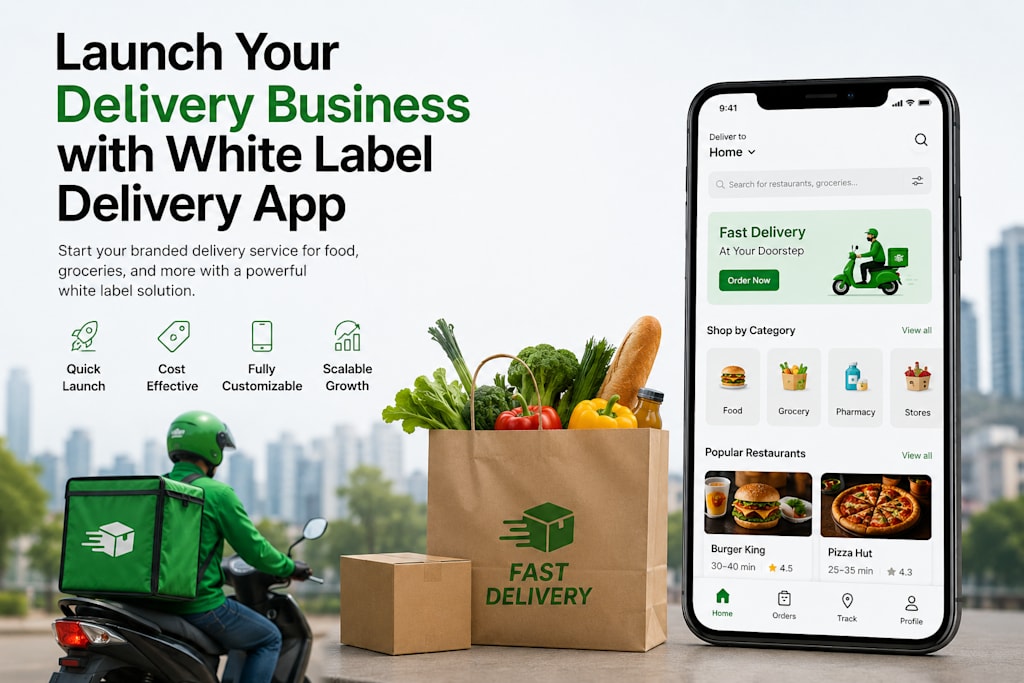
The delivery industry has experienced remarkable growth over the last decade. Consumers now expect fast, convenient, and on-demand delivery services for food, groceries, medicines, retail products, and other essentials. This growing demand has created countless opportunities for entrepreneurs and businesses looking to enter the market.
However, developing a delivery platform from scratch requires significant investments in technology, design, testing, and maintenance. This is where a White Label Delivery App becomes a practical and cost-effective solution. It allows businesses to launch their delivery services quickly with pre-built technology, customizable features, and proven business models.
Whether you want to start a food delivery platform, grocery delivery marketplace, or multi-service logistics business, white-label technology can help you enter the market faster while reducing development risks and costs.
Understanding How a White Label Delivery App Simplifies Business Launches
A White Label Delivery App is a ready-made delivery software solution that businesses can purchase, customize, and launch under their own brand identity. Instead of spending months or years building technology from the ground up, entrepreneurs can focus on customer acquisition, partnerships, and operations.
These platforms typically include customer applications, delivery driver applications, merchant dashboards, admin panels, payment integrations, and order management systems. Since the core infrastructure is already developed and tested, businesses can significantly reduce their time-to-market.
The biggest advantage is that companies gain access to enterprise-level features without investing heavily in software development resources.
Why Entrepreneurs Are Choosing White Label Apps for Sale Instead of Custom Development
Many startups struggle with limited budgets and tight launch timelines. Developing a delivery application from scratch involves hiring developers, designers, QA specialists, project managers, and DevOps engineers.
This process can become expensive and time-consuming.
By choosing white label apps for sale, businesses can access ready-to-launch technology that has already been tested in real-world environments. Some major benefits include:
Faster Market Entry
Businesses can launch within weeks instead of waiting several months for development.
Lower Initial Investment
The cost of purchasing and customizing a ready-made platform is often much lower than building a new application from scratch.
Reduced Technical Risks
Established white-label solutions have already undergone extensive testing and optimization.
Scalability
Most solutions are designed to support growing customer bases, increasing orders, and expanding delivery networks.
Branding Flexibility
Businesses can customize logos, colors, themes, and workflows to create a unique brand experience.
Identifying the Right Delivery Business Model Before Launching
Before investing in technology, entrepreneurs should determine which delivery business model aligns with their goals and target market.
Restaurant Delivery Marketplace
This model connects customers with local restaurants through a single platform. Revenue is typically generated through commissions, delivery fees, and promotional listings.
A white label food delivery app is particularly suitable for entrepreneurs targeting this market.
Grocery Delivery Platform
Consumers increasingly prefer online grocery shopping because of convenience and time savings. A white label grocery delivery app allows businesses to partner with supermarkets, local stores, and specialty retailers.
Hyperlocal Delivery Service
Hyperlocal delivery focuses on transporting goods within a specific geographic area. This can include medicines, flowers, electronics, and everyday essentials.
Multi-Vendor Delivery Marketplace
This model combines multiple categories under one platform. Customers can order food, groceries, pharmacy products, and retail items from a single application.
Dedicated Logistics Service
Some businesses focus exclusively on last-mile delivery and logistics support for local merchants and eCommerce stores.
Conducting Market Research to Build a Sustainable Delivery Business
Launching a delivery company without understanding market demand can result in poor customer acquisition and low profitability.
Market research should focus on:
- Competitor analysis
- Consumer purchasing behavior
- Delivery preferences
- Geographic demand
- Pricing expectations
- Vendor opportunities
- Delivery challenges
Understanding these factors helps entrepreneurs position their business effectively and identify gaps in the market.
Selecting the Best White Label Delivery App for Your Business Goals
Not all delivery platforms offer the same features and scalability. Choosing the right solution is critical for long-term success.
When evaluating a White Label Delivery App, consider the following factors:
User-Friendly Customer Experience
The application should provide intuitive navigation, easy ordering, and seamless checkout processes.
Real-Time Tracking Capabilities
Customers increasingly expect visibility into their delivery status. Real-time GPS tracking improves transparency and trust.
Vendor Management System
Merchants should be able to manage menus, inventory, pricing, and order fulfillment efficiently.
Driver Application Features
Delivery personnel should have access to route optimization, order management, earnings tracking, and delivery confirmations.
Advanced Analytics
Business owners require actionable insights into sales performance, customer behavior, and operational efficiency.
Multi-Payment Support
Support for digital wallets, credit cards, debit cards, and online banking improves customer convenience.
Scalability and Future Growth
The platform should support expansion into new locations and service categories without major technical limitations.
Building a Strong Brand Identity Around Your Delivery Platform
Technology alone does not guarantee success. A recognizable and trustworthy brand helps businesses attract customers and retain them over time.
Brand development should include:
- Professional logo design
- Consistent visual identity
- Clear value proposition
- Reliable customer support
- Positive user experience
- Strong online presence
A branded White Label Delivery App allows businesses to compete with larger delivery companies while maintaining complete ownership of their customer relationships.
Partnering with Merchants and Vendors to Expand Service Coverage
A delivery platform's success often depends on the quality and quantity of participating vendors.
Businesses should focus on building partnerships with:
- Restaurants
- Grocery stores
- Pharmacies
- Convenience stores
- Specialty retailers
- Local businesses
Providing vendors with transparent commission structures and reliable operational support can encourage long-term collaboration.
Setting Up Efficient Delivery Operations and Fleet Management
Delivery performance directly impacts customer satisfaction.
Businesses must establish clear operational processes for:
Order Assignment
Orders should be assigned automatically to available drivers based on proximity and workload.
Route Optimization
Efficient routes reduce delivery times and fuel costs.
Driver Management
Businesses should monitor driver performance, availability, and customer ratings.
Delivery Verification
Proof-of-delivery systems help prevent disputes and improve accountability.
Customer Communication
Automated notifications keep customers informed throughout the delivery journey.
Developing a Revenue Model That Supports Long-Term Growth
A profitable delivery business typically relies on multiple revenue streams.
Common monetization methods include:
Delivery Charges
Customers pay a fee for each completed order.
Vendor Commissions
Businesses earn a percentage from every transaction completed through the platform.
Subscription Plans
Premium memberships can offer free deliveries, discounts, and exclusive benefits.
Advertising Opportunities
Vendors can pay for featured placements and promotional visibility.
Surge Pricing
Additional fees can be applied during peak demand periods.
Combining multiple revenue streams can improve profitability and business sustainability.
Leveraging Digital Marketing Strategies to Attract Customers
Even the best delivery platform requires effective marketing to generate users and orders.
Businesses should invest in:
Search Engine Optimization
SEO helps improve online visibility and organic traffic.
Social Media Marketing
Platforms like Instagram, Facebook, and LinkedIn can help build brand awareness.
Influencer Partnerships
Local influencers can introduce the platform to new audiences.
Referral Programs
Customer referral incentives encourage organic growth.
Email Marketing
Personalized campaigns can increase customer retention and repeat purchases.
Paid Advertising
Targeted campaigns can accelerate customer acquisition during the launch phase.
Expanding Beyond Food Delivery into Multiple Service Categories
Many successful delivery businesses start with a single niche and gradually expand their offerings.
For example, a business may launch with a white label food delivery app and later add grocery, pharmacy, and retail delivery services.
Similarly, companies operating a white label grocery delivery app can diversify into convenience store deliveries, household essentials, and hyperlocal logistics.
This expansion strategy helps increase revenue opportunities while maximizing customer lifetime value.
Common Challenges Delivery Startups Face and How to Overcome Them
Every delivery business encounters obstacles during growth.
Customer Acquisition Costs
Businesses can reduce costs through referral programs and local partnerships.
Driver Retention
Competitive incentives and transparent payment systems help retain delivery personnel.
Vendor Onboarding
Simplified onboarding processes encourage merchant participation.
Delivery Delays
Route optimization and real-time tracking help improve efficiency.
Competition
Differentiation through service quality, niche targeting, and customer support can create competitive advantages.
Future Trends Shaping the Delivery Industry
The delivery sector continues to evolve through technological innovation and changing consumer expectations.
Emerging trends include:
- AI-powered route optimization
- Predictive demand forecasting
- Contactless deliveries
- Electric vehicle fleets
- Drone delivery experimentation
- Hyperlocal commerce growth
- Voice-based ordering systems
- Subscription-driven delivery services
Businesses that adopt these innovations early can strengthen their market position and improve operational efficiency.
Conclusion
Launching a delivery business has become significantly easier with modern white-label technology. A White Label Delivery App enables entrepreneurs to enter the market quickly, reduce development costs, and focus on growing their customer base. Whether you plan to launch a white label food delivery app, a white label grocery delivery app, or a multi-vendor delivery marketplace, choosing the right platform can accelerate your path to success.
By combining a reliable technology solution with strong branding, efficient operations, strategic vendor partnerships, and effective marketing efforts, businesses can build scalable delivery services capable of competing in today's fast-growing on-demand economy. Investing in quality white label apps for sale provides a practical foundation for long-term growth while minimizing technical and financial risks.
FAQs
How much does it cost to launch a delivery business using a White Label Delivery App?
The cost varies depending on customization requirements, features, integrations, and deployment complexity. However, white-label solutions are generally much more affordable than custom app development.
Can a White Label Delivery App support multiple vendors?
Yes. Most modern platforms support multi-vendor functionality, allowing restaurants, grocery stores, pharmacies, and retailers to operate through a single marketplace.
Is a white label food delivery app suitable for startups?
Yes. A white label food delivery app is ideal for startups because it reduces development costs, shortens launch timelines, and provides access to proven delivery features.
Can I customize a white label grocery delivery app with my branding?
Yes. Most providers allow businesses to customize logos, colors, layouts, and user experiences to align with their brand identity.
What are the benefits of purchasing white label apps for sale?
White label apps for sale provide ready-made technology, faster deployment, lower development costs, reduced technical risks, and scalability for future growth.
How long does it take to launch a delivery platform using a white-label solution?
Depending on customization requirements and integrations, businesses can often launch within a few weeks rather than several months required for custom development.
Can a White Label Delivery App scale as my business grows?
Yes. Most professional solutions are designed to support increasing numbers of customers, vendors, orders, and geographic expansion without major infrastructure changes.
About the Creator
Enjoyed the story? Support the Creator.
Subscribe for free to receive all their stories in your feed.
Comments
There are no comments for this story
Be the first to respond and start the conversation.