
How to Improve Website Conversion Rates with Simple Changes
Small Changes That Increase Conversions

Many websites get a lot of traffic, but they don't make any sales. People come, look around, and go without doing anything. This is where optimising your conversion rate comes in. It aims to make your website easy to use and understand. People are more likely to act when they can rapidly find what they need. This guide will show you easy strategies to boost your conversion rate using real-world tactics.
1. Introduction to Conversion Rate Optimisation
Conversion rate is simply the share of visitors who take an action on your website. That action could be buying a product, signing up, or filling in a form. If 100 people visit your site and 4 take action, your conversion rate is 4 percent.
This number has a direct impact on your results. You can keep spending on ads or content to bring more visitors in, but if they do not convert, growth stays limited. When your conversion rate improves, you get more value from the same traffic. This is a critical focus for growth in 2026, as a 1% increase in conversion rates can lead to a 10% increase in overall profits by making your existing marketing spend far more efficient.
Conversion Rate Optimisation focuses on making that improvement. It looks at how people use your site and where they struggle. Then it fixes those points. The aim is not to push users, but to make their journey clear and easy.
2. Understanding Conversion Rate and Conversion Funnel
Looking at your conversion rate alone will not tell you much. You need to see what happens before a user takes action. This is where the conversion funnel helps.
A funnel shows the steps users go through. Here is how users move through a funnel:
- They discover your website
- They explore your content or products
- They consider their options
- They take action
At each step, some users leave. This is normal, but the pattern matters. At each stage, some users leave. These are called drop off points. Common drop off points include:
- Landing pages that do not match user intent
- Complicated forms
- Slow loading pages
- Unclear calls to action
If many users leave at the same point, something is not working. It could be a page that feels unclear. It could be a form that asks too much. It could be slow loading or poor layout.
Understanding where users drop off helps you fix weak points. This leads to better conversion rates over time. Not by guessing, but by looking at how people behave.
3. Role of A/B Testing in Conversion Rate Optimisation
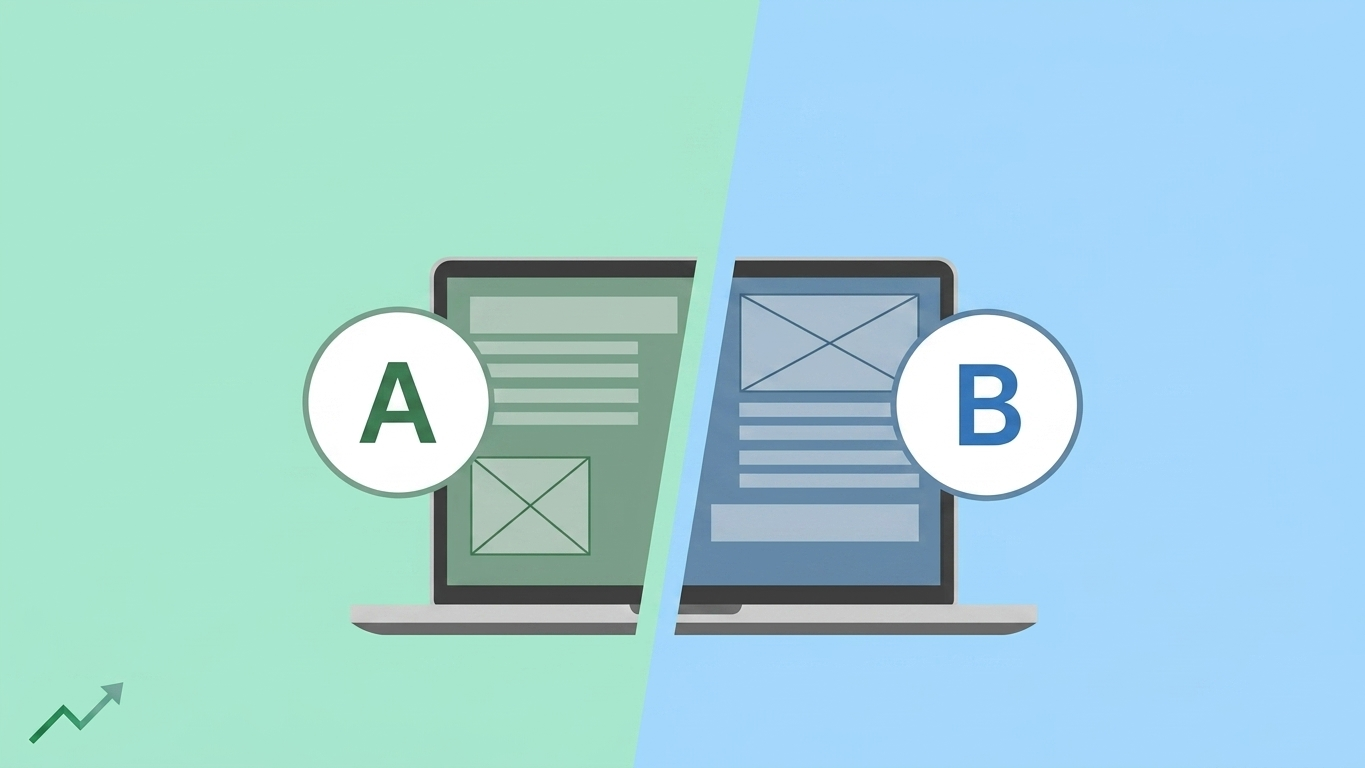
One of the best tools for CRO is A/B testing. You can look at two different versions of the same page or element. You show one version to one group of users and a different version to the other group. After that, you check to see which one gets more people to buy something. This takes the guesswork out of the process.
You don't argue about what could work. You let users determine by what they do. You can try out different headlines, photos, layouts, and even little things like the text on buttons. The smallest alteration can sometimes have the biggest impact.
A stronger call to action or a clearer headline can change how people behave. But you have to be patient when you test. The outcome might not be reliable if you quit too soon.
You should also just try one idea at a time. You won't know what made the difference if you adjust too many things at once. These tests will provide you a good idea of how your users react over time.
4. Building a Strong Sales Funnel
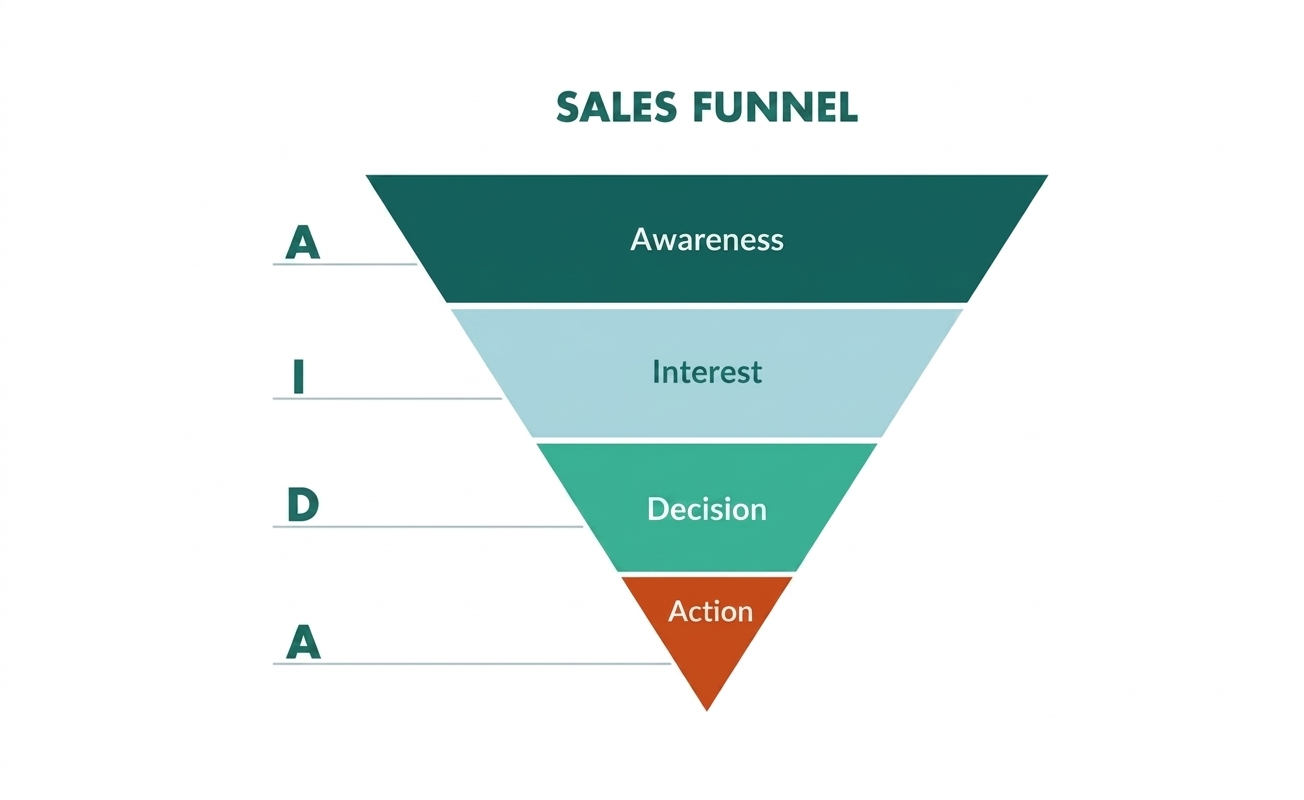
A sales funnel is the path users take from first contact to final action. It usually has four stages:
- Awareness
- Interest
- Decision
- Action
At the start, users discover your site. They might come from search or an advert. At the awareness stage, users learn about your brand. You need clear and helpful content. If your message is not clear, they will leave.
As they move forward, they begin to explore. They want to understand what you offer and how it helps them. At the interest stage, users explore your offer. You should provide useful details and benefits. This is where your content and structure matter.
Next comes the decision stage. Users compare options and think carefully. This is where trust becomes important. They need to feel confident before they move ahead. At the decision stage, users compare options. This is where trust and value matter most.
The final step is action. This should be simple. If the process feels slow or confusing, users may stop at the last moment. At the action stage, users take the final step. This should be simple and direct. To improve each stage:
- Use clear messaging at the start
- Provide helpful information in the middle
- Build trust before the final step
- Remove barriers at the end
A strong funnel works smoothly from start to end. If one part breaks, the whole journey suffers. A strong funnel supports your conversion rate. If one stage is weak, it affects the whole process.
5. Value Proposition and Why It Drives Conversions
Your value proposition is the reason someone chooses you. It explains what you offer and why it matters.
If this message is weak or unclear, users will not stay long. They need to understand your offer quickly. Most people decide within seconds whether to continue.
A strong value proposition focuses on the result. It shows what the user gains. It does not rely on vague claims.
For example, saying you offer “high quality services” means little. Saying you help users “launch a working website in one day” is much clearer.
When your message is direct and easy to follow, users feel more certain. That makes it easier for them to take the next step.
6. Social Proof and Trust Building
People rarely act without some level of trust. When they visit a new website, they look for signs that others have had a good experience.
This is where social proof helps. Social proof shows that others trust your product or service. Reviews, ratings, and testimonials all show that real people have used your product or service.
It helps reduce doubt. When users see that others had a good experience, they feel more confident.
Common types of social proof include:
- Customer reviews
- Ratings
- Testimonials
- Case studies
When users see positive feedback, it reduces doubt. It makes the decision feel safer. Real examples work best. They show real results.
For example, a case study that explains how a client improved sales gives strong proof. It shows real results and explains what changed for a customer. This adds depth and makes your claims more believable.
Trust is also built through simple things. Clear information, honest wording, and a clean layout all help. Trust also comes from clear policies, secure payment options, and honest messaging. When users feel comfortable, they are more likely to move forward.
If users trust your website, they are more likely to take action.

7. Reducing Friction in User Experience
Friction is anything that slows users down. It could be a confusing layout, too many choices, or a long form.
One common issue is offering too many options. It may seem helpful, but it often has the opposite effect. When users see too much, they hesitate.
A simple structure works better. Clear paths, clear messages, and clear actions.
Your calls to action should leave no doubt. Users should know exactly what happens next.
Forms should also be short. If users feel the process will take too long, they may give up before finishing.
Every small barrier adds up. Removing them makes the experience smoother and improves conversions.
The same idea applies in retail packaging. When product presentation is cluttered or unclear, customers feel unsure. Simple and well structured packaging helps products feel easier to understand and trust.
Just like in digital journeys, clarity in packaging reduces hesitation and helps customers make quicker decisions.
8. Website Performance Factors That Affect Conversion Rate
Speed plays a big role in how users behave. If your site takes too long to load, many will leave before they even see your content.
This is even more important on mobile. People expect fast results. If they have to wait, they move on.
A site that works well on all devices is no longer optional. It is expected. Text should be easy to read, and buttons should be easy to tap.
Performance is not just about speed. It is also about stability. Pages should load properly without errors or delays.
Even small improvements in speed can lead to better results. A faster site keeps users engaged and reduces drop offs.
9. Personalisation and User Behaviour Optimisation
Not all users are the same. They arrive with different needs and expectations. Personalisation helps you respond to that.
It means showing content that fits the user. A returning visitor may see something different from a first time visitor. Someone who looked at a product before may be shown similar items.
This makes the experience feel more relevant. It feels less like a general message and more like a helpful suggestion.
When users see content that matches their interest, they are more likely to act. It removes extra steps and brings them closer to a decision.
Done well, personalisation supports the entire user journey.
10. Exit Intent Strategies to Recover Visitors
Many users leave without taking action. This is part of normal behaviour. Still, you can recover some of them.
Exit intent tools track when a user is about to leave. At that moment, you can show a message or offer.
This could be a small discount, a sign up form, or a useful guide. The idea is to give users a reason to stay or return later.
The timing matters. If it appears too early, it can feel annoying. If it appears at the right moment, it can be helpful.
Exit intent does not work for every case, but when used with care, it can lift conversions.
11. Industry Specific Conversion Strategies
Different industries see different user behaviour. What works for one may not work for another.
In e-commerce, users want clear product details and an easy checkout. In SaaS, they often look for trials and simple setup. In B2B, decisions take longer, so detailed information and trust matter more.
Financial services depend heavily on trust. Users need to feel safe before they act. In the media, the focus is often on keeping users engaged and coming back.
The most important thing is to know your audience. When you personalise your approach to their needs, things naturally get better.
12. Last Thoughts
It's not easy to get quick wins with conversion rate optimisation. It's about getting better over time. You watch how people use it, make changes, and then try how things work out. After that, you do it again.
Over time, small changes can make a big difference. An easier form, a faster webpage, or a message that is easier to understand can all help. The idea is easy to understand. Make the journey simple.
People will be more likely to decide if they can easily navigate your site and get to what they want to do. In the long run, that's what leads to higher conversion rates.
About the Creator
Enjoyed the story? Support the Creator.
Subscribe for free to receive all their stories in your feed.
Comments
There are no comments for this story
Be the first to respond and start the conversation.