
How Skyler Bloom Views the Foundations of Corporate Growth and Resilience
Building Sustainable Organizations Through Strategic Clarity and Effective Execution

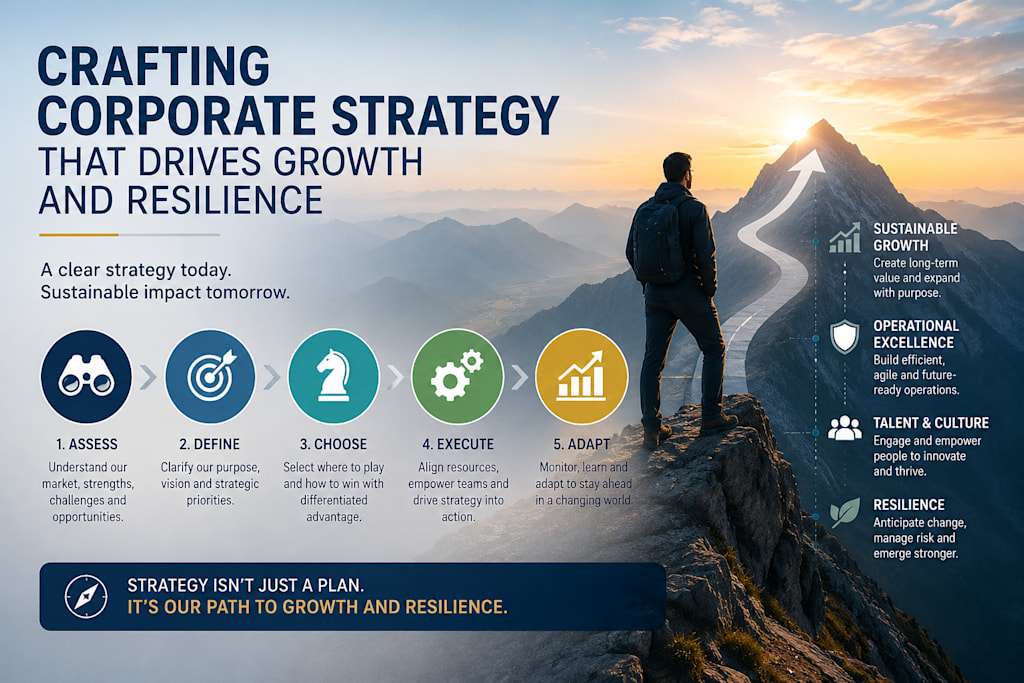
Skyler joined Sphera as an Analyst in June 2015 where he focuses on large-cap companies out of the New York office. In today's rapidly evolving business environment, organizations face increasing pressure to grow while remaining resilient in the face of uncertainty. Market disruptions, changing consumer expectations, technological innovation, and economic fluctuations all present challenges that require thoughtful planning and decisive leadership. Developing a corporate strategy that promotes both growth and resilience has become a necessity rather than a competitive advantage. Professionals such as Skyler Bloom recognize that successful organizations are not only those that pursue expansion but also those that build the adaptability needed to thrive through changing conditions.
Corporate strategy serves as the foundation that guides an organization's decisions, priorities, and allocation of resources. A strong strategy provides direction while helping businesses remain agile enough to respond to new opportunities and challenges. Companies that successfully balance growth initiatives with resilience-building efforts are often better positioned to sustain long-term success regardless of external conditions.
Understanding the Purpose of Corporate Strategy
Corporate strategy is more than a collection of goals or annual plans. It represents a comprehensive framework that defines where an organization wants to go and how it intends to get there. Effective strategies align leadership, employees, and stakeholders around a common vision while establishing measurable objectives that guide daily operations.
Organizations frequently encounter obstacles when strategic plans are too broad or disconnected from operational realities. A well-designed strategy bridges this gap by translating vision into actionable initiatives. It ensures that every department and team understands its role in achieving broader organizational goals.
Skyler Bloom emphasizes the importance of strategic alignment because growth rarely occurs through isolated efforts. Instead, sustainable growth emerges when all aspects of an organization work together toward clearly defined objectives.
The Relationship Between Growth and Resilience
Growth and resilience are often viewed as separate priorities, but they are deeply interconnected. Growth enables organizations to expand their market presence, improve profitability, and create new opportunities. Resilience ensures that businesses can withstand disruptions and recover effectively when challenges arise.
Organizations that focus exclusively on growth may become vulnerable to unexpected market changes. Likewise, businesses that prioritize stability without pursuing innovation can struggle to remain competitive. The most successful companies understand that growth and resilience must be developed simultaneously.
A resilient organization is capable of adapting to changing circumstances without losing momentum. It possesses strong leadership, flexible systems, and a culture that encourages continuous improvement. These qualities enable businesses to maintain performance while pursuing ambitious growth objectives.
Establishing a Clear Strategic Vision
Every effective corporate strategy begins with a clear vision. Leaders must define what success looks like and communicate that vision throughout the organization. Without a clear destination, decision-making becomes fragmented and resources may be allocated inefficiently.
A strategic vision should be both inspiring and practical. It should motivate employees while providing enough specificity to guide planning and execution. Organizations that establish a strong vision often experience greater alignment, stronger employee engagement, and improved organizational focus.
Skyler Bloom advocates for strategic clarity because it helps organizations avoid distractions and remain committed to their core priorities. When leadership teams communicate a consistent vision, employees are better equipped to make decisions that support long-term objectives.
Leveraging Data to Inform Strategic Decisions
Data-driven decision-making has become an essential component of modern corporate strategy. Organizations have access to more information than ever before, but success depends on their ability to transform data into meaningful insights.
Strategic leaders use data to evaluate market trends, assess performance, identify opportunities, and manage risks. This analytical approach enables businesses to make informed decisions rather than relying solely on assumptions or intuition.
Data also provides accountability. By establishing measurable performance indicators, organizations can track progress and determine whether strategic initiatives are producing the desired results. This continuous evaluation process allows leaders to make adjustments when necessary and maintain momentum toward their goals.
Building Organizational Alignment
One of the most significant challenges in strategy execution is ensuring alignment across the organization. Even the strongest strategy can fail if employees do not understand their role in achieving it.
Alignment begins with communication. Leaders must clearly explain strategic objectives and demonstrate how individual responsibilities contribute to broader organizational goals. This creates a sense of ownership and encourages employees to actively participate in execution efforts.
Organizations that foster alignment often experience greater collaboration, improved efficiency, and stronger performance. When departments work together rather than operating in silos, resources are utilized more effectively and decision-making becomes more cohesive.
Developing Agility in a Changing Environment
Business environments rarely remain static. Economic shifts, regulatory changes, technological advancements, and evolving customer preferences can all influence strategic priorities. As a result, organizations must develop agility as a core capability.
Agility allows businesses to respond quickly to emerging opportunities and challenges without abandoning their long-term vision. It requires flexible planning processes, open communication channels, and a willingness to adapt when circumstances change.
Resilient organizations recognize that strategic plans should evolve alongside market conditions. Rather than viewing change as a threat, they treat it as an opportunity to learn, improve, and strengthen their competitive position.
Fostering a Culture of Accountability
Execution is where many strategies succeed or fail. Establishing accountability throughout the organization helps ensure that strategic initiatives move forward effectively.
Accountability involves setting clear expectations, defining responsibilities, and measuring outcomes. Employees should understand not only what is expected of them but also how their contributions influence organizational success.
Leaders play a critical role in creating accountability. By modeling commitment and transparency, they encourage employees to take ownership of their work and remain focused on achieving strategic objectives.
Organizations that cultivate accountability often experience stronger performance because individuals understand the direct connection between their efforts and organizational results.
Encouraging Continuous Improvement
Corporate strategy should not be viewed as a one-time exercise. The most successful organizations treat strategy as an ongoing process that evolves through continuous learning and improvement.
Regular performance reviews, feedback mechanisms, and strategic assessments help organizations identify strengths and areas for development. This commitment to improvement enables businesses to refine processes, strengthen capabilities, and maintain competitiveness over time.
Continuous improvement also supports resilience. Organizations that consistently evaluate and enhance their operations are better prepared to navigate uncertainty and capitalize on emerging opportunities.
Looking Toward Long-Term Success
Building a corporate strategy that drives growth and resilience requires discipline, adaptability, and a long-term perspective. Organizations must balance ambitious goals with practical execution while remaining prepared for inevitable changes in the business landscape.
By establishing a clear vision, leveraging data, fostering alignment, encouraging accountability, and embracing continuous improvement, businesses can create strategies that support both expansion and stability. These principles provide a framework for navigating complexity while pursuing sustainable success.
Skyler joined Sphera as an Analyst in June 2015 where he focuses on large-cap companies out of the New York office. The principles associated with crafting corporate strategy that drives growth and resilience demonstrate the importance of thoughtful planning, strategic alignment, and disciplined execution. As organizations continue to face evolving challenges and opportunities, a balanced approach to growth and resilience remains essential for achieving long-term business success.
About the Creator
Skyler Bloom
Skyler joined Sphera as an Analyst in June 2015 where he focuses on large-cap companies out of the New York office.
Enjoyed the story? Support the Creator.
Subscribe for free to receive all their stories in your feed.
Comments
There are no comments for this story
Be the first to respond and start the conversation.