
How Medical Device Technologies Are Redefining Healthcare
From Operating Rooms to Remote Monitoring—Why the Medical Device Technologies Market Is Entering Its Most Transformative Era
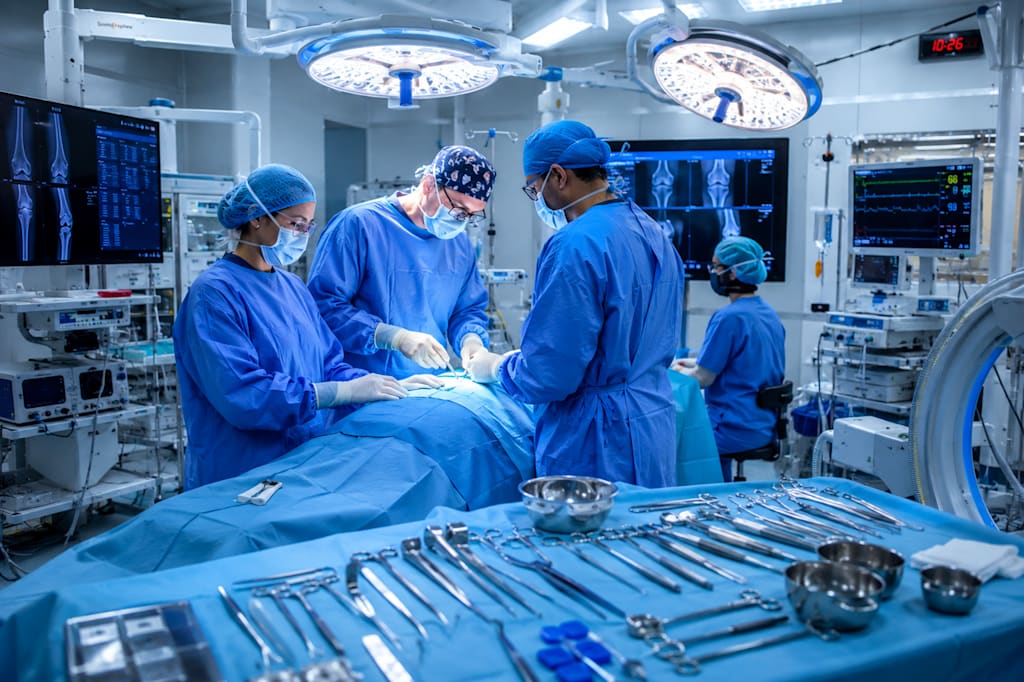
The operating room is silent except for the rhythmic beeping of monitoring equipment.
A surgeon glances at a high-definition display showing real-time patient data. Across the room, intelligent imaging systems provide unprecedented clarity. Nearby, a nurse verifies readings from connected monitoring devices that continuously transmit vital information.
This scene isn't a glimpse into a distant future. It's today's healthcare reality.
Behind these moments lies a rapidly expanding ecosystem of innovation known as the **Medical Device Technologies Market**—a sector quietly transforming how diseases are diagnosed, monitored, and treated across the globe.
According to Mordor Intelligence, the medical device technologies industry size is projected to expand from USD 0.68 trillion in 2025 and USD 0.73 trillion in 2026 to USD 1.02 trillion by 2031, registering a CAGR of 6.99% between 2026 to 2031. This remarkable growth reflects the increasing role of advanced medical technologies in shaping modern healthcare delivery.
For healthcare professionals, patients, investors, and innovators alike, this transformation is becoming impossible to ignore.
---
### Why Medical Device Technologies Are Becoming the Backbone of Modern Healthcare
Healthcare systems worldwide face a common challenge: delivering better outcomes to more patients while managing rising costs and increasingly complex medical conditions.
Medical device technologies are emerging as one of the most effective solutions.
The market's growth is being fueled by several interconnected trends:
* Aging populations worldwide
* Rising prevalence of chronic diseases
* Increased demand for minimally invasive procedures
* Expansion of healthcare infrastructure
* Rapid adoption of digital health technologies
* Growth of remote patient monitoring systems
According to Mordor Intelligence, diagnostic devices represented **39.12% of market revenue in 2025**, making them the largest device category. These include imaging technologies such as MRI systems, CT scanners, ultrasound equipment, and advanced diagnostic platforms that enable earlier and more accurate detection of diseases.
Yet one of the most exciting developments is occurring in monitoring technologies.
Monitoring devices are forecast to grow at a **7.23% CAGR through 2031**, driven largely by the increasing adoption of remote healthcare and connected patient monitoring systems.
Imagine a patient recovering at home while physicians receive continuous updates on vital signs. Instead of waiting for scheduled appointments, healthcare providers can identify potential issues in real time.
This shift is fundamentally changing the relationship between patients and healthcare providers.
The market is also experiencing a technological evolution beyond traditional medical equipment.
Mordor Intelligence reports that conventional electro-mechanical and disposable systems accounted for **55.9% of market revenue in 2025**, reflecting their continued importance across healthcare settings. However, emerging technologies are rapidly gaining momentum.
Among these innovations, nanotechnology and smart materials stand out.
This segment is projected to expand at an impressive **8.11% CAGR through 2031**, making it one of the fastest-growing technology platforms in the market.
From antimicrobial coatings that help reduce infection risks to advanced biosensors capable of monitoring physiological changes in real time, these innovations are helping healthcare become more precise, personalized, and preventive.
---
### The Technologies Driving the Next Wave of Growth
One of the most fascinating aspects of the Medical Device Technologies Market is the convergence of multiple technological disciplines.
Artificial intelligence, robotics, advanced materials, remote connectivity, and digital imaging are increasingly working together rather than evolving separately.
This convergence is creating entirely new possibilities for healthcare delivery.
Consider the rapid advancement of robotic-assisted surgery.
Modern surgical systems enhance precision, improve visualization, and support minimally invasive procedures. These capabilities often translate into reduced recovery times and improved patient experiences.
At the same time, healthcare providers are embracing digital monitoring solutions that extend care beyond hospital walls.
Connected monitoring systems, wearable sensors, and remote diagnostic tools are helping clinicians track patient health continuously rather than episodically.
For patients living with chronic conditions, this can mean earlier interventions and better long-term management.
The impact extends across multiple therapeutic areas.
According to Mordor Intelligence, **cardiology held 22.7% of market revenue in 2025**, making it the leading therapeutic application segment. Cardiovascular care continues to benefit from innovations in diagnostic imaging, implantable devices, and monitoring technologies.
Meanwhile, neurology is expected to be the fastest-growing therapeutic segment, projected to expand at a **7.63% CAGR through 2031**.
These growth patterns illustrate a broader trend: medical technology is becoming increasingly specialized while simultaneously becoming more integrated.
---
**Suggested Visual Break**
*Embed an image of advanced surgical robotics, AI-assisted diagnostics, or modern hospital technology infrastructure.*
---
Healthcare facilities themselves are evolving alongside these technologies.
Hospitals represented **66.1% of market demand in 2025**, maintaining their position as the primary end users of medical device technologies. However, other care settings are gaining traction.
Ambulatory Surgical Centers (ASCs), for example, are projected to grow at a **7.99% CAGR through 2031**, reflecting increasing demand for efficient outpatient care.
This trend suggests a future where advanced medical technologies are not confined to large hospitals but are distributed across a broader healthcare ecosystem.
---
### A Trillion-Dollar Future Fueled by Innovation
The most compelling aspect of the Medical Device Technologies Market isn't simply its size.
It's what that growth represents.
Every percentage point of market expansion reflects new opportunities to improve patient outcomes, enhance healthcare efficiency, and expand access to advanced medical care.
According to Mordor Intelligence, the market will surpass **USD 1.02 trillion by 2031**, highlighting the enormous scale of innovation occurring across the healthcare sector.
Geographically, North America currently leads the market, while Asia-Pacific is expected to be the fastest-growing region with a projected **7.56% CAGR through 2031**.
This global momentum underscores a simple reality:
Healthcare innovation is no longer concentrated in a few specialized centers. It is becoming a worldwide movement powered by technology, data, and an increasing focus on patient-centered care.
As medical devices become smarter, more connected, and more accessible, their influence will extend far beyond hospitals and clinics.
They will shape how people monitor their health, manage chronic conditions, recover from procedures, and engage with healthcare systems throughout their lives.
The trillion-dollar future of medical device technologies isn't just about market growth.
It's about transforming healthcare itself.
**What medical technology innovation do you believe will have the biggest impact on patient care over the next decade—AI-powered diagnostics, robotic surgery, remote monitoring, or something else entirely? Share your thoughts below and join the conversation.**
About the Creator
Enjoyed the story? Support the Creator.
Subscribe for free to receive all their stories in your feed.
Comments
There are no comments for this story
Be the first to respond and start the conversation.