
How IoT is Revolutionizing Healthcare: Future Prospects and Challenges
IoT's Impact on Healthcare: Future Trends and Challenges

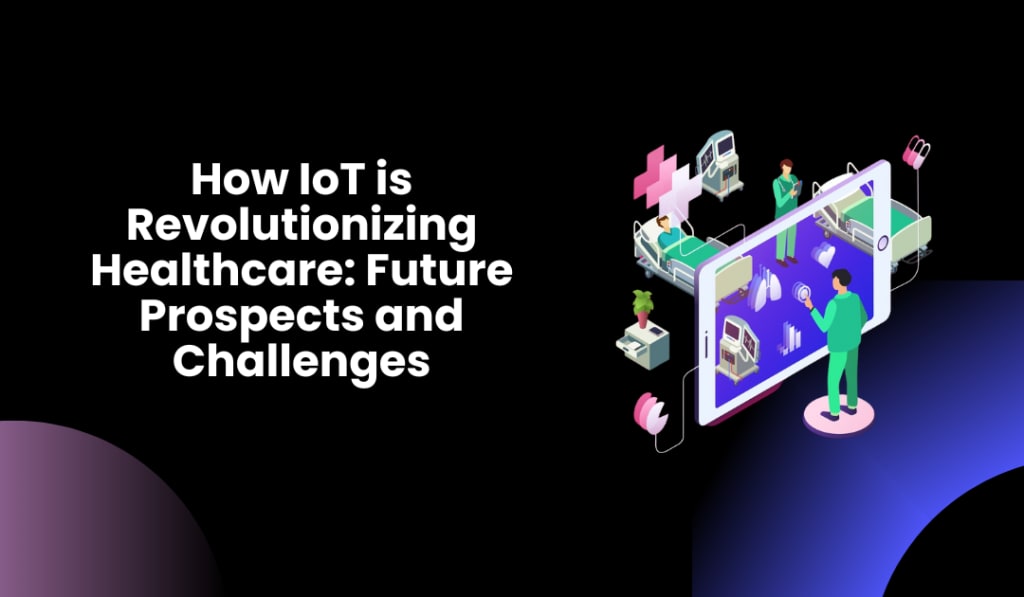
The Internet of Things (IoT) is transforming industries across the board, and healthcare is no exception. As we step into a future driven by innovation, IoT-enabled devices are playing a crucial role in reshaping healthcare delivery, improving patient outcomes, and optimizing medical processes. With smart sensors, wearable technology, and real-time data analytics, IoT has opened new horizons for the healthcare industry.
Let’s dive deep into how IoT is revolutionizing healthcare, the future possibilities it holds, and the challenges that come with it.
The Impact of IoT in Healthcare
IoT in healthcare refers to a network of connected devices that collect, transmit, and analyze data to enhance medical services. From remote monitoring devices to smart hospital systems, IoT is redefining how healthcare professionals and patients interact with technology. Here’s how IoT is making a difference:
1. Remote Patient Monitoring (RPM): IoT devices like wearable heart monitors, glucose sensors, and pulse oximeters allow doctors to track patient health remotely. This real-time data helps healthcare providers detect early signs of health issues, ensuring prompt medical intervention and reducing hospital readmissions.
2. Smart Medical Devices: Connected devices such as smart inhalers, insulin pens, and automated medication dispensers help patients manage their conditions effectively. These devices can send alerts to patients and doctors, ensuring adherence to treatment plans and improving medication management.
3. Hospital Asset Tracking: IoT technology helps hospitals manage medical equipment efficiently by using RFID tags and sensors to track devices. This reduces equipment loss, optimizes resource allocation, and saves time in emergencies. Real-time tracking also enhances staff efficiency by streamlining hospital workflows.
4. Predictive Maintenance of Medical Equipment: IoT-enabled sensors monitor the performance of critical medical machinery like MRI scanners and ventilators. Predictive analytics help hospitals schedule maintenance proactively, reducing downtime and avoiding costly repairs. This ensures that life-saving equipment is always operational.
5. Real-time Health Data Analytics: IoT devices generate massive amounts of patient data. Advanced analytics tools process this data to identify patterns, detect anomalies, and support medical research and personalized treatment plans. Real-time data can also be used to monitor disease outbreaks and manage public health crises.
6. Enhanced Elderly Care: IoT solutions offer significant benefits for elderly care by providing continuous health monitoring. Smart home sensors can detect falls, track vital signs, and alert caregivers or emergency services in real-time. This fosters independent living while ensuring safety.
7. Virtual Healthcare Assistants: AI-powered IoT devices can act as virtual health assistants, reminding patients to take medication, scheduling doctor appointments, and offering basic health advice. These smart assistants bridge the gap between patients and healthcare providers.
Future Prospects of IoT in Healthcare
The future of IoT in healthcare looks incredibly promising, with innovations pushing the boundaries of what’s possible. Let’s explore the upcoming trends and opportunities:
1. AI-Powered IoT Solutions: Integrating Artificial Intelligence (AI) with IoT will revolutionize predictive healthcare. AI algorithms will process real-time data from IoT devices, allowing for accurate diagnosis, risk assessment, and early disease detection. Machine learning models will become more adept at predicting health crises before they occur.
2. 5G-Enabled IoT Devices: The rollout of 5G networks will enhance the performance of IoT devices by providing ultra-fast data transfer and minimal latency. This will enable smoother remote surgeries, real-time telehealth consultations, and continuous patient monitoring — all with greater reliability.
3. Personalized Healthcare: IoT devices will pave the way for personalized medicine by collecting individual health data and tailoring treatments accordingly. This will significantly improve patient outcomes, minimize side effects, and reduce unnecessary hospital visits.
4. Blockchain Integration: Security remains a critical concern in healthcare. Blockchain technology, combined with IoT, will enhance data security by creating decentralized, tamper-proof health records, ensuring patient privacy and regulatory compliance. This technology will also streamline data sharing among healthcare providers without compromising security.
5. Smart Implants and Bio-Patches: The future will see the rise of smart implants and bio-patches that monitor vital signs, deliver drugs automatically, and send real-time data to healthcare providers, offering continuous and precise patient care. These innovations will revolutionize chronic disease management.
6. Digital Twins: A cutting-edge development in IoT is the concept of digital twins — virtual models of physical objects or systems. In healthcare, digital twins could simulate a patient’s organs, allowing doctors to test treatments virtually before applying them in real life, enhancing precision medicine.
Challenges of IoT in Healthcare
Despite its transformative potential, IoT in healthcare comes with its own set of challenges. Let’s take a closer look at the hurdles the industry must overcome:
- Data Security and Privacy: IoT devices collect vast amounts of sensitive patient data, making them prime targets for cyberattacks. Ensuring robust encryption, secure APIs, and compliance with healthcare regulations like HIPAA is crucial. Healthcare organizations must also implement multi-factor authentication and regular security audits.
- Interoperability Issues: Many IoT devices operate on different protocols and platforms, leading to compatibility issues. Achieving seamless integration between various devices and healthcare systems remains a major challenge. Establishing universal standards is vital for effective data exchange.
- Data Overload: With millions of IoT devices generating data continuously, healthcare providers struggle to process and analyze this information effectively. Advanced data management solutions and AI-driven analytics are needed to extract actionable insights and prevent data silos.
- High Implementation Costs: Deploying IoT infrastructure — from sensors to cloud storage — requires significant investment. Smaller healthcare facilities may face budget constraints in adopting these technologies. Exploring scalable and cost-effective IoT solutions is key to bridging this gap.
- Regulatory Compliance: The healthcare sector is heavily regulated, and ensuring IoT devices comply with standards like GDPR and HIPAA adds complexity to their development and deployment. Healthcare providers must collaborate with legal experts to stay updated with evolving regulations.
The Role of an IoT Development Company in Healthcare Innovation
Partnering with an IoT Development Company plays a crucial role in overcoming these challenges and unlocking the full potential of IoT in healthcare. These companies specialize in designing and deploying customized IoT solutions, integrating devices with cloud platforms, ensuring data security, and creating user-friendly applications for both patients and healthcare providers.
An experienced IoT Development Company understands the unique needs of the healthcare sector, offering innovative solutions like remote monitoring systems, AI-powered data analytics, and secure health record management. Their expertise helps healthcare organizations embrace IoT technology seamlessly and efficiently.
Conclusion
IoT is undoubtedly revolutionizing healthcare by enhancing patient care, streamlining medical processes, and enabling data-driven decision-making. With future innovations like AI integration, 5G connectivity, and personalized medicine on the horizon, the healthcare industry is set to undergo a technological transformation.
However, to fully harness IoT’s potential, addressing challenges like data security, interoperability, and regulatory compliance is essential. Collaborating with an IoT Development Company can accelerate the adoption of smart healthcare solutions, ensuring both innovation and security.
As we move forward, it’s clear that IoT will continue to reshape healthcare, bringing us closer to a future where technology empowers better health outcomes for all.
About the Creator
Enjoyed the story? Support the Creator.
Subscribe for free to receive all their stories in your feed.
Comments
There are no comments for this story
Be the first to respond and start the conversation.