
How Industrial Design Consultancy Shapes Product Success
Industrial Design Consultancy supports innovation by improving usability, functionality, and market readiness throughout product development.

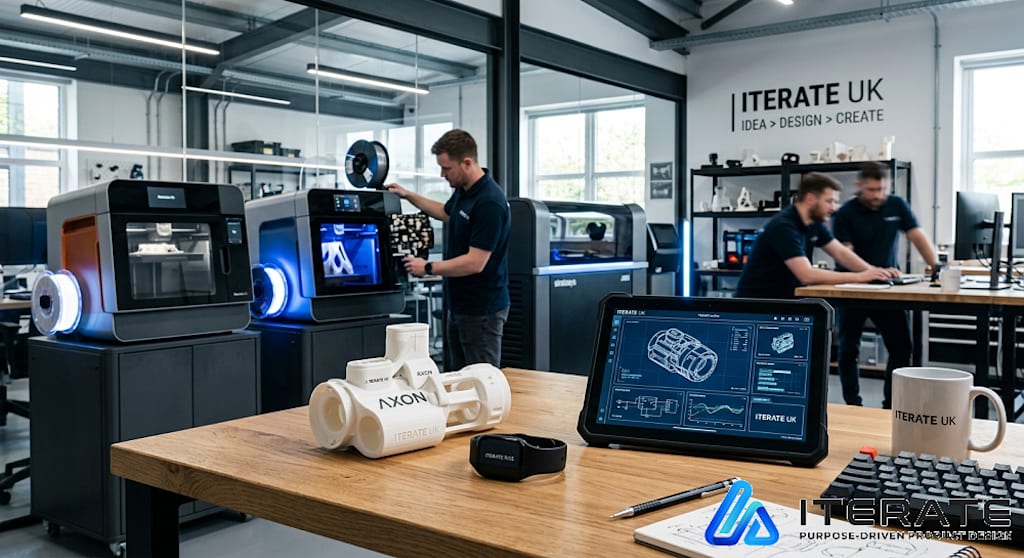
In today's competitive marketplace, creating a successful product requires much more than a good idea. Consumers and businesses expect products that are functional, visually appealing, easy to use, reliable, and capable of solving real-world problems. Achieving these goals requires a combination of creativity, engineering knowledge, market understanding, and user-focused thinking. This is where an Industrial Design Consultancy plays an essential role.
Industrial design sits at the intersection of innovation, engineering, and human experience. It focuses on developing products that meet user needs while remaining practical to manufacture and commercially viable. Whether designing consumer electronics, medical devices, industrial equipment, or sustainable products, industrial designers help bridge the gap between concept and reality.
Many organisations also work with a New Product Development Company to guide ideas through the entire innovation journey. Together, industrial design and product development processes help businesses transform concepts into successful products that can compete effectively in modern markets.
This article explores the role of industrial design consultancy, its importance in product innovation, and how it contributes to successful product development.
Understanding Industrial Design Consultancy
Industrial design is the process of creating products that balance functionality, usability, appearance, and manufacturability. An Industrial Design Consultancy provides specialist expertise that helps businesses develop products from initial concepts through to production-ready solutions.
Industrial designers focus on how products:
- Look
- Feel
- Function
- Interact with users
- Perform in real-world environments
Their work involves understanding user behaviour, analysing market needs, and developing practical solutions that meet technical and commercial requirements.
Industrial design is not limited to aesthetics. It also considers ergonomics, sustainability, manufacturing efficiency, and long-term product performance.
Why Industrial Design Matters
Consumers often make purchasing decisions based on both functionality and experience. Products that are difficult to use, uncomfortable, or visually unappealing may struggle even if they perform technically well.
Enhancing User Experience
One of the primary goals of industrial design is improving how users interact with products.
Designers consider factors such as:
- Comfort
- Accessibility
- Ease of use
- Intuitive operation
- Visual clarity
A well-designed product can improve customer satisfaction and reduce user frustration.
Supporting Innovation
Industrial design encourages creative thinking and problem-solving.
By exploring different concepts and approaches, designers help businesses identify innovative solutions that address genuine user needs.
Improving Market Competitiveness
Products that combine strong functionality with appealing design often stand out in crowded markets.
An Industrial Design Consultancy helps businesses create products that differentiate themselves while maintaining practicality and performance.
The Role of a New Product Development Company
While industrial design focuses on the user experience and product form, a New Product Development Company typically manages the broader process of transforming ideas into market-ready products.
This process often includes:
- Market research
- Product strategy
- Industrial design
- Engineering development
- Prototyping
- Testing
- Manufacturing preparation
The integration of industrial design within product development ensures that products remain both user-focused and technically feasible.
The Product Development Process
Successful product innovation follows a structured development pathway.
Each stage contributes to improving product quality and reducing development risks.
Research and Discovery
Every product begins with understanding a challenge, opportunity, or unmet need.
Research activities may include:
- User interviews
- Competitor analysis
- Industry research
- Trend evaluation
- Market assessment
The goal is to identify opportunities where innovation can create value.
Industrial designers use research findings to inform design decisions and ensure products address genuine user requirements.
Concept Development
After gathering insights, designers begin exploring potential solutions.
Concept development often involves:
- Sketching
- Brainstorming
- Design workshops
- Digital visualisation
Multiple concepts are typically generated and evaluated before selecting a preferred direction.
This stage encourages creativity while maintaining a focus on practicality.
User Centred Design
User-centred design places people at the heart of the development process.
Instead of focusing solely on technical features, designers consider how users interact with products in real-world situations.
Questions commonly explored include:
- Is the product easy to use?
- Can users understand its functions quickly?
- Is it comfortable to operate?
- Does it solve the intended problem effectively?
Industrial Design Consultancy services often prioritise user-centred design because successful products depend on positive user experiences.
Ergonomics and Human Factors
Ergonomics is a critical component of industrial design.
It focuses on ensuring products fit the physical and cognitive capabilities of users.
Examples include:
- Comfortable handles
- Accessible controls
- Reduced physical strain
- Improved visibility
Human factors engineering also considers how people think, process information, and respond to product interfaces.
These considerations help reduce errors and improve overall usability.
Design Visualisation and Digital Modelling
Modern industrial design relies heavily on digital tools.
Computer Aided Design (CAD) software enables designers to create detailed three-dimensional models that can be evaluated before physical prototypes are produced.
Digital modelling supports:
- Design refinement
- Engineering collaboration
- User evaluation
- Manufacturing planning
Visualisation tools help stakeholders understand concepts and provide feedback during development.
Prototyping and Product Evaluation
Prototypes play an essential role in product development.
They allow designers and engineers to test concepts in practical settings before investing in full-scale production.
Prototype development may involve:
- 3D printing
- CNC machining
- Mock-up creation
- Functional testing
An Industrial Design Consultancy often uses prototypes to assess usability, ergonomics, and overall product performance.
Testing provides valuable insights that guide design improvements.
The Importance of Design for Manufacturing
A product may look appealing and function well as a prototype, but it must also be practical to manufacture.
Design for Manufacturing (DFM) focuses on ensuring products can be produced efficiently and cost-effectively.
Considerations include:
- Material selection
- Assembly processes
- Production costs
- Manufacturing complexity
- Quality control requirements
A New Product Development Company frequently integrates manufacturing considerations early in the development process to avoid costly redesigns later.
Sustainability in Industrial Design
Environmental responsibility has become an important consideration in product development.
Industrial designers increasingly focus on creating products that minimise environmental impact throughout their lifecycle.
Strategies may include:
- Reducing material usage
- Selecting recyclable materials
- Improving energy efficiency
- Extending product lifespan
- Simplifying repair and maintenance
Sustainable design not only benefits the environment but can also improve operational efficiency and customer perception.
Industrial Design Across Different Industries
Industrial design supports innovation in a wide range of sectors.
Consumer Products
Consumer goods require strong user appeal and intuitive functionality.
Industrial designers help optimise:
- Product aesthetics
- User experience
- Brand differentiation
- Packaging integration
Examples include household appliances, wearable technology, and personal electronics.
Medical Devices
Healthcare products must balance usability, safety, and regulatory requirements.
Industrial design contributes to:
- Patient comfort
- Clinical usability
- Hygiene considerations
- Accessibility
Medical product development often relies heavily on user-centred design principles.
Industrial Equipment
Industrial machinery must perform reliably in demanding environments.
Industrial designers focus on:
- Operator safety
- Maintenance accessibility
- Durability
- Functional efficiency
Good design improves both productivity and user satisfaction.
Transportation and Mobility
Industrial design influences the development of vehicles, mobility solutions, and transportation systems.
Designers work to improve:
- Comfort
- Efficiency
- Safety
- User interaction
Innovation in mobility continues to create new opportunities for industrial design.
Common Challenges in Product Development
Despite advances in technology and design methodologies, product development remains complex.
Balancing Creativity and Practicality
Designers must create innovative solutions while ensuring products remain manufacturable and commercially viable.
Managing Technical Complexity
Modern products often combine mechanical systems, electronics, software, and connectivity features.
Coordinating these disciplines requires effective collaboration.
Meeting User Expectations
Consumer expectations continue to evolve.
Products must deliver excellent experiences while remaining affordable and reliable.
Addressing Sustainability Goals
Environmental considerations increasingly influence design decisions.
Businesses must balance sustainability objectives with performance and cost requirements.
Emerging Trends in Industrial Design
Industrial design continues to evolve alongside technological advancements.
Several trends are shaping the future of the industry.
Smart Products
Connected devices are becoming increasingly common.
Industrial designers now consider:
- Digital interfaces
- Connectivity features
- Data interaction
- User engagement
Smart technologies are transforming how people interact with products.
Advanced Materials
New materials offer opportunities to improve performance, durability, and sustainability.
Examples include:
- Lightweight composites
- Recyclable plastics
- Bio-based materials
- High-performance polymers
Material innovation continues to influence product design strategies.
Artificial Intelligence
AI technologies are beginning to support product development by assisting with:
- Design optimisation
- User analysis
- Performance prediction
- Concept generation
These tools may accelerate future development processes.
Circular Design
Circular design focuses on reducing waste and extending product lifecycles.
Designers increasingly consider:
- Repairability
- Reusability
- Recycling
- Resource efficiency
This approach supports long-term sustainability objectives.
Conclusion
Successful products require a careful balance of functionality, usability, aesthetics, and manufacturability. An Industrial Design Consultancy plays a crucial role in achieving this balance by helping businesses create products that meet user needs while remaining practical to develop and produce.
From research and concept generation to prototyping and manufacturing preparation, industrial design contributes value throughout the product lifecycle. When combined with the expertise of a New Product Development Company, businesses can transform innovative ideas into commercially viable products that perform effectively in competitive markets.
As technology, sustainability requirements, and consumer expectations continue to evolve, industrial design will remain a key driver of innovation, helping organizations create meaningful products that improve experiences and solve real-world challenges.
About the Creator
ITERATE Design and Innovation Ltd
ITERATE Design and Innovation Ltd is a UK-based product design consultancy that helps turn your ideas into real, market-ready products - quickly and effectively.
Enjoyed the story? Support the Creator.
Subscribe for free to receive all their stories in your feed.
Comments
There are no comments for this story
Be the first to respond and start the conversation.