
How Induction Cooking is Transforming Commercial Kitchens
Should One Consider Induction Cooking Over Traditional Cooking

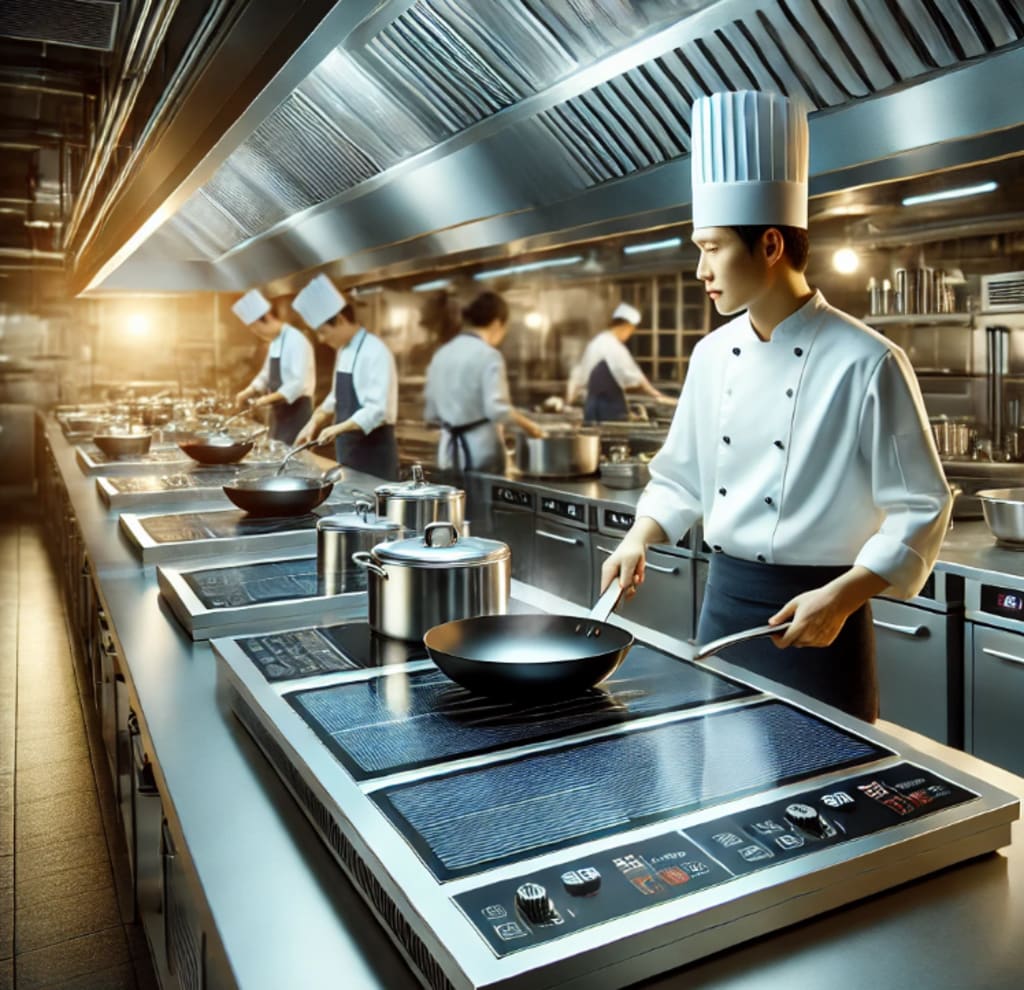
The foodservice industry continues to adopt modern technologies to enhance efficiency, safety, and sustainability. One of the most significant advancements in recent years is the widespread use of induction cooking in commercial kitchens. This method offers precision, energy efficiency, and improved safety, making it an increasingly preferred choice for professional chefs and kitchen operators.
The Principles of Induction Cooking
Induction cooking operates through electromagnetic energy, which directly heats compatible cookware rather than using traditional gas or electric heating elements. When an induction-compatible pan is placed on the cooktop, a magnetic field generates heat instantly within the cookware, allowing for precise temperature control and rapid cooking.
Advantages of Induction Cooking in Commercial Kitchens
Energy Efficiency and Cost Savings
One of the primary reasons commercial kitchens are transitioning to induction cooking is its energy efficiency. Traditional gas and electric stoves lose a significant portion of energy as heat dissipates into the surrounding environment. In contrast, induction cooktops transfer heat directly to the cookware, reducing energy wastage and lowering utility costs.
According to industry studies, induction cooktops can be up to 90% efficient in energy transfer, compared to approximately 50% for gas and 65% for electric cooking. This efficiency results in reduced operating costs, an essential consideration for commercial establishments aiming to maintain profitability.
Precise Temperature Control
Induction cooking provides precise temperature regulation, which is crucial in professional kitchens. Unlike gas burners, which may require manual adjustments to maintain consistent heat levels, induction cooktops offer instant temperature changes and accurate heat distribution. This precision reduces the risk of overcooking or burning, improving food quality and consistency.
Enhanced Safety Features
Safety is a key concern in commercial kitchens, where high heat and open flames present fire hazards. Induction cooking reduces these risks as the cooktops remain cool to the touch, with heat generated only within the cookware. This minimises the chances of accidental burns and fire incidents. Additionally, most induction cooktops include automatic shut-off features, further enhancing kitchen safety.
Improved Kitchen Environment
Commercial kitchens often experience excessive heat from traditional cooking methods, making working conditions challenging. Induction cooking generates significantly less ambient heat, improving kitchen comfort and reducing the strain on ventilation and air conditioning systems. This contributes to a more efficient and pleasant working environment for kitchen staff.
Key Induction Cooking Equipment for Commercial Kitchens
Commercial kitchens require durable and high-performance catering equipment to meet their operational demands. Essential induction-based equipment includes:
Induction Cooktops: Available in countertop and built-in models, these provide flexible and precise cooking solutions.
Induction Woks: Designed for high-heat stir-frying while maintaining energy efficiency.
Induction Griddles: Used for evenly cooking pancakes, meats, and other grilled items.
Induction-Based Combi Ovens: Combining induction heating with convection technology for versatile cooking applications.
Should You Consider Induction Cooking Over Traditional Cooking?
Choosing between induction and traditional cooking methods depends on various operational needs. Induction cooking is well-suited for establishments prioritising energy efficiency, precise temperature control, and enhanced safety. It is particularly beneficial in confined kitchen spaces where heat management is essential. Furthermore, businesses seeking to reduce energy costs and comply with environmental regulations may find induction cooking to be a practical investment.
However, traditional gas cooking remains a preferred choice in kitchens requiring high-temperature, open-flame cooking techniques, such as charring or wok cooking that necessitates direct flame contact. Additionally, the initial cost of induction equipment and the need for compatible cookware may be a factor to consider when making the transition.
Adoption of Induction Cooking in the Catering Industry
Many catering businesses, restaurants, and institutional kitchens are adopting induction cooking as part of their catering equipment investments. The transition is particularly evident in locations where energy efficiency and sustainability are key considerations. Induction cooking aligns with environmental regulations and energy-saving initiatives, making it a viable long-term investment.
About the Creator
KW Commercial
KW Commercial is a trusted Australian supplier of premium commercial kitchen equipment designed to meet the needs of restaurants, cafes, and food service businesses.
Enjoyed the story? Support the Creator.
Subscribe for free to receive all their stories in your feed.
Comments
There are no comments for this story
Be the first to respond and start the conversation.