
How Extreme Temperatures Affect 100 Ton Overhead Crane Structural Steel and Lubrication
How heat and cold reshape steel behavior, lubrication performance, and long-term crane reliability
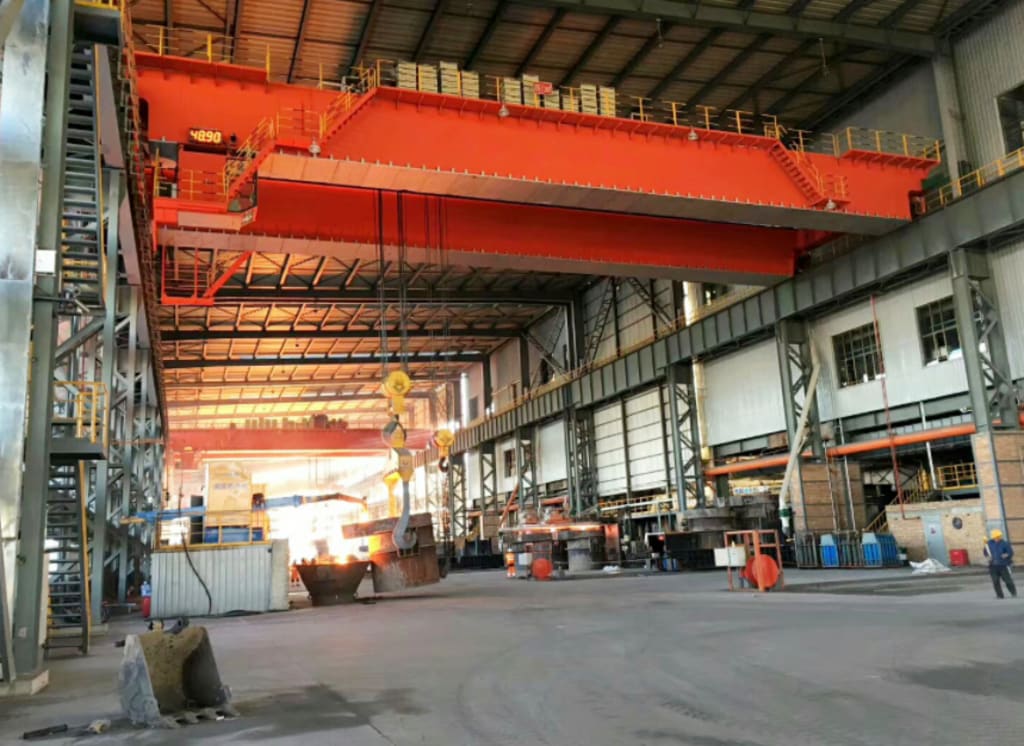
A 100 ton overhead crane is a critical piece of heavy lifting equipment used in steel mills, fabrication workshops, power plants, warehouses, and heavy industry production lines. These cranes are designed to operate under demanding load conditions, often running continuously in environments that are far from ideal.
Among all external factors affecting crane performance and lifespan, extreme temperatures—both high and low—have one of the most significant impacts on structural steel behavior and lubrication systems. Temperature variations influence not only mechanical strength but also fatigue life, deformation behavior, lubrication efficiency, and long-term operational safety.
This article provides a detailed technical analysis of how extreme heat and cold affect the structural steel and lubrication systems of a 100 ton overhead crane, and what engineering strategies are used to mitigate these effects.
1. Overview of Thermal Stress in Overhead Cranes
Overhead cranes are large steel structures composed of:
- Main girders (single or double beam)
- End carriages
- Trolley systems
- Hoisting mechanisms
- Runway rail interface components
These components expand, contract, and respond differently when exposed to temperature extremes. Unlike static structures, cranes are dynamic systems subjected to:
- Moving loads
- Repeated stress cycles
- Sudden acceleration and braking
- Environmental exposure
Thermal effects interact with mechanical loads, creating combined stress conditions that can significantly influence crane reliability.
2. Effects of High Temperatures on Structural Steel
High-temperature environments are common in steel plants, foundries, and outdoor summer operations. When temperatures rise significantly above normal operating conditions, several changes occur in structural steel behavior.
2.1 Thermal Expansion and Structural Deformation
Steel expands when heated. In a 100 ton overhead crane, this expansion affects:
- Main girder length
- Rail alignment
- End carriage positioning
If thermal expansion is not evenly distributed, it can lead to:
- Misalignment between crane wheels and rails
- Increased rolling resistance
- Localized stress concentration in joints
Even small dimensional changes over long spans can affect operational smoothness.
2.2 Reduction in Material Stiffness
At elevated temperatures, steel experiences a reduction in:
Elastic modulus
Yield strength (slight but measurable under extreme heat)
This means the structure becomes slightly more flexible under load, increasing:
- Girder deflection
- Vibration amplitude during movement
- Fatigue accumulation over time
Although modern crane steels are engineered for thermal stability, repeated exposure still contributes to long-term fatigue effects.
2.3 Accelerated Fatigue and Stress Cycling
High temperatures can accelerate fatigue damage because:
- Material softening increases micro-deformation under repeated loads
- Welded joints experience higher strain concentration
- Thermal cycling creates expansion-contraction fatigue
This is especially important in double girder cranes where load distribution must remain balanced.
2.4 Paint and Corrosion Coating Degradation
Protective coatings are also affected by heat:
- Epoxy coatings may soften or degrade
- Protective layers may lose adhesion over time
- Surface oxidation rates may increase in humid heat environments
This indirectly increases corrosion risk in structural steel.
3. Effects of Low Temperatures on Structural Steel
Cold environments—such as northern regions, winter outdoor yards, or refrigerated industrial zones—present a different set of challenges.
3.1 Reduced Toughness and Brittleness Risk
At low temperatures, steel can become more brittle. This affects:
- Impact resistance
- Crack propagation resistance
- Welded joint toughness
In extreme cold, sudden load impacts (such as abrupt lifting or braking) may cause micro-cracks in stressed areas.
3.2 Thermal Contraction and Alignment Stress
As temperature drops:
- Steel contracts
- Girder span shortens slightly
- Rail alignment tension changes
This can lead to:
- Increased wheel flange wear
- Higher rolling resistance
- Misalignment stress at connection points
Over time, repeated expansion and contraction cycles can loosen structural connections.
3.3 Increased Load on Mechanical Joints
Bolted and welded joints may experience:
- Uneven stress distribution
- Increased stiffness mismatch between components
- Micro-movement under dynamic load
This can contribute to long-term fatigue in high-cycle cranes.
4. Temperature Effects on Lubrication Systems
While structural steel is affected mechanically, lubrication systems are equally sensitive—and often more immediately impacted.
Lubrication is critical in a 100 ton overhead crane because it supports:
- Gear reducers
- Bearings
- Wire rope systems
- Wheel assemblies
- Trolley drive systems
5. High Temperature Effects on Lubrication
5.1 Oil Viscosity Reduction
At high temperatures, lubricating oil becomes thinner (lower viscosity), which leads to:
- Reduced oil film thickness
- Increased metal-to-metal contact
- Higher wear rates in gears and bearings
If viscosity drops too much, lubrication failure can occur even if oil quantity is sufficient.
5.2 Oxidation and Oil Degradation
Heat accelerates chemical breakdown of oil:
- Formation of sludge and deposits
- Loss of lubrication properties
- Increased acidity in oil
This reduces system efficiency and increases maintenance frequency.
5.3 Seal Aging and Leakage
Rubber seals and gaskets are sensitive to heat:
- Hardening of sealing materials
- Loss of elasticity
- Increased risk of hydraulic or gearbox oil leakage
6. Low Temperature Effects on Lubrication
6.1 Increased Oil Viscosity
At low temperatures, oil becomes thicker, leading to:
- Slower circulation in lubrication systems
- Delayed startup lubrication
- Higher energy consumption during initial operation
6.2 Lubrication Starvation During Start-Up
The most critical risk in cold environments is startup lubrication delay:
- Bearings may operate briefly with insufficient oil film
- Gearboxes may experience dry friction conditions
- Increased wear occurs during first minutes of operation
6.3 Grease Hardening
Grease used in open gear systems or bearings may:
- Harden significantly
- Lose flowability
- Reduce penetration into contact surfaces
This affects long-term reliability if not properly selected for low-temperature operation.
7. Combined Impact on Crane Performance
When structural steel and lubrication issues combine, the effects become more serious:
- Increased rolling resistance of crane travel
- Higher motor load and energy consumption
- Greater vibration during operation
- Reduced positioning accuracy
- Increased maintenance frequency
In extreme environments, these combined effects may reduce crane lifespan if not properly managed.
8. Engineering Design Strategies for Temperature Adaptation
Modern 100 ton overhead cranes are designed with thermal adaptation strategies:
8.1 Material Selection
- Low-temperature impact-resistant steel grades
- High-temperature fatigue-resistant alloys
- Weld materials with thermal compatibility
8.2 Expansion Compensation Design
- Expansion joints in long-span girders
- Flexible coupling systems in drive shafts
- Controlled tolerance rail installation
8.3 Lubrication System Optimization
- Synthetic oils with wide temperature stability range
- Automatic centralized lubrication systems
- Heater-assisted lubrication in cold climates
- Cooling systems in high-temperature environments
8.4 Monitoring and Smart Maintenance
Advanced cranes integrate:
- Temperature sensors on bearings and gearboxes
- Oil condition monitoring systems
- Structural strain monitoring in critical zones
These systems allow predictive maintenance before failure occurs.
9. Operational Best Practices in Extreme Temperatures
Operators also play a critical role in mitigating temperature effects.
In High Temperatures:
- Avoid continuous overload operation
- Monitor gearbox temperature rise
- Increase lubrication inspection frequency
In Low Temperatures:
- Perform warm-up cycles before full load operation
- Use cold-weather rated lubricants
- Avoid sudden high-speed movements at startup
10. Industrial Application Context
100 ton overhead cranes are widely used in environments where temperature extremes are unavoidable, including:
- Steel mills with high ambient heat
- Outdoor fabrication yards exposed to seasonal changes
- Mining and heavy equipment manufacturing plants
- Cold-region industrial logistics centers
Manufacturers such as Aicrane design crane systems with enhanced structural steel selection and temperature-adaptive lubrication systems to ensure stable performance across these demanding environments.
Conclusion
Extreme temperatures significantly influence both structural steel behavior and lubrication performance in a 100 ton overhead crane. High heat accelerates material fatigue, reduces oil viscosity stability, and increases seal degradation, while extreme cold increases brittleness risk, raises lubrication resistance, and slows system response.
Understanding these effects is essential for ensuring safe, efficient, and long-lasting crane operation. With proper engineering design, material selection, lubrication strategy, and maintenance planning, overhead cranes can maintain reliable performance even in the most challenging thermal environments.
About the Creator
Aicrane01
Welcome to the Aicrane Blog, your practical guide to lifting solutions. Discover articles covering overhead cranes, gantry cranes, winches, steel structures, boat lifts, and more.
Website: https://steelmillcranes.com/
Enjoyed the story? Support the Creator.
Subscribe for free to receive all their stories in your feed.
Comments
There are no comments for this story
Be the first to respond and start the conversation.