
How Electric Vehicles Are Transforming the Global Automotive Upholstery Market
The rise of EVs, sustainable materials, and personalized interiors is redefining the driving experience worldwide.

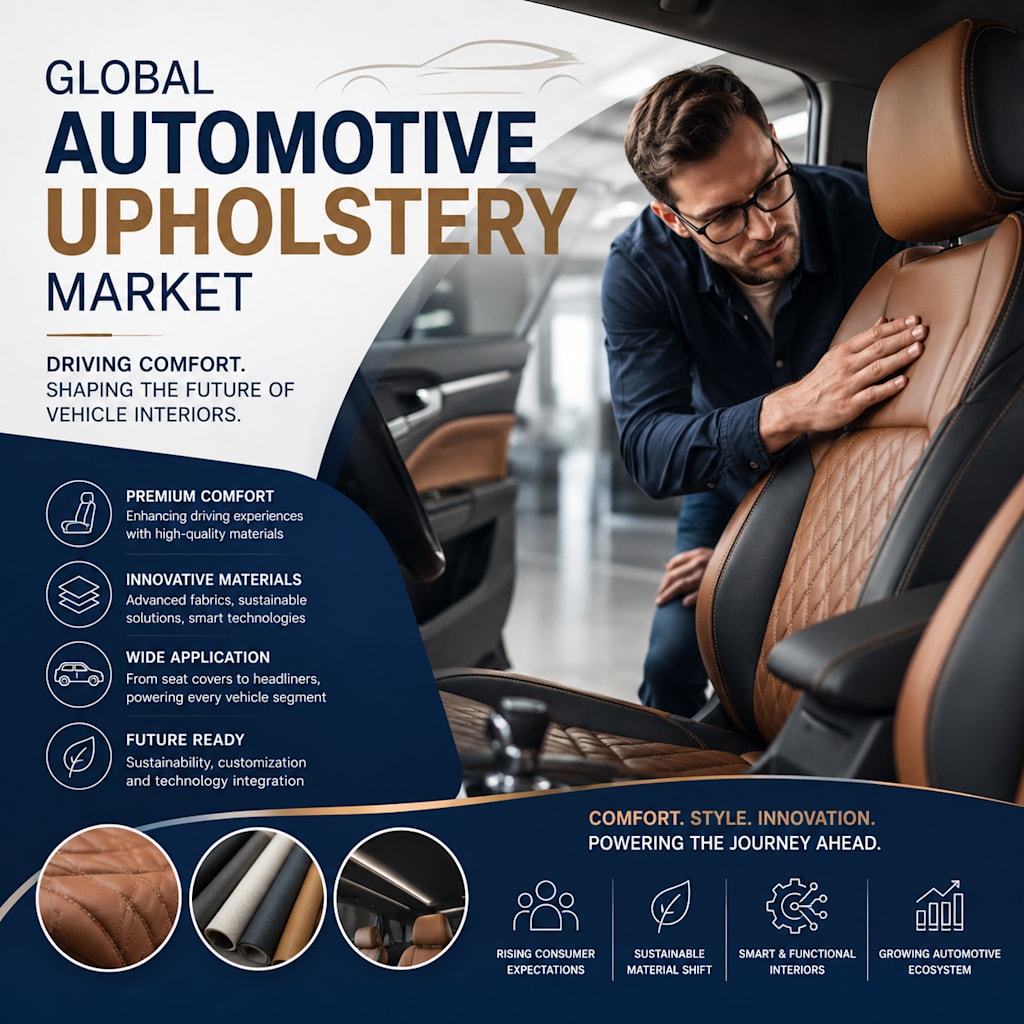
As the automotive industry continues its transformation, one trend stands out: the rising importance of vehicle interiors. Performance and fuel efficiency are still critical consumer considerations when purchasing a car, but the cabin environment is rapidly gaining ground.
Modern customers are increasingly prioritizing interior comfort, materials, technology integration, and overall aesthetic appeal. In many cases, the design and feel of a vehicle's interior are now directly impacting purchasing decisions.
This trend is fundamentally reshaping the global automotive upholstery market. What was once considered a purely functional part of vehicle production is evolving into a high-value sector driven by factors such as premiumization, electric vehicle innovation, sustainability, and smart materials.
A Market Moving Beyond Traditional Car Interiors
The global automotive upholstery market was estimated to be worth approximately USD 7.8 billion in 2025 and is forecast to grow to nearly USD 11.4 billion by 2034. This represents a compound annual growth rate (CAGR) of about 4.15% between 2026 and 2034.
While these numbers highlight the market's financial scale, the underlying drivers are what truly capture the industry's transformation. Automotive interiors are no longer just about seats and fabrics; they are becoming integrated, lifestyle-oriented environments that blend luxury, comfort, technology, and sustainability. As vehicles become smarter and more personalized, upholstery materials are evolving in tandem.
Why Vehicle Interiors Matter More Than Ever
For decades, automakers primarily focused on engine performance and exterior styling. However, consumer expectations are rapidly changing. Drivers are spending more time inside their vehicles due to traffic congestion, longer commutes, and the growing prevalence of connected mobility experiences. As a result, interior comfort and cabin quality have become crucial competitive differentiators, especially in electric vehicles (EVs), premium SUVs, luxury sedans, and mobility fleets. Consumers are increasingly demanding interiors that feel modern, comfortable, and technologically advanced, fueling growth across the automotive upholstery sector.
The Rise of Premium and Customized Interiors
A key factor driving market expansion is the surging demand for premium vehicle interiors. Luxury brands like BMW, Mercedes-Benz, Lexus, Audi, and Tesla are investing heavily in creating interior experiences that go beyond traditional automotive design. Common features now include soft-touch premium materials, heated and ventilated seating, integrated ambient lighting, personalized stitching and trim options, and advanced acoustic insulation. This trend is no longer exclusive to luxury vehicles; even mid-range segments are incorporating premium features as automakers compete for modern buyers, leading to a steady increase in upholstery content value per vehicle worldwide.
Electric Vehicles Are Reshaping Interior Design
The rapid adoption of electric vehicles is having a significant impact on the upholstery market. EVs offer greater architectural flexibility due to the absence of large engine components. This allows manufacturers to redesign interiors to feel more spacious, lounge-like, and technology-focused, creating demand for lightweight upholstery materials, sustainable interior fabrics, smart seating systems, and premium synthetic leather alternatives. Brands like NIO, Tesla, BYD, and Lucid Motors are actively differentiating themselves through their interior quality and passenger experience, positioning interiors as a core selling point rather than an afterthought.
Sustainability Is Changing Upholstery Materials
One of the most important transformations occurring in the market is the shift towards sustainable materials. Consumer pressure and regulatory requirements are driving automakers to reduce their environmental impact. As a result, traditional materials are being replaced by eco-friendly alternatives, including recycled polyester fabrics, bio-based polymers, vegan leather, plant-derived materials, and recyclable non-woven fabrics. Luxury automakers are increasingly committing to animal-free interiors, while governments are implementing stricter environmental regulations, making sustainability a critical competitive advantage.
Why Non-Woven Fabrics Are Dominating
Among fabric types, non-woven materials currently hold the largest market share due to their lightweight structure, lower manufacturing costs, better acoustic insulation, and ease of recyclability. With electric vehicle range being a top priority, weight reduction is crucial. This trend is pushing manufacturers toward materials that offer both durability and efficiency, making non-woven fabrics increasingly popular.
Smart Fabrics Could Define the Future of Automotive Interiors
Perhaps the most exciting development in the industry is the emergence of smart upholstery technologies. Automotive upholstery is beginning to integrate electronic functionalities directly into fabrics and seating systems, enabling features such as heated and ventilated seats, biometric monitoring sensors, occupant detection systems, self-cleaning nano-coatings, and adaptive temperature control. Some companies are even developing upholstery that can monitor driver health and fatigue in real-time. As connected vehicles continue to evolve, smart fabrics are expected to be the fastest-growing segment in the market.
Asia-Pacific Is Leading Global Growth
The Asia-Pacific region is the current market leader and is anticipated to remain the fastest-growing region over the next decade. China is a major contributor due to its vast vehicle production capacity and rapidly expanding EV industry. India is also an emerging growth market, with rising middle-class incomes driving demand for passenger vehicles with enhanced interiors. Additionally, increasing vehicle ownership in Southeast Asian countries further supports regional demand for automotive upholstery materials. The combination of high vehicle production and a growing appetite for premium interiors makes Asia-Pacific the global growth engine for this industry.
Competition Is Intensifying Across the Industry
The automotive upholstery market is becoming increasingly competitive as companies vie to develop innovative materials and technologies. Key players are focusing on smart seating systems, sustainable material innovation, lightweight interior solutions, premium synthetic leather, and integrated sensor technologies. Automotive suppliers are forming strategic partnerships with chemical companies, textile manufacturers, and technology firms to accelerate innovation. Competition is no longer solely about durability but about delivering a complete interior experience.
Challenges Facing the Industry
Despite strong growth prospects, the market faces several challenges. Raw material price volatility, particularly for petroleum-based polymers and genuine leather, remains a significant concern. Manufacturers are also navigating strict environmental regulations, supply chain disruptions, rising production costs, and the need for rapid technology integration. Balancing affordability with sustainability, especially in price-sensitive segments, is an ongoing challenge.
The Future of Automotive Upholstery
The future of automotive upholstery is likely to be shaped by three dominant trends: sustainable materials, smart interior technologies, and EV interior premiumization. Eco-friendly and recyclable materials will become more commonplace as automakers strive for carbon reduction. Smart fabrics and sensor-integrated seating systems are poised to redefine the driving experience, while electric vehicles will continue to drive demand for more sophisticated, lounge-like cabin designs. As these trends converge, automotive upholstery will transition from a supporting component to a central element of vehicle innovation and brand identity.
Final Thoughts
The automotive upholstery industry is undergoing a significant transformation, extending far beyond traditional seat fabrics and interior trims. Fueled by electrification, sustainability, customization, and smart technology, vehicle interiors are becoming increasingly advanced and experience-focused, reshaping the very definition of automotive luxury and comfort.
About the Creator
Robert
Senior Market Researcher at IMARC Group, specializing in global market analysis, industry trends, and data-driven insights across diverse sectors.
Enjoyed the story? Support the Creator.
Subscribe for free to receive all their stories in your feed.
Comments
There are no comments for this story
Be the first to respond and start the conversation.