
How Electric School Buses Are Driving a Cleaner Future for Students
As governments and schools invest in sustainable transportation, electric buses are emerging as a powerful solution for healthier communities and lower emissions.

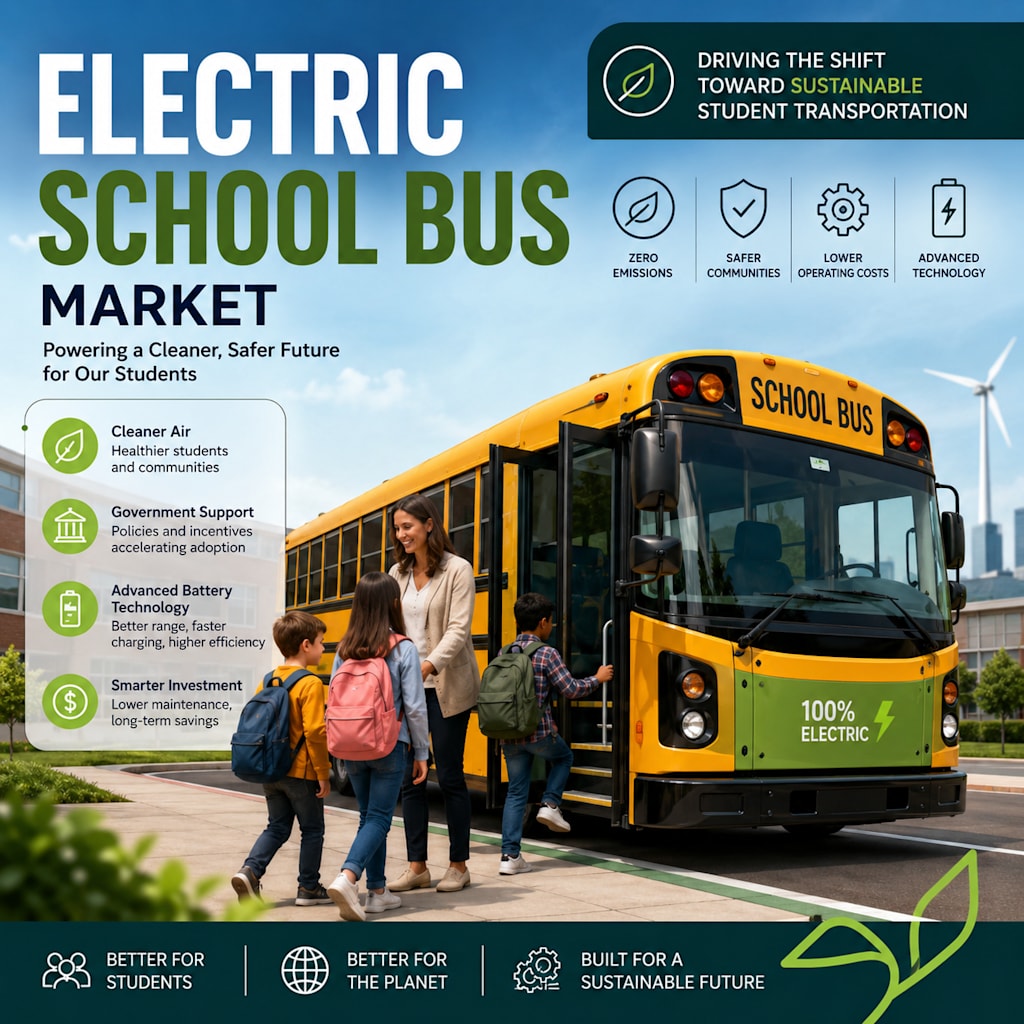
For decades, the iconic yellow school bus has been a staple of education and childhood. Every morning, millions of students climb aboard diesel-powered vehicles, often unaware of the environmental toll they can take.
Today, however, this is starting to change.
Across the world, school districts, governments, and transportation companies are increasingly adopting electric school buses as a more sustainable, quiet, and cleaner alternative to their fossil fuel counterparts. What was once a niche movement is fast becoming one of the fastest-growing segments in the transportation industry.
As climate change, air pollution, and fuel prices continue to be a growing concern for us, electric school buses have emerged as an accessible and eco-friendly alternative.
A Booming Market
The electric school bus industry is experiencing a significant period of growth and development.
In 2025, the global market was valued at USD 45.6 billion. However, this industry is projected to reach nearly USD 389.3 billion by 2034, growing at an estimated compound annual growth rate (CAGR) of 26.89%.
This exponential growth can be attributed to many environmental policies, emerging technologies, and a demand for more environmentally friendly transport systems.
Unlike most trends that come and go in the industry, the development of electric school buses will likely persist for years, due to both economic and environmental reasons.
Traditional School Buses Under Fire
Diesel school buses have long been a staple of student transport, reliable and widely available, but they are also notorious polluters.
Students breathe diesel exhaust while getting on and off, and even while on board. Numerous studies have linked the vehicle emissions produced by diesel buses to respiratory problems in children, which can affect developing lungs even further.
At the same time, governments worldwide are faced with mounting pressure to reduce the transportation industry's overall emissions.
With climate goals at the forefront for many countries, school transportation becomes a focal point, and electric school buses address the environmental and health concerns in one fell swoop.
Cleaner Air for Students and Communities
The biggest reason to make the switch to electric school buses is their ability to positively impact air quality.
Being zero-emission, there is no more exhaust pollution traveling into our neighborhoods, school communities, and residential areas.
The impact on students can be particularly noticeable. Healthier schools due to reduced pollution are important for respiratory health in children, and can reduce childhood asthma rates.
Communities will also see great benefits, with lower air pollution levels and government environmental targets met.
Government Funding Paves the Way
The shift to electric school transportation will not happen solely based on consumer demand and market forces.
In fact, governments have been actively funding these initiatives through various grants, tax credits, and subsidies.
Public funding is helping school districts offset the upfront costs of electric buses, and many governmental bodies are committed to making electric buses a realistic option for schools across many regions.
Charging infrastructure has also been an area where the government has invested significantly to ensure schools can access what they need to electrify their fleets.
Without this type of support, it would take a great deal longer to achieve widespread electric school bus adoption.
Battery Technology Reinvents the Equation
Ten years ago, electric buses would never have been considered by school districts.
Lower range on battery power, lengthy charging times and capacity issues were some of the problems that hindered their progress, but this has now changed dramatically.
Thanks to advanced battery technology-primarily lithium-ion batteries-we now have a way to power electric buses more efficiently and for longer periods.
Modern electric school buses offer significantly increased range and reduced charging times compared to the electric buses of a decade ago.
Many of the prior hurdles to electric school bus adoption have been overcome with improvements in battery technology, making them a more viable alternative for more schools.
Lower Operating Costs Drive Long-Term Value
While it may be more expensive to purchase an electric bus upfront, it is far more cost-effective to operate over the vehicle's lifetime.
Electric buses only have one moving part (the motor), which requires far less maintenance and repair compared to internal combustion engines.
Fuel costs are another important consideration. The cost of electricity per mile is typically lower than that of diesel fuel, and electric vehicle power sources are often more price stable.
Taking government subsidies into account, the argument for buying an electric bus becomes far more appealing.
Asia-Pacific is at the Forefront
Across the globe, it appears that the Asia-Pacific region is leading the transition to electric school transportation.
The following points have all contributed to this strong position:
* Government support for the development of electric vehicles.
* Ability to mass produce vehicles and parts at scale.
* Increased urbanism.
* Growing awareness about environmental protection.
* Investment in advanced battery technology.
In several Asian countries, these points have combined to help regions move forward, placing them as a leader for the electric school bus industry.
The US as a Significant Market
The United States is another key market to watch in the electric school bus industry.
Federal and state programs encouraging reduced pollution have prompted many school districts to invest in the technology, with funding for zero-emission schools being distributed in large amounts.
As more public attention shifts to health and environmental issues, public support for electric buses is also growing among parents, educators, and the public.
With battery technology improving and charging infrastructure becoming more widespread, the US is poised for significant growth in electric school bus usage.
The Intelligence Behind the School Bus
But the improvements go further than just replacing diesel buses with electric alternatives.
New technology is constantly being developed that will further improve and optimize electric school buses, making transportation more efficient. These can include:
* Real-time fleet management systems.
* GPS tracking.
* Predictive maintenance for individual vehicles.
* Enhanced safety features.
* Energy management systems.
As the automotive and technology industries continue to evolve, it's likely that electric school buses will become more intelligent and adaptable.
Obstacles on the Road Ahead
However, this transition isn't without its hurdles.
The cost of electric buses is a significant barrier to adoption for many schools. While incentives are helping, many institutions face budgetary constraints that slow purchasing decisions.
Development of charging infrastructure must also be managed thoughtfully.
In certain regions, the electric grid cannot currently support the charging needs of hundreds or thousands of school buses.
As technology continues to advance and battery prices decline, many industry professionals believe that these barriers will gradually diminish over time.
The Future Is Electric
The trajectory for the school bus industry appears to be electric.
Increased public interest, government backing, technological advances, and financial incentives are all helping the industry flourish.
Once considered to be experimental, electric school buses are now becoming a scalable and viable option for schools globally.
With more communities choosing a greener alternative, electric school buses will undoubtedly be a prominent fixture of future transportation.
For millions of students across the globe, the iconic yellow school bus will soon symbolize more than just an education; it will stand for a cleaner and healthier future.
About the Creator
Robert
Senior Market Researcher at IMARC Group, specializing in global market analysis, industry trends, and data-driven insights across diverse sectors.
Enjoyed the story? Support the Creator.
Subscribe for free to receive all their stories in your feed.
Comments
There are no comments for this story
Be the first to respond and start the conversation.