
How Does Poor Store Execution Affect Retail Deployment
The cost of Poor store execution on Retail Deployment

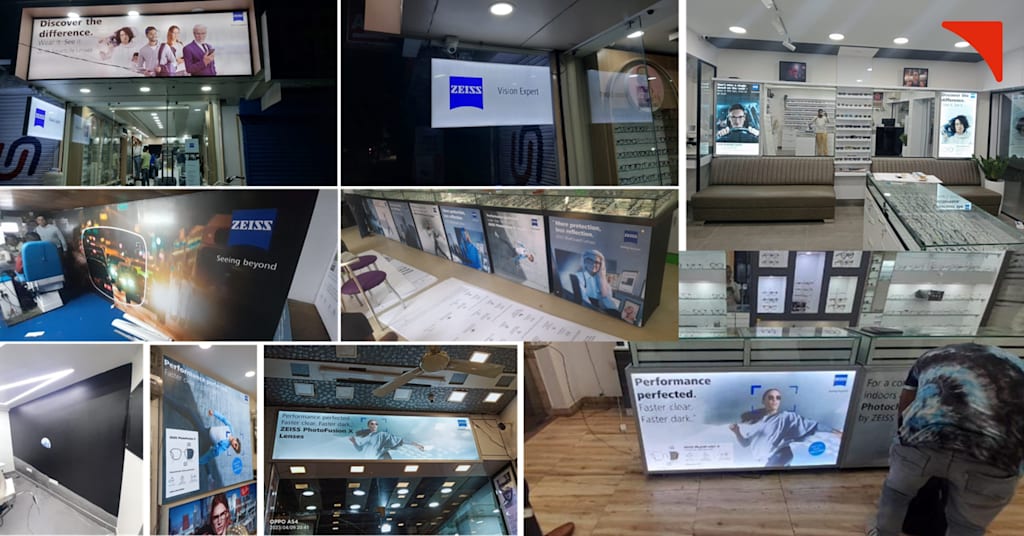
While rolling out your business and scaling it with many stores across different locations, you can face several issues that delay execution and lead to inconsistent customer experiences across stores. Instead of becoming a localized problem in one store, it becomes a systemic issue that reduces the profitability and damages the brand image and perception.
Retail Deployment doesn’t fail because of a weak strategy, but weak store execution across locations that turns growth into a liability.
How variation in Execution kills Deployment economics
You can fix an issue at a fixed cost when the issue persists in one store, but when you have to fix issues in several stores in different cities, you get a varied cost and several other parameters, like handling local vendors, which can prove disastrous for the customer experience.
Westside learned this through painful expansion. Early stores opened with inconsistent fixture arrangements and merchandising standards. Later stores required constant manual adjustments to match brand standards. By store 15, they realized they were spending 15-20% of store management time correcting execution issues that should have been locked in during store build.
They paid a huge cost for this deployment, suffering not only revenue leakage but also time leakage. That variance of execution didn’t hamper the quality after fixing it, but it definitely reduced the revenue as the stores were performing 10-18% worse than normal outlets.
The ‘delayed timeline’ price
Bata India was expanding and refreshing their stores when it faced a delay in their timeline. Several stores got delayed for 2-4 weeks. The inconsistency here meant they couldn’t capture market windows as competitors won the race.
It became an example of strategic failure as delayed openings mean costs they spend on marketing, staff training, and inventory placement are sunk without corresponding revenue capture.
A competitor opening faster captures shelf space, brand awareness, and customer preference before you arrive. Market leadership isn't just about being first- it's about being fast enough to be first. If you don’t win the gold medal, they might cherish you now, but they will forget the legacy of your services.
Standardization is the key to scalability.
What happens when every store has a custom layout? It uses different fixtures; each store gets different installation timelines, staff training, and execution quality. This leads to delays and revenue loss, so to solve this, many retail businesses started to standardize the approach.
Tier-2 city expansion of Aditya Birla Fashion was not executed with chaos since all its stores operate on the same specifications of fixtures, layout principles, and merchandising standards. Every new place is not one to solve, but one to duplicate. Otherwise, each store is a bespoke undertaking, and implementation is out of control in no time.
This move by businesses enables them to deploy at a large scale with a proven formula to replicate, which enhances their customer experience as errors in quality are reduced.
Consistency Drives Revenue. Directly.
Shoppers Stop is also a company that works well in any geography due to the fact that the implementation is the same - layout, placement of products, flow of services. Those stores that do not meet that standard perform significantly worse, even with the same range and price. On a large scale, bad execution usually causes a 10-15% revenue difference between good and bad execution points. That's not marginal. That's transformational.
The Unseen Tax is Rework.
FBB was opening stores with execution shortcuts, trying to correct in the process of operation, and by store 8-10, was incurring 18-22 percent higher execution costs in the portfolio. The appropriate company was returning to repair the past stores rather than progressing. The consequence: they had 12stores open when they had planned 15, and this is a market position that is lost forever.
The Real Question
All the retail brands are capable of implementing a single store. The question is, can your systems, standards, and visibility mechanisms run twenty at the same time, every time, and on budget? Brands with the ability to scale profitably. Those that are unable to scale into operating debt.
About the Creator
D'Art Design
D’Art Design is a leading global retail design agency. We integrate tactic to provide outstanding experiences, through brand communication and activation, brand design, promotion, and interior design.
Enjoyed the story? Support the Creator.
Subscribe for free to receive all their stories in your feed.
Comments
There are no comments for this story
Be the first to respond and start the conversation.