
How Businesses Can Modernize Legacy Systems with Cloud Applications
Why Legacy Systems Are Becoming a Business Challenge

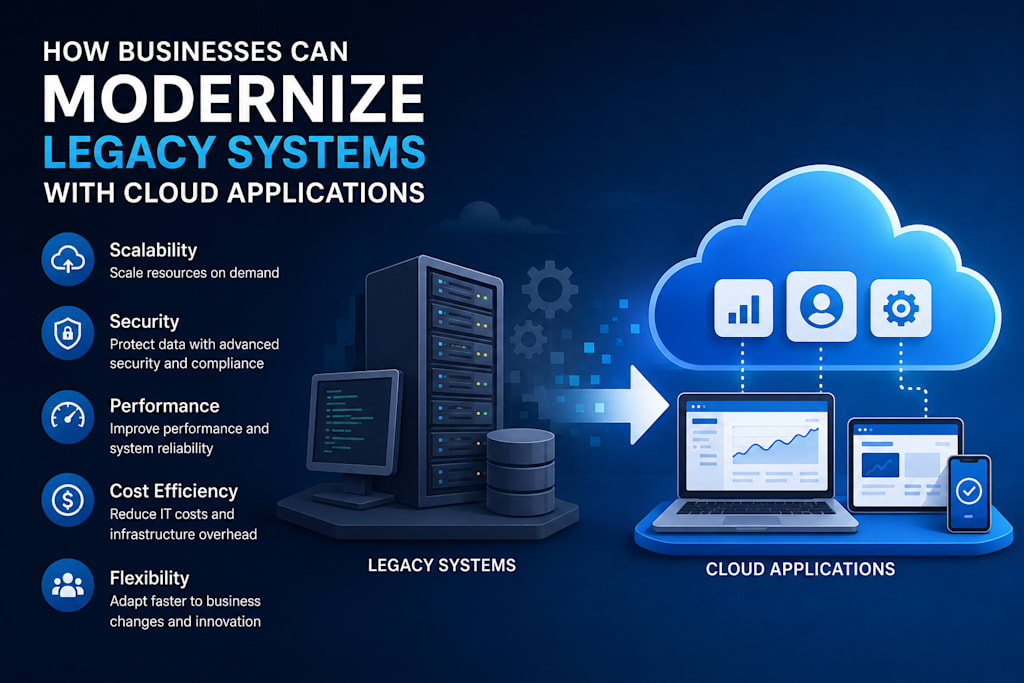
Many businesses still depend on software systems built years ago. While these legacy systems may continue to perform basic operations, they often create limitations that slow down growth, increase operational costs, and reduce business flexibility.
Older systems are usually difficult to scale, expensive to maintain, and challenging to integrate with modern technologies. In industries where speed, automation, and real-time access to data are becoming essential, relying on outdated infrastructure can hold organizations back from digital transformation.
This is why many companies are now shifting toward cloud applications to modernize operations without completely disrupting existing workflows.
What Is Legacy System Modernization?
Legacy system modernization is the process of upgrading outdated software, infrastructure, or applications using modern technologies and cloud-based solutions.
Instead of replacing everything at once, businesses often modernize systems step by step. This approach helps organizations reduce risks while improving performance, security, scalability, and user experience.
Cloud application development has become one of the most practical ways to achieve this transition because it allows businesses to move away from rigid on-premise infrastructure and adopt more flexible digital environments.
Common Problems with Legacy Systems
Before understanding the benefits of modernization, it is important to recognize the challenges businesses commonly face with older systems.
High Maintenance Costs
Legacy systems often require dedicated hardware, manual updates, and specialized support teams. Over time, maintaining these systems becomes more expensive than upgrading them.
Limited Scalability
Traditional infrastructure may struggle to handle growing customer demands, increasing workloads, or expanding business operations.
Poor Integration Capabilities
Many older systems were not designed to connect with modern APIs, cloud platforms, mobile applications, or automation tools.
Security Risks
Outdated software can create vulnerabilities due to unsupported frameworks, missing security patches, and limited monitoring capabilities.
Slower Innovation
Businesses using rigid legacy systems may find it difficult to launch new features, improve customer experiences, or adopt emerging technologies.
How Cloud Applications Help Modernize Legacy Systems
Cloud applications provide businesses with modern infrastructure, scalable resources, and flexible development environments that simplify modernization efforts.
Improved Scalability
Cloud platforms allow businesses to scale resources based on operational demand. Whether traffic increases suddenly or business operations expand, cloud environments can adapt quickly without requiring major infrastructure investments.
Better Accessibility
Cloud-based applications allow teams to access systems securely from different locations. This flexibility supports remote work, collaboration, and faster decision-making.
Faster Software Updates
Modern cloud environments support continuous updates and deployment cycles, reducing downtime and improving software reliability.
Enhanced Security
Cloud providers typically offer advanced security measures such as encryption, access management, automated backups, and threat monitoring.
Reduced Infrastructure Management
Businesses can reduce dependency on physical servers and manual maintenance processes by shifting workloads to cloud infrastructure.
Practical Approaches to Legacy System Modernization
Every business has different modernization requirements. The right approach depends on system complexity, business goals, compliance needs, and operational priorities.
Rehosting
Also known as “lift and shift,” this approach involves moving existing applications to the cloud with minimal code changes. It is often the fastest migration strategy.
Refactoring
Refactoring involves modifying application architecture and code to improve cloud compatibility, performance, and scalability.
Rebuilding Applications
Some businesses choose to rebuild critical systems entirely using modern cloud-native technologies to support long-term growth.
Hybrid Cloud Integration
Organizations with sensitive data or compliance requirements may combine cloud applications with existing on-premise infrastructure through hybrid cloud environments.
Industries Benefiting from Cloud Modernization
Cloud modernization is helping businesses across multiple industries improve operational efficiency and customer experiences.
Healthcare
Healthcare organizations use cloud applications to improve patient data management, remote access, and operational coordination.
Financial Services
Financial companies modernize systems to strengthen security, improve transaction processing, and support digital banking experiences.
Logistics and Transportation
Transportation companies use cloud-based platforms for fleet tracking, workflow automation, route optimization, and real-time operational visibility.
Retail and E-Commerce
Retail businesses rely on cloud applications to manage inventory, customer engagement, analytics, and omnichannel operations.
Important Considerations Before Modernization
Modernizing legacy systems requires careful planning. Businesses should evaluate several factors before beginning cloud transformation projects.
Define Clear Business Goals
Organizations should identify whether their primary objective is reducing costs, improving scalability, enhancing security, or increasing operational efficiency.
Evaluate Existing Infrastructure
Understanding current system limitations helps businesses prioritize modernization efforts more effectively.
Focus on Data Security
Security and compliance planning should be integrated into every stage of cloud migration and application modernization.
Choose Scalable Technologies
Businesses should invest in cloud technologies that can support future growth and evolving operational requirements.
Work with Experienced Development Teams
Modernization projects often involve infrastructure planning, integration challenges, and application redesign. Experienced cloud development teams can help reduce risks and improve implementation efficiency.
The Growing Role of AI and Automation
Modern cloud applications are increasingly integrated with artificial intelligence and automation tools. Businesses are using these technologies to automate repetitive tasks, improve analytics, and optimize operational workflows.
AI-powered cloud systems can help organizations:
Analyze large volumes of business data
Predict operational trends
Improve customer support workflows
Automate reporting and monitoring
Enhance decision-making processes
As digital transformation continues to evolve, the combination of cloud computing and intelligent automation will become even more important for businesses seeking long-term competitiveness.
Final Thoughts
Legacy systems may still support core business functions, but they often limit growth, innovation, and operational efficiency in today’s fast-changing digital environment.
Cloud applications provide businesses with a practical path toward modernization by improving scalability, security, accessibility, and flexibility. Instead of relying on outdated infrastructure, organizations can build more adaptive systems that support long-term digital transformation goals.
Companies investing in cloud modernization today are positioning themselves to respond faster to market changes, improve operational performance, and create better experiences for both employees and customers.
About the Creator
Vishwajeet Singh
A proven leader in digital transformation, Vishwajeet drives innovation, scalability, and business impact at Bytexus. His role focuses on strategic direction, enterprise-level execution, and building long-term value for global clients .
Enjoyed the story? Support the Creator.
Subscribe for free to receive all their stories in your feed.
Comments
There are no comments for this story
Be the first to respond and start the conversation.