
How Brands Use Product engraving at events to Create Real-Time Personalisation
See how brands are making event giveaways special with live product engraving. From personalised mugs to keyrings, real-time engraving creates memorable keepsakes people actually want to keep.

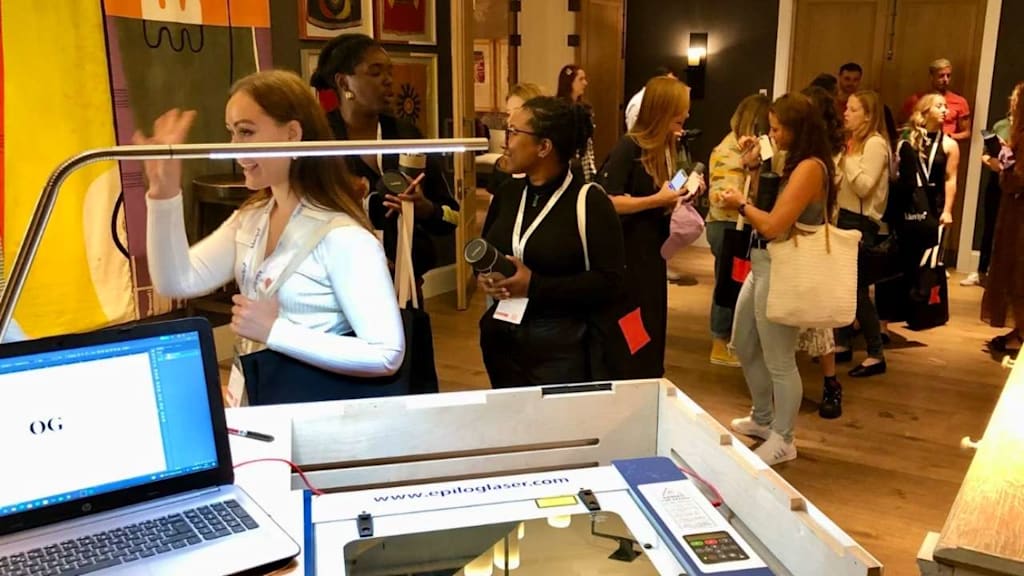
Real-time personalisation is when you get something made just for you, right there and then. At big events in the UK, brands are now doing this in a clever way: they engrave names, dates, or short messages onto products while people watch. It feels more special than a normal freebie because it looks like it was made for one person only.
This blog explains how it works, why it matters, and what brands need to think about if they want to try it.
Why Product engraving at events feels special
Most event gifts are the same for everyone. You get a tote bag, a pen, or a bottle, and it has the brand logo on it. That is fine, but it can feel a bit boring.
Engraving changes the feeling because:
- It adds your name (or a small message), so it feels like it belongs to you.
- People keep it longer, because it is personal and harder to throw away.
- It creates a moment. Watching your item being made is exciting, even if it only takes a minute.
- It starts conversations. People often show friends, take photos, and talk about it.
Brands like this because they are not just giving out stuff. They are giving out an experience.
What happens during live event engraving
Live event engraving is usually set up like a small “making station” at the event. People come over, choose an item, type their name (or tell staff), and then the engraving is done on the spot.
A simple flow often looks like this:
- Queue and choose: Visitors pick an item from a set list.
- Personalisation rules: Staff explain limits (for example, “Up to 10 characters” or “No swear words”).
- Name Check: Before engraving the spelling is checked for names.
- Engrave: The machine is used to engrave the object while the visitor is observing.
- Collect and share: People take it, often take a photo, and walk away happy.
Some brands add small touches, like a “pick-up card” or a simple display showing examples of fonts. That helps speed things up and avoids confusion.
Popular items for onsite laser engraving
Not every item engraves well. Brands normally choose products that are useful, safe, and quick to personalise. Onsite laser engraving is common because it is tidy and precise, and it can work on different materials.
Here are popular choices you often see in the UK event world:
- Metal water bottles or travel mugs (strong and used every day)
- Keyrings (cheap, fast, and easy to carry)
- Phone stands or small desk items (good for office events)
- Notebook covers (especially leather-look covers)
- Compact mirrors (common at beauty and lifestyle events)
- Wooden tags or coasters (nice for craft or food festivals)
Brands also think about the surface shape. Flat areas are easier and quicker. Curved items can still work, but they may need extra set-up.
A key point: some plastics are not safe to laser (like PVC) because they can give off harmful fumes. A responsible engraving team will avoid risky materials and use proper ventilation.
Planning Product engraving at events: space, power, timings
A good engraving station looks simple, but it needs planning. If the queue is too long, people walk away. If it is too fast, the brand may run out of stock.
Event planners often think about:
Space
- Enough room for a small counter, the machine, and a short queue
- A clear “start here” and “collect here” point so people do not block walkways
Power and kit
- Safe access to power (many venues in the UK have strict rules)
- Cable covers to stop trips
- Backup supplies (blank items, cleaning cloths, and packaging)
Speed
- Setting limits helps, like one item per person
- Keeping personalisation short (name, initials, or a short word)
- Having staff focused on the spelling check to prevent mistakes
Staffing
- One person greeting and managing the queue
- One person running the engraving set-up
- One person handing out finished items (at busy times)
This is also where brands decide what success looks like. Is it “as many engravings as possible”? Or “best quality and best photos shared”? The answer changes how the station is run.
Keeping it safe and legal in the UK
Because engraving uses machines, safety matters. Brands and event organisers in the UK usually consider:
- Venue rules: Some venues require risk assessments and method statements.
- Public safety: Barriers or Clear Table layout – Do not allow visitors to come in contact with moving parts.
- Ventilation: Proper ventilation/filtration, as per the system in place.
- Electrical safety: This is where PAT testing equipment is expected to be present at venues in the UK.
- Fire safety: Keeping the area tidy and away from flammable clutter.
There is also the people side. If staff collect names, brands should be careful about privacy. If a name is only used to engrave an item and not saved, that is simpler. Where details are stored (for instance for subsequent marketing for instance), then explicit consent and GDPR compliant processing is required
Measuring success without being pushy
Engraving can feel personal, so brands should be careful not to make it awkward. The best stations are friendly and easy, not like a sales trap.
Ways brands often measure results:
- Number of items engraved per hour
- Average queue time
- Stock use (did they bring the right amount?)
- Photo sharing (people tagging the event or using a hashtag)
- Short feedback like “How was it?” on a simple card or QR code
The main thing is that the person leaves thinking, “That was fun,” not “I got pressured.”
Quick questions people ask
How long does engraving take?
Often under a few minutes per item, depending on the material and how long the text is.
Is onsite laser engraving loud?
Usually it is not very loud, but events are noisy anyway. The main thing is having a calm, organised set-up.
Can visitors engrave anything they bring?
Some stations only engrave official event items to avoid problems with materials, size, or brand rules.
What text is allowed?
Most events keep it clean and short. Staff may refuse rude words or anything that could cause trouble.
Does it work for all ages?
Yes, but children should be kept at a safe distance from the equipment. The station should be designed for public spaces.
A final thought on real-time personalisation
When it is done well, Product engraving at events turns a normal giveaway into something people actually want to keep. It also creates a small “wow moment” that fits nicely into busy event days.
In the UK, there are specialist teams that provide live event engraving and onsite laser engraving as a service. One example you might hear about is MakersCAFE. Whichever supplier a brand chooses, the best results usually come from good planning, safe set-up, and simple personalisation that feels genuinely for the visitor.
About the Creator
MakersCAFE
MakersCAFE creates unforgettable experiences with live laser engraving and personalized brand activations. From events to trade shows, we help brands connect with their audience in unique and meaningful ways.
Enjoyed the story? Support the Creator.
Subscribe for free to receive all their stories in your feed.
Comments
There are no comments for this story
Be the first to respond and start the conversation.