
How AI Software Is Actually Built Behind the Scenes
A Simple Look at How Modern AI Applications Go from Raw Data to Real-World Software

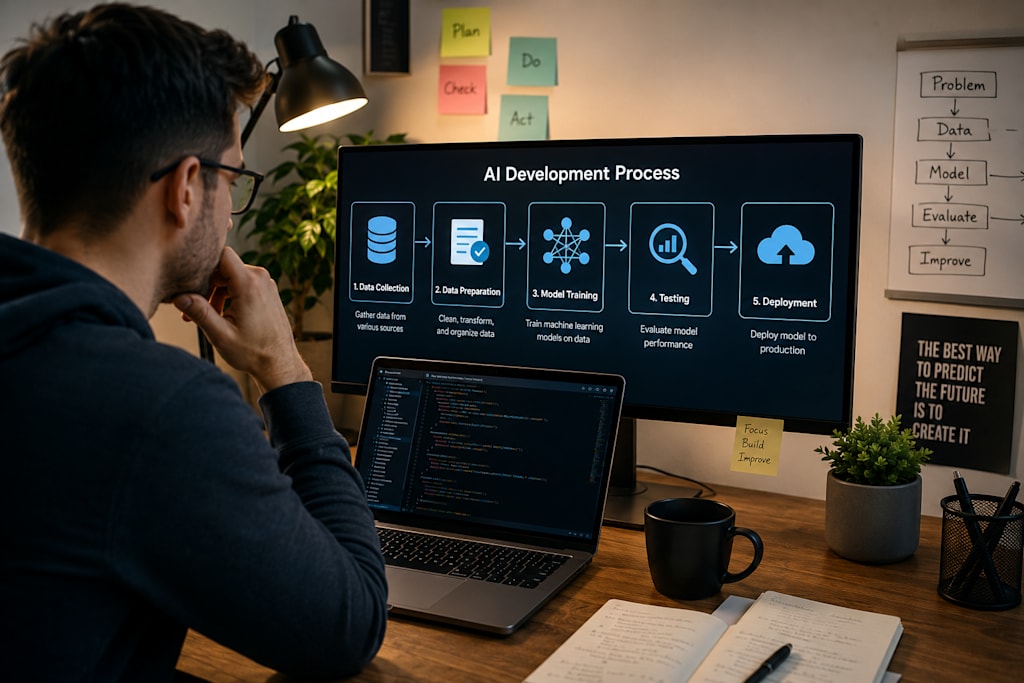
AI has quietly become part of everyday life. People use it while shopping online, watching movies, talking to chatbots, using navigation apps, or even checking banking transactions. Businesses are also relying on AI more than ever for automation, customer support, analytics, forecasting, and decision-making.
But while AI tools are becoming common, many people still do not understand how AI software is actually created behind the scenes.
Building AI software is not just about typing prompts into a chatbot or training a robot overnight. Real AI development involves planning, collecting data, testing systems, solving technical problems, and improving models continuously over time.
Whether it is a recommendation engine on a streaming platform or software that helps companies detect fraud, most AI applications follow a similar development process.
Here is a simple breakdown of how AI software is actually built from the beginning to deployment.
Understanding the Problem First
Every AI project starts with a problem that needs solving.
Before developers build anything, businesses first identify what they want the AI system to do. Without a clear goal, even advanced AI models can become ineffective.
For example:
A logistics company may want to reduce delivery delays.
A retailer may want better product recommendations.
A customer support company may want faster response times.
A healthcare platform may want appointment automation.
One thing many people underestimate is how important this early planning stage is. A poorly defined problem usually leads to poor AI performance later.
This stage often involves business teams, software engineers, analysts, and data specialists working together to define realistic goals.
Why Data Matters So Much
Data is the foundation of every AI system.
AI models learn patterns by studying information. The better the data quality, the better the AI system usually performs.
Companies collect data from many different sources, including:
websites
mobile apps
customer interactions
cloud databases
APIs
transaction systems
IoT devices
For example, an online shopping platform may analyze browsing history, purchase behavior, and product searches to improve recommendations.
In real-world projects, collecting clean and organized data is often more difficult than businesses expect. Data may be incomplete, duplicated, outdated, or stored across multiple systems.
This is one reason why AI development projects sometimes take months before model training even begins.
Cleaning and Preparing the Data
Raw data is rarely usable immediately.
Before AI models can learn properly, developers spend time preparing the data. This process is commonly called data preprocessing.
It usually includes:
removing incorrect records
fixing missing values
organizing information
labeling datasets
standardizing formats
This stage may sound simple, but it is one of the most time-consuming parts of AI development.
For example, if a fraud detection system is trained using inaccurate financial records, the AI model may produce unreliable results.
Many developers say that preparing the data takes longer than building the AI model itself.
Choosing the Right AI Model
Once the data is prepared, developers decide which type of AI model fits the project best.
Different AI systems are designed for different tasks.
Some AI models work well for:
prediction
recommendation systems
language processing
image recognition
automation
forecasting
For example:
Chatbots often rely on natural language processing models.
Image recognition systems use deep learning.
Recommendation engines analyze behavioral patterns.
Choosing the wrong model can lead to poor accuracy and performance problems later.
This stage usually involves experimentation because developers often test multiple approaches before selecting the best option.
Training the AI System
Training is where the AI system begins learning from the data.
During this stage, developers feed datasets into algorithms so the model can identify patterns and relationships.
The process involves repeated testing and adjustments to improve prediction accuracy.
For example, a customer support chatbot may analyze thousands of previous conversations to learn how people ask questions and how responses should be generated.
Training AI systems can require large computing resources, especially for advanced applications.
Many companies now use cloud infrastructure because training large AI models on local systems can become expensive and slow.
This stage also involves a lot of trial and error. AI development is rarely a perfect one-step process.
Testing Before Launch
Before deployment, AI systems need extensive testing.
Developers must make sure the system performs correctly in real-world situations.
Testing usually focuses on:
accuracy
reliability
response quality
bias detection
security
system stability
For example, if an AI healthcare system produces unreliable recommendations, it could create major operational problems.
One challenge with AI testing is that real-world behavior constantly changes. A model that performs well today may become less accurate months later if new data patterns emerge.
Because of this, testing is never truly finished.
Turning the Model Into Real Software
Once the AI model works properly, developers integrate it into a usable application.
This is where AI becomes something people can actually interact with.
The final software may include:
mobile apps
dashboards
chat interfaces
analytics systems
automation tools
At this stage, traditional software development becomes just as important as machine learning.
Even a powerful AI model can fail if the application itself is slow, confusing, or difficult to use.
User experience plays a major role in successful AI products.
Deploying the AI Application
Deployment means making the AI system available for real users.
Many businesses deploy AI software through cloud platforms because they offer flexibility and scalability.
During deployment, developers focus on:
system performance
uptime
infrastructure reliability
API integration
scalability
monitoring
For example, a logistics platform using AI for route optimization must process real-time traffic data quickly without delays.
A slow AI system can negatively affect the user experience even if the model itself is accurate.
Why AI Systems Need Continuous Improvement
One common misconception is that AI systems stop evolving after deployment.
In reality, AI applications require continuous monitoring and updates.
User behavior changes over time. Markets change. Customer preferences change. Data changes.
Because of this, developers regularly:
retrain models
improve datasets
fix errors
optimize predictions
monitor performance
For example, recommendation systems on streaming platforms constantly adapt based on changing viewing habits.
Without continuous improvement, AI performance can gradually decline.
Challenges Businesses Often Face
Although AI offers many advantages, development is not always simple.
Some common challenges include:
poor-quality data
high infrastructure costs
integration issues
security concerns
lack of technical expertise
Many businesses also underestimate how much planning and testing AI projects require.
In reality, successful AI systems are usually the result of long-term development rather than quick automation shortcuts.
Final Thoughts
AI software development is a long process that combines data, experimentation, testing, software engineering, and continuous improvement.
While AI tools are becoming more accessible, building reliable AI applications still requires careful planning and technical expertise behind the scenes.
As more businesses continue adopting AI technologies, understanding how these systems are actually developed helps people better understand the technology shaping modern digital experiences.
Disclosure: This article was created with AI-assisted support and reviewed, edited, and refined by a human author before publication.
About the Creator
Vishwajeet Singh
A proven leader in digital transformation, Vishwajeet drives innovation, scalability, and business impact at Bytexus. His role focuses on strategic direction, enterprise-level execution, and building long-term value for global clients .
Enjoyed the story? Support the Creator.
Subscribe for free to receive all their stories in your feed.
Comments
There are no comments for this story
Be the first to respond and start the conversation.