
How Agricultural Robots Are Changing Farming Forever
Automation, AI, and precision agriculture are driving a new era of efficiency and sustainability.

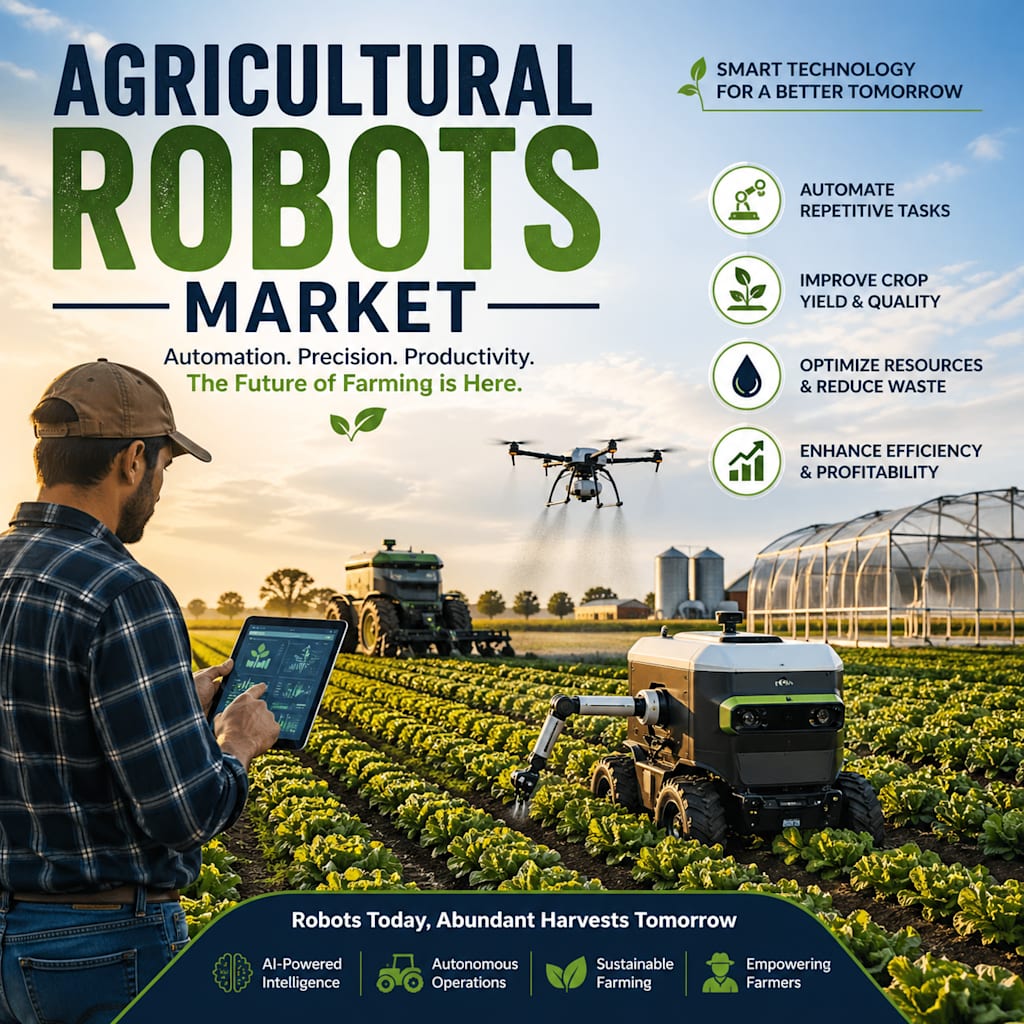
Farming is no longer just about the soil‚ seeds and seasons․
Around the world‚ robotics technology is finding its way into agriculture․ Whether self-driving tractors‚ drones with artificial intelligence‚ or new machines with sensors and cameras‚ the means to plant‚ monitor and harvest food is rapidly changing․
The fast-growing agricultural robot industry forms the centerpiece of this transition․
The futuristic idea is now seen as an imperative as farmers must produce more food with less land and fewer resources․
A Market Growing Faster Than Customary Agriculture
The value of the global market for agricultural robots was nearly USD 12 billion in 2025 and is projected to be over USD 41 billion in 2034․
This reflects a major revolution in agricultural practices globally‚ with a compound annual growth rate (CAGR) of 14․2%․
As with many previous technological advancements‚ agricultural robots are increasing efficiency‚ but they are also redefining what productivity means․ With increasing population and demand for food worldwide‚ automation becomes a necessity rather than a luxury․
Why Farmers Are Turning to Robots
Modern agriculture faces its own set of challenges․
Labor shortages are becoming a larger issue‚ especially in areas of large scale farming․ Other challenges include increasing costs of production‚ unpredictable weather‚ and pressure to adopt sustainable practices․
Agricultural robots could solve many of these problems․
Robots are not encumbered by the limitations of humans in terms of fatigue‚ so robots can continuously plant‚ harvest and spray‚ reducing human labor costs over the long run․
Even though their initial installation cost is high‚ robotic systems offset costs through reduced labor‚ time and materials costs for the job․
Precision farming driving technology transition‚ future growth․
The rapid uptake of agricultural robots has been driven by the advance of precision agriculture․
The goal of data-driven farming is to target specific areas of the field rather than all of it․
Robots equipped with sensors and artificial intelligence can:
- Real-time data monitoring of soil conditions
- Monitor crop health and identify growth trends․
- Detect early pest and disease outbreaks
- Enhancement of the use of water‚ fertilizers and pesticides
It also conserves resources‚ saves money‚ increases yield‚ and has less impact on the environment than customary methods․
Recent years have seen the development of technologies such as AI-powered field robots‚ which can be used to augment decision making․
Effects of Labor Shortages in Agriculture
Labor scarcity is one of the main challenges currently facing the agricultural industry․
Furthermore‚ fewer people want to take on physically demanding work on farms‚ contributing to a mismatch between supply and demand for labor in many areas․
Agricultural robots help to bridge this gap․
Robots are capable of performing labor-intensive tasks with great precision‚ such as the harvesting of crops‚ and the removal of weeds‚ with robots being more efficient and faster than human laborers․
It allows farmers to be more productive and focus on planned decisions rather than engaging in manual work․
Technology Is Making Robots Smarter and More Accessible
As robotics‚ AI‚ and machine learning develop‚ agricultural robots are achieving greater capabilities in performing tasks․
Modern robots can now:
- Computer vision can be used to tell crops from weeds․
- Navigate detailed terrain using advanced sensors․
- Collecting and analyzing real-time agricultural data․
- Can work with limited supervision
At the same time‚ technical improvements are driving down costs and introducing robotic solutions to small and mid-sized farms․
With innovation‚ it is likely that the agricultural robots will become more versatile․
Sustainability Is Now A Major Focus
Environmental concerns have emerged to be an influential force in future agricultural practices․
Conventional agriculture however uses higher quantities of water‚ fertilizers and pesticides‚ which can lead to multiple environmental impacts and depletion of natural resources․
Agricultural robots offer a more sustainable solution․
Robots are able to apply resources precisely‚ reducing waste‚ pollution‚ and improving sustainability for soil agriculture through precision spraying and localized irrigation systems‚ among other tasks․
As global society is becoming increasingly concerned about sustainability‚ these benefits may drive their adoption․
What Are the Leading Types of Agricultural Robots?
A range of agricultural robots are being used for a variety of tasks․
Of these‚ automated harvesters (machines specially designed to harvest fruits‚ vegetables‚ and other crops) currently dominate the market as they reduce crop damage and labor costs and can harvest in a fraction of the time․
Other key technologies include:
- Drones (UAVs) for aerial surveillance and spraying
- Driverless tractors for automated field operations
- Milking robots in dairy farm management
- Soil and crop monitoring robots for data collection
These technologies form part of the modernization of agriculture․
Where Adoption is Growing the Fastest
Adoption of agricultural robots varies by region․
North America is the largest market globally due to a higher concentration of infrastructure developments‚ technology investments‚ and automated solutions․
The Asia-Pacific region is expected to be an important area for growth․ Adoption is driven by growing investments in agriculture‚ population growth‚ and increasing agricultural productivity in countries such as India and China․
Production in Europe is increasing for sectors such as dairy farming‚ where robots help improve both productivity and product quality․
Middle East‚ Africa and Latin America have been slower to adopt agricultural robotics‚ but have begun to implement the technology as part of their agricultural modernization programs․
A Competitive and Innovation-Driven Industry
The agricultural robots market is in a state of change as technology quickly advances․
The top players are concentrating:
- Full automation of farm systems
- Agricultural equipment using artificial intelligence and IoT
- Improving the efficiency and adaptability of robots
- Partnering with research institutes and farming organizations
Other new developments in the field include AI-powered robots and collaborative robotics platforms․
Problems That Still Need to Be Solved
While rapidly growing‚ the agricultural robotics market is not without its challenges․
The high up-front cost can be difficult for smallholders in developing countries‚ and technical challenges exist as the technology must be able to adapt to the terrain and remain reliable in complex farm systems․
Farmers may also need specialized training to operate and maintain advanced robotic systems․
However‚ these obstacles may be diminished‚ as technologies become more mature‚ affordable‚ and easier to use․
The Future of Farming Is Automated
Agriculture is at a tipping point․
As demand for food and pressure on natural resources increases‚ alongside labor shortages‚ customary farming alone cannot meet the food demands of the world․
Due to this‚ agricultural robots are seen as a breakthrough in agriculture‚ a completely new form of farming․
These systems are already transforming farming practices‚ including increasing efficiency‚ lowering costs‚ and enabling sustainable agriculture․
The market is expected to exceed USD 41 billion by 2034‚ and automation will be essential to feed the growing population․
Final Thoughts
The stereotype of farming is changing․
Farms previously dependent almost entirely on human labor now have smart machines on board and at their head‚ but the benefits of agricultural robots are becoming too great to let the difficulties keep us from adopting them․
As technology continues to advance‚ one thing remains clear:
Farming will be more clever‚ efficient‚ and automated in the future․
About the Creator
Robert
Senior Market Researcher at IMARC Group, specializing in global market analysis, industry trends, and data-driven insights across diverse sectors.
Enjoyed the story? Support the Creator.
Subscribe for free to receive all their stories in your feed.
Comments
There are no comments for this story
Be the first to respond and start the conversation.