
How a UX Design Agency Uses Design Thinking
Designing with Purpose

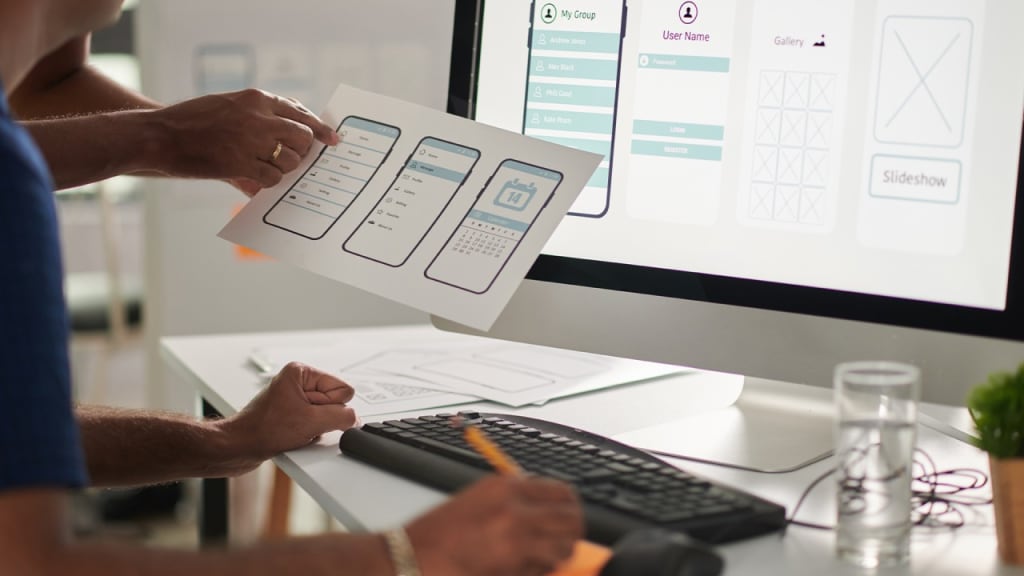
Design thinking is no longer a buzzword, it's a foundational operating system for digital product development. In 2025, where users demand frictionless, intuitive, and emotionally intelligent interfaces, design thinking helps UX teams respond with clarity and empathy.
More than a methodology, it's a mindset one that prioritizes people over pixels and insight over assumption. The top-tier UX design agency doesn’t just apply design thinking in isolated workshops; it infuses it across every touchpoint, from discovery to prototyping, testing to iteration.
This blog explores how design thinking is woven into the day-to-day of leading UX teams and why it continues to unlock innovation at the intersection of human behavior and digital experience.
Step 1: Empathize Understanding People Beyond the Persona
The process starts not with software, but with empathy.
UX teams don't just define target audiences; they observe real users in real contexts. This often means:
- Shadowing users during tasks
- Conducting in-depth interviews
- Running empathy mapping sessions
- Analyzing behavioral data and heatmaps
The goal isn’t to validate assumptions but to surface friction moments where users feel confused, anxious, or unsupported. These emotional signals often reveal more than analytics ever could.
Top UX agencies are especially skilled at balancing qualitative insight (stories, feelings, habits) with quantitative data (drop-off rates, clicks, dwell time). This hybrid view helps them step into the user’s shoes and walk miles before designing anything.
Step 2: Define Framing the Problem with Surgical Precision
Empathy feeds insight. But insight alone isn’t useful until it’s reframed into a clear, actionable problem.
UX design teams use synthesis frameworks like:
- Point-of-view statements
- How-might-we questions
- Journey bottleneck mapping
- Behavioral clustering
For instance, instead of a generic goal like “Improve onboarding,” a refined problem statement would sound like:
“How might we reduce cognitive overload for first-time users who abandon onboarding at step two due to unclear instructions?”
By defining the problem at this level of granularity, UX teams avoid designing for symptoms and instead address the root causes of user frustration.
This clarity becomes the north star for all ideation, prototyping, and testing.
Step 3: Ideate From Insight to Interface Hypotheses
Once the problem is framed, creativity is unleashed but with purpose. Ideation in UX doesn’t mean brainstorming random screens. It’s about hypothesis-driven creativity, guided by user needs. Agencies employ techniques like:
- Crazy 8s sketching
- Affinity clustering
- Design studio workshops
- Role-playing user flows
- Heuristic remixing
The best ideas often come from constraints. UX teams ask:
- What mental models is the user relying on here?
- What if we removed this step entirely?
- How can we make this delightful, not just functional?
Every idea is tested against a dual lens: Does it solve the core user problem? and Is it feasible within product realities?
The result isn’t a single solution but a portfolio of interface hypotheses ready for prototyping.
Step 4: Prototype Building to Learn, Not to Launch
Design thinking sees prototypes not as early versions of products, but as learning tools. At this stage, fidelity varies based on what’s being tested:
- Low-fidelity sketches to validate user flow
- Mid-fidelity wireframes to assess layout hierarchy
- High-fidelity mockups for emotional and aesthetic resonance
- Clickable prototypes to test interaction logic
The goal isn’t polish , it’s feedback.
Top UX agencies prioritize speed over perfection, deliberately creating imperfect artifacts to provoke user reactions. Prototypes allow teams to simulate the experience without sinking time into engineering enabling faster pivoting based on actual user behavior.
This agile mindset transforms UX from “design it and ship it” to “design it, test it, understand it, and evolve it.”
Step 5: Test Learning from Real User Behavior
Testing closes the loop but also opens the next iteration cycle.
The most effective UX agencies don't test to validate success; they test to invite failure. By designing usability studies that surface edge cases, confusion points, and decision fatigue, they turn friction into forward motion.
- Modern testing tools include:
- Eye-tracking to measure attention flow
- Remote usability tests across devices
- A/B testing of interface variables
- Sentiment scoring from voice inflection
- Task completion metrics
But what separates advanced UX teams is their ability to listen between the lines decoding user hesitation, surprise, or delight as valuable data points.
Every usability insight becomes fuel for the next iteration, reinforcing design thinking’s recursive power.
The Agency Edge: Why Design Thinking Thrives in UX Studios
While product teams may practice design thinking internally, the agency environment uniquely enhances it. Here's why:
Cross-disciplinary exposure: Agencies bring together strategists, researchers, interaction designers, and motion specialists creating a rich cross-pollination of ideas during ideation.
Fresh perspective: Unlike in-house teams, agencies don’t suffer from organizational tunnel vision. They see the forest and the trees, allowing them to spot UX blind spots more effectively.
Process rigor: Agencies often refine design thinking into modular frameworks customizable by client and project size ensuring consistent application across all workstreams.
Feedback velocity: Agencies operate in tight sprints, which compresses the design-testing-iteration cycle, making insights tangible faster.
Challenge culture: In high-caliber studios, feedback isn't feared it's expected. This psychological safety around iteration keeps the design thinking loop alive.
This is why partnering with a top-tier UX design agency can often unlock strategic clarity and product innovation that’s hard to surface internally.
Beyond Process: Design Thinking as a Culture
Perhaps most importantly, design thinking isn’t just a process , it’s a culture of inquiry and humility. It teaches teams to:
- Listen before they speak
- Question before they assume
- Build before they commit
- Learn before they scale
In 2025, where users expect not just usability but resonance, this mindset is not optional. It's the bedrock of meaningful digital experiences.
UX agencies that embrace design thinking at every layer research, prototyping, interaction design, and visual storytelling don’t just design screens. They design understanding.
Final Thoughts: The Power of Nonlinear Thinking
The beauty of design thinking is its nonlinear nature. Teams often loop back to empathy after testing, or redefine the problem after a round of prototyping. This recursive structure mirrors the reality of UX: messy, complex, and always evolving.
As digital ecosystems become more intelligent and immersive, the ability to think like a user with flexibility, empathy, and curiosity will define the next generation of successful products.
And agencies who master design thinking aren’t just helping clients build better interfaces.
They’re helping them build better futures.
About the Creator
Innovator's Edge
Innovator's Edge is a trusted platform for technology enthusiasts, professionals, and businesses seeking insights into the latest trends in web development, branding, and ui/ux.
Enjoyed the story? Support the Creator.
Subscribe for free to receive all their stories in your feed.
Comments
There are no comments for this story
Be the first to respond and start the conversation.