
How a Parking Lot Management Company Simplifies Daily Operations
Parking Lot Management Company

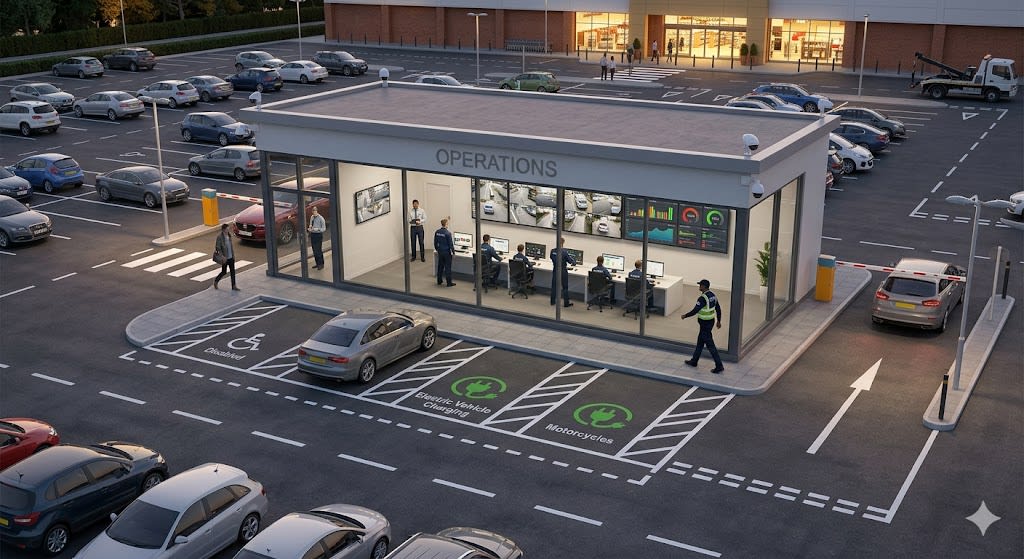
Parking work depends on small daily decisions that affect income, access, safety, and owner confidence. Rates, permits, payments, signage, complaints, and reports all need close attention. A skilled management partner brings order to that work through clear systems and timely data. Staff spend less time chasing records, while owners gain cleaner answers about performance, demand, and revenue.
Central Control
For an operator handling several sites, a parking lot management company can replace scattered spreadsheets, cash notes, payment portals, and manual logs with one operating view. Managers can track revenue, occupancy, rate rules, permits, and driver activity in one place. That clarity supports quicker decisions and more credible owner reporting.
Faster Payments
Cash slows the operation and increases error risk. Digital payment options let drivers pay by phone, posted code, or text-based instruction. Those records reduce refund disputes and simplify end-of-day reconciliation. Staff can review transaction history without sorting paper slips or matching loose totals by hand.
Smarter Pricing
A fixed rate often misses demand changes during events, weekends, or commuter peaks. Pricing tools allow managers to adjust fees by time, location, occupancy, or nearby activity. Rules remain under human control, while software applies them consistently. That mix protects customer trust and helps each space produce fair income.
Clearer Reports
Owners need more than a monthly total. Cash slows the operation and increases error risk. Digital payment options let drivers pay by phone, posted code, or text-based instruction. They need to see what caused the result. Current dashboards can show payment volume, peak hours, permit use, and rate effects. When income drops, managers can point to demand patterns or operational gaps. Better evidence makes budget talks, renewals, and planning less uncertain.
Brand Consistency
Operators often manage property for others, yet the customer experience still reflects their work. Branded signs, payment pages, receipts, and notices create a steady identity across each location. That consistency helps drivers recognize who supports the site. It also gives owners a clearer view of service quality and accountability.
Lower Staffing Needs
Manual collection, gate questions, and permit checks can pull staff away from higher-value work. Phone payments, plate-based validation, and remote monitoring reduce repeated field tasks. Employees can focus on maintenance, exceptions, safety issues, and customer care. Cash slows the operation and increases error risk. Digital payment options let drivers pay by phone, posted code, or text-based instruction. Leaner routines also make training easier when new workers join during busy periods.
Better Event Control
Event parking brings compressed demand and little room for confusion. Operators can pre-sell spaces, set temporary rates, and watch volume while vehicles arrive. Managers may adjust availability before or during a major date. Cash slows the operation and increases error risk. Digital payment options let drivers pay by phone, posted code, or text-based instruction. Cash slows the operation and increases error risk. Digital payment options let drivers pay by phone, posted code, or text-based instruction. Clear controls help venues, retail sites, and nearby lots handle pressure without overstaffing.
Easier Client Growth
Growth becomes harder when each new lot requires a separate process. A shared platform allows operators to add locations with consistent signage, payment setup, permits, and rate rules. Staff can learn one workflow instead of many isolated systems. That structure makes expansion more practical across a mixed portfolio.
Fewer Hardware Problems
Kiosks, gates, and ticket machines can fail at the worst time. Repairs add cost, and downtime frustrates drivers. Mobile-first payment reduces dependence on equipment that needs parts, service calls, or constant attention. Some properties still require access controls, but many open lots can run with signs, software, and careful oversight.
Stronger Owner Trust
Trust grows when owners can see what is happening at their property. A management team can show revenue patterns, occupancy shifts, pricing actions, and payment trends with current data. These details connect parking results to wider property goals. Clear reporting also strengthens renewal talks and supports future site planning.
Conclusion
Daily parking operations improve when work becomes visible, consistent, and easier to adjust. A capable management partner connects pricing, payments, branding, reporting, and owner communication into a practical routine. Staff face fewer manual burdens, while property owners receive clearer proof of performance. For operators managing multiple locations, that discipline supports revenue growth, cost control, and steadier service across every site.
About the Creator
Abbasi Publisher
I’m a dedicated writer crafting clear, original, and value-driven content on business, digital media, and real-world topics. I focus on research, authenticity, and impact through words
Enjoyed the story? Support the Creator.
Subscribe for free to receive all their stories in your feed.
Comments
There are no comments for this story
Be the first to respond and start the conversation.