
House Ethics Committee Launches Investigation into Rep. Jimmy Gomez Over Alleged Sexual Contact with Staffer
The California Democrat admits to "personal mistakes" outside his marriage but denies wrongdoing, as the House grapples with a series of sexual misconduct allegations against lawmakers.

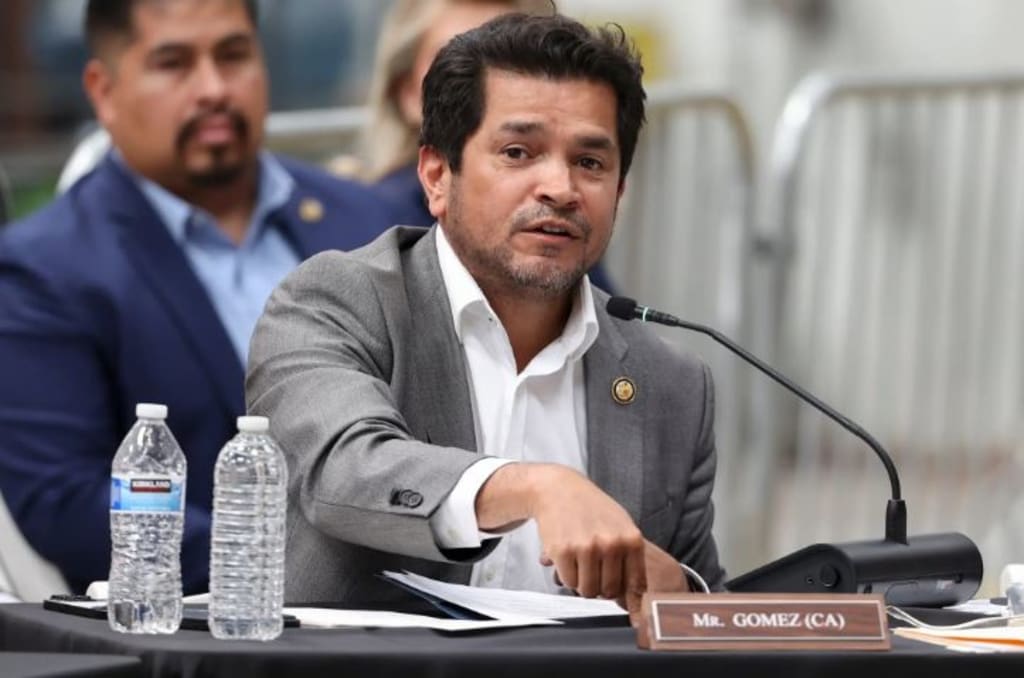
The House Ethics Committee announced on Monday that it was investigating whether Representative Jimmy Gomez had engaged in inappropriate sexual contact with a House staffer, as the California Democrat conceded he had made "personal mistakes" outside his marriage.
Mr. Gomez, 51, who represents parts of Los Angeles, said in a statement that he regretted his mistakes, but he denied any wrongdoing, saying that his actions "were consensual in nature and haven't violated the law or House Ethics rules."
"That doesn't diminish the impact that these mistakes have made on those I care about the most," Mr. Gomez said. "I take full responsibility and have committed myself to working through the pain privately with my wife and family."
The Rules Governing Congressional Conduct
House rules instituted in 2018, after the #MeToo movement focused attention on sexual misconduct in the workplace, forbid members from engaging in sexual conduct with their own aides or those working on committees on which they serve. But the rules do not bar lawmakers from having relationships with other staff members whom they do not supervise.
In the statement announcing the investigation, Representative Michael Guest of Mississippi, the Republican chairman of the Ethics Committee, and Representative Mark DeSaulnier of California, its top Democrat, cited a clause of the rules that prohibits members from "unwelcome sexual advances or conduct" toward other lawmakers or House employees.
The distinction between prohibited and permitted conduct is significant. Under the current rules, a member of Congress can have a consensual relationship with a staffer who does not work directly for them. However, if the relationship involves a direct subordinate or a committee staff member, it is a violation of House rules.
Mr. Gomez's defense rests on this distinction. By asserting that his actions were consensual and did not involve a direct subordinate, he is arguing that his conduct falls within the bounds of permissible behavior under House rules.
The Context: A Series of Sexual Misconduct Scandals
The inquiry into Mr. Gomez's conduct comes months after the resignations of two lawmakers facing sexual misconduct accusations. Representatives Eric Swalwell, Democrat of California, and Tony Gonzales, Republican of Texas, forced the House to confront its handling of such complaints.
Mr. Gomez, who joined Congress in 2017, had been the chairman of Mr. Swalwell's campaign for governor but withdrew from the position after Mr. Swalwell was accused of sexually assaulting a former staff member and of sexual misconduct with other women, charges he denies.
The Swalwell and Gonzales cases highlighted the challenges the House faces in addressing sexual misconduct allegations. Both lawmakers resigned under pressure, but the circumstances of their departures raised questions about whether the Ethics Committee's processes were adequate.
Earlier this month, Representative Chuck Edwards, Republican of North Carolina, ended his re-election campaign after the panel said that it had "substantial reason to believe" that he "violated House rules related to sexual harassment and hostile workplaces." That investigation took fewer than four months, according to the committee's report, a relatively swift resolution by Ethics Committee standards.
The Ethics Committee Under Scrutiny
The committee, a bipartisan panel responsible for policing members' behavior, has been under pressure from several lawmakers and outside groups who complain that it is too slow to investigate claims of misconduct.
Critics argue that the committee's processes are opaque and that investigations often drag on for months or even years, allowing accused members to continue serving without accountability. Others have raised concerns about the committee's reluctance to take action against members, particularly those in leadership positions.
House leaders have tasked Representatives Kat Cammack, Republican of Florida, and Teresa Leger Fernández, Democrat of New Mexico, to propose changes to how the Ethics Committee handles such allegations. The effort reflects growing recognition that the current system is not working effectively.
Several lawmakers have proposed that the House change its code of conduct to prohibit members of Congress from having sexual relationships with any staff member. Such a change would go beyond the current rules, which only restrict relationships with direct subordinates or committee staff.
The Gomez Investigation: What We Know
The Ethics Committee did not provide details on what prompted its investigation, and noted in its statement that the mere fact of the inquiry did not indicate that any wrongdoing had been found. But The New York Post reported in April that Mr. Gomez had kissed a member of another office's congressional staff in 2023. CNN reported in June that the committee was investigating Mr. Gomez, who is running for re-election against another Democrat.
The investigation comes at a politically sensitive time for Mr. Gomez. He is facing a re-election campaign, and the allegations could affect his prospects. His opponent has already sought to capitalize on the controversy, calling for greater transparency and accountability.
Mr. Gomez's statement, while acknowledging personal mistakes, was careful to deny any violation of House rules. By framing his actions as consensual and outside the scope of prohibited conduct, he is attempting to limit the political damage.
The Broader Implications
The Gomez investigation is part of a broader reckoning in American politics over sexual misconduct. The #MeToo movement brought attention to the prevalence of sexual harassment and assault in workplaces across the country, including in Congress.
In the years since, Congress has taken steps to address the issue, including strengthening the Ethics Committee's powers and implementing new training requirements. However, critics argue that more needs to be done.
The proposals to ban members from having sexual relationships with any staff member would represent a significant change. Such a rule would be more restrictive than the current rules and would reflect a growing recognition that relationships between members and staff create inherent power imbalances.
The Political Fallout
For Mr. Gomez, the investigation is a significant political challenge. He has represented his Los Angeles district since 2017 and is known as a progressive voice on issues such as healthcare, immigration, and economic justice. The allegations could undermine his standing with constituents and donors.
However, Mr. Gomez's denial of wrongdoing and his acknowledgment of personal mistakes may help him weather the storm. By taking responsibility for his actions while maintaining that he did not violate House rules, he is attempting to strike a balance that could allow him to continue his political career.
The Ethics Committee's investigation will determine whether Mr. Gomez violated House rules. If the committee finds that he did, he could face sanctions ranging from a reprimand to expulsion from the House. The outcome will depend on the evidence gathered and the committee's interpretation of the rules.
The Role of the Media
The media has played a significant role in bringing the allegations against Mr. Gomez to light. The New York Post and CNN both reported on the allegations, and the Ethics Committee's investigation appears to be a response to those reports.
The media's role in exposing sexual misconduct has been a double-edged sword. On the one hand, it has brought attention to issues that might otherwise remain hidden. On the other hand, it has raised concerns about trial by media, where individuals are judged in the court of public opinion before the facts are established.
The Gomez case highlights the tension between the public's right to know and the need for due process. While the allegations are serious, Mr. Gomez is entitled to a fair investigation and the presumption of innocence until proven otherwise.
The House Ethics Committee's investigation into Representative Jimmy Gomez represents the latest chapter in a series of sexual misconduct scandals that have rocked Congress. Mr. Gomez's acknowledgment of "personal mistakes" outside his marriage, combined with his denial of wrongdoing, sets the stage for a complex and politically charged inquiry.
The outcome of the investigation will have significant implications for Mr. Gomez's political future and for the broader debate over sexual misconduct in Congress. As the House considers changes to its code of conduct, the Gomez case may serve as a catalyst for reform.
For now, the investigation continues, and Mr. Gomez faces an uncertain future. The case is a reminder of the challenges of addressing sexual misconduct in a political environment where power dynamics and personal relationships intersect.
About the Creator
Mark Lim
Hi I am mark an automotive student and a car, tech and food enthusiast ! Im gonna try and post daily & hope you enjoy what I write and do share my page with people you know. I would gladly appreciate it! Cheers
Enjoyed the story? Support the Creator.
Subscribe for free to receive all their stories in your feed.
Comments
There are no comments for this story
Be the first to respond and start the conversation.