
Horrible Night — Busy Day: How Ukrainians Live After Air Attacks
How Ukrainians Live After Air Attacks

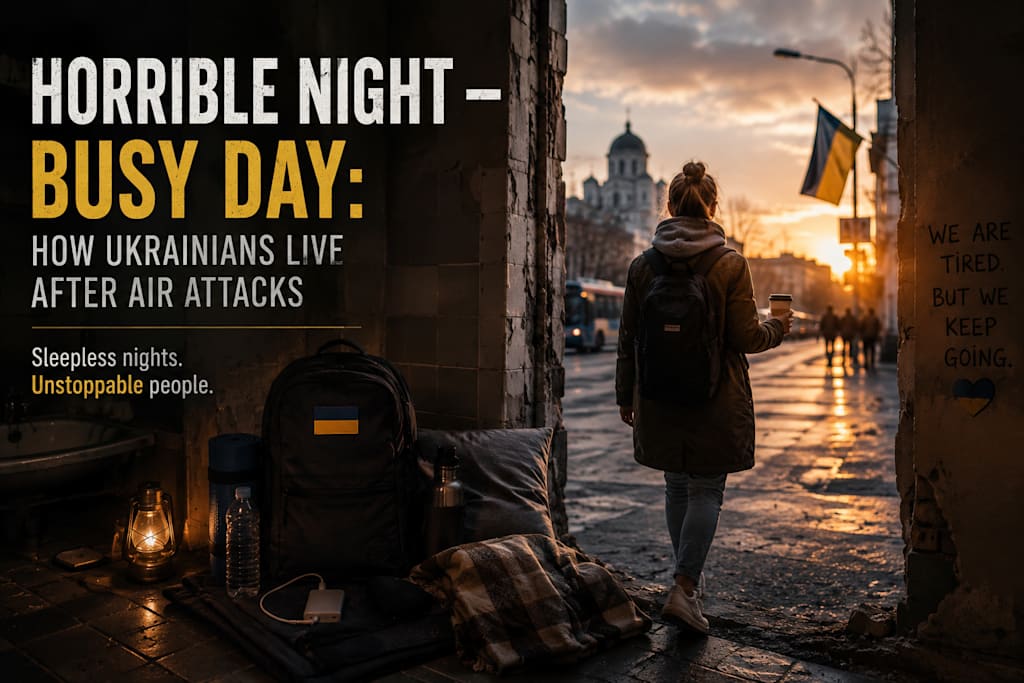
Another sleepless night.
The sound of sirens, distant explosions, and endless alerts on our phones have become a normal part of life for millions of Ukrainians. When an air raid begins, people rush to shelters, basements, underground parking lots, or any place that feels safer than their homes. Fear, anxiety, and uncertainty fill the hours until the danger finally passes.
Last night was one of those nights again.
This time, my boyfriend and I stayed at home, spending most of the night in our bathroom — one of the safest places in our apartment. As uncomfortable as it sounds, many Ukrainians have similar routines. When the risk of missile or drone attacks is especially high, people follow the news closely and make quick decisions about where to spend the night.
If there is enough time before the attack reaches our area, we usually go to the nearest subway station. Fortunately, it is located underground and not far from our home. During large-scale attacks, entire families spend the night there. Children sleep on blankets, parents sit nearby scrolling through news channels, and everyone waits for the all-clear signal.
Living in Ukraine means always being prepared.
Most people keep an emergency backpack ready. The contents may differ from person to person, but mine usually includes documents, cash, water, snacks, a power bank, a blanket, and a yoga mat that can serve as a makeshift bed during long nights in a shelter. These items have become as essential as house keys.
The reality of an air attack is difficult to describe to someone who has never experienced one.
You spend the entire night monitoring Telegram channels, listening to explosions in the distance, and wondering where the next missile or drone might land. Sleep becomes impossible. Every unfamiliar sound makes you tense. Every notification forces you to check your phone.
But eventually, morning comes.
And that is when something remarkable happens.
Life continues.
Parents take their children to school or help them attend online classes. Doctors return to hospitals. Teachers prepare lessons. Shop owners open their businesses. Students attend lectures and prepare for exams. Office workers log into meetings.
The country keeps moving forward despite exhaustion.
I work in a medical laboratory, and after an air attack I still have to go to work because patients are waiting for their procedures and tests. I remember one winter morning particularly well. It was February. During a massive attack, the city was left without electricity. It was still dark outside when I left for work.
As I walked through the darkness, I kept thinking about my schedule, my responsibilities, and the people expecting me. The attack had not changed those things.
At that moment, I realized how much Ukrainians have adapted to living under extraordinary circumstances.
That adaptation comes at a price.
For more than a year, I took antidepressants to help cope with the stress and uncertainty of wartime life. Constant air raid alerts, interrupted sleep, and the feeling that danger could arrive at any moment slowly wear down your mental health. Many people carry invisible scars from this experience.
Yet somehow, we continue.
We make plans. We think about the future. We celebrate birthdays. We fall in love. We build careers. We dream.
Living under the constant threat of air attacks is physically and emotionally exhausting. Lack of sleep affects concentration, productivity, and health. Many people spend several nights each week interrupted by sirens and alerts.
But what often surprises people outside Ukraine is the resilience of ordinary citizens.
After nights filled with fear, people still find the strength to work, volunteer, support their families, and help their communities. Cafés open their doors. Public transportation runs. Neighbors check on each other. Small acts of kindness become powerful symbols of hope.
This does not mean Ukrainians are not tired.
We are.
The emotional burden is enormous. Many people struggle with anxiety, stress, grief, and uncertainty. But giving up is not an option. Every busy day after a horrible night becomes an act of quiet resistance.
The story of modern Ukraine is not only about surviving attacks.
It is also about preserving everyday life in extraordinary circumstances.
We continue to study, work, celebrate important moments, and build our future. Each new day proves that even after the darkest night, life goes on.
Sometimes, when I hear the sound of explosions, my thoughts drift back to Switzerland, where I lived for two and a half years. I remember the peaceful nights, the silence, and the feeling of safety that many people take for granted.
Then I open my eyes.
I see my boyfriend beside me.
I think about my parents, my friends, and the life I have here.
And I understand that despite this terrible war, despite the fear and exhaustion, this is still my home.
This is where my life is.
And this is where I choose to keep moving forward.
About the Creator
TETIANA SEREBRIAKOVA
I am a young writer, and every Thursday, I will share motivation, lifestyle insights, and personal stories with you
Enjoyed the story? Support the Creator.
Subscribe for free to receive all their stories in your feed.
Comments
There are no comments for this story
Be the first to respond and start the conversation.