
HMRC Side Hustle Tax Limit Change in the UK
What It Actually Means for People Making Extra Money Online

The phrase “HMRC side hustle tax limit change” sounds like the kind of grey, bureaucratic headline most people scroll past until it becomes personal. Then suddenly it matters. You sell a few vintage dresses on Vinted. You do lashes from your spare room. You make £80 here and £130 there from dog sitting, tutoring, Etsy, TikTok shop samples, freelance design, paid surveys, photography, baking cakes, flipping furniture, or writing copy after work. At first, it feels too small to count as “real income.” Then someone posts a warning online that HMRC is coming for side hustlers, and the panic starts.
The truth is less dramatic, but more important.
The UK has not suddenly made every casual seller a tax dodger. HMRC has not decided that selling an old coat online means you need an accountant. But the rules around side income are being watched more closely, and the reporting threshold is changing in a way that could make life easier for some people while still leaving tax to pay for others.
That last part matters. A higher reporting threshold is not the same thing as a higher tax-free allowance.
This is where a lot of people get confused.
At the moment, the key number most side hustlers need to understand is still £1,000. HMRC’s trading allowance lets you earn up to £1,000 in gross trading or casual income in a tax year without needing to report that income, as long as you qualify for the allowance. The allowance can apply to self-employment, casual services, small online selling for profit, and some other miscellaneous income. If your total gross income from these activities is £1,000 or less, you usually do not need to tell HMRC about it.
Gross income means the money coming in before expenses. Not profit. Not what is left after postage, packaging, fabric, tools, platform fees, petrol, or the ring light you bought because your product photos looked like they were taken in a cupboard. If customers paid you £1,250 and your costs were £600, your gross income is still £1,250. That is the number HMRC cares about first when deciding whether the £1,000 allowance has been exceeded.
This one detail catches people out because ordinary people think in profit. Tax forms often begin with turnover.
So what is changing?
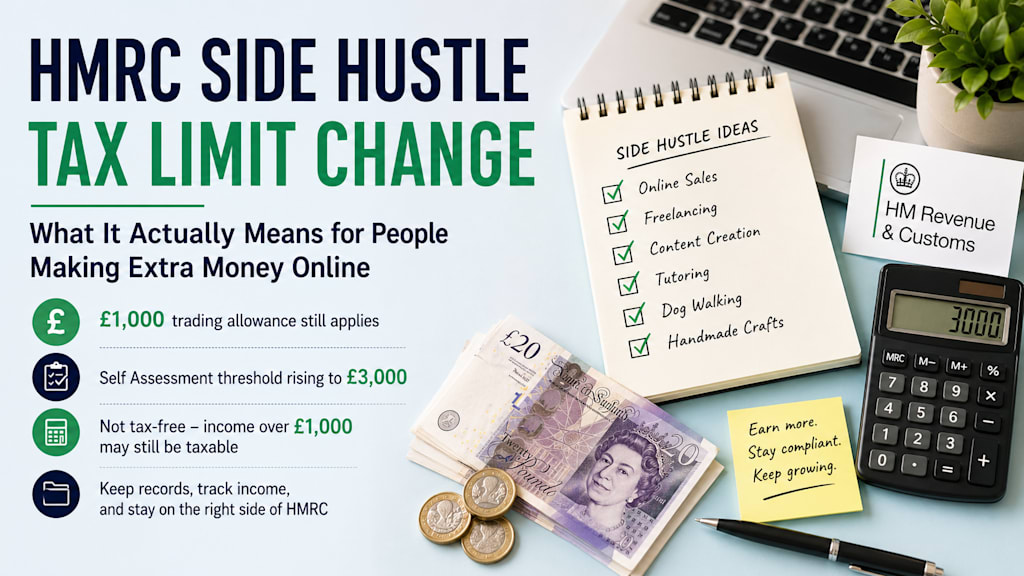
The government has announced that the Self Assessment reporting threshold for trading income will rise to £3,000. The announcement said up to 300,000 people, including side hustlers, would no longer need to file a full Self Assessment tax return once the change is in place. The examples given included people selling clothes online, dog walking, gardening, taxi driving, and creating content online.
That sounds like a huge relief, and for some people it will be. But it does not mean the first £3,000 of side hustle income becomes tax-free. The £1,000 trading allowance remains the important tax-free allowance. The planned £3,000 figure is about who needs to file a full Self Assessment return, not about creating a new £3,000 tax-free allowance.
That is the sentence worth reading twice.
If your side hustle income is under £1,000 in a tax year, you may not need to report it. If it is over £1,000, you may need to declare it. In future, if your trading income is between £1,000 and £3,000, the process may become simpler, but the income can still be taxable depending on your wider situation.
This is not just a technical distinction. It changes how you should behave.
Imagine someone called Maya sells handmade candles on weekends. She starts in October, makes a few batches for friends, then opens an Etsy shop before Christmas. By April, she has received £1,450 in sales. She has spent nearly £700 on wax, jars, labels, postage, and a market stall, so in her mind she has “only made” £750. But HMRC looks first at her gross receipts. She has crossed the £1,000 trading allowance threshold, so she needs to pay attention. She may be able to deduct actual expenses instead of using the trading allowance, but she should not shrug and say, “I barely made anything.”
Now imagine Dan sells his old trainers, a games console, and a bike he no longer uses. He gets £1,200 across a few online platforms. That does not automatically make him a trader. Selling personal possessions you no longer want is different from buying stock or making goods with the intention of selling for profit. This is why the internet’s favourite panic line, “HMRC will tax your Vinted sales,” is too blunt. HMRC is interested in trading income, not every casual clear-out from a wardrobe that should have been emptied three years ago.
The messy middle is where real life sits. A one-off clear-out is usually not a business. Regular buying and reselling for profit looks more like trading. Making products to sell looks like trading. Offering services for payment looks like trading. Getting paid for content, affiliate links, gifted items, dog walking, tutoring, beauty treatments, or freelance work can all count as extra income.
And yes, online platforms have made this harder to ignore.
Platforms and marketplaces can share seller information with tax authorities under reporting rules. This does not mean every seller will get a scary letter. It does mean HMRC can see more than it used to. The old habit of thinking “small money online doesn’t count” is becoming riskier, especially for people who sell regularly, receive repeat payments, or treat the activity like a second income.
A good rule of thumb is this: if you would be annoyed if the money stopped, it is probably worth tracking properly.
You do not need a complicated system. A basic spreadsheet is better than pretending you will remember in January what happened last May. Track the date, platform, customer payment, fees, postage, materials, mileage, equipment, and refunds. Keep screenshots or receipts. If you use PayPal, Stripe, Etsy, Vinted, Depop, eBay, Fiverr, TikTok Shop, Instagram, or bank transfer, do not rely on the platform to tell the story clearly later. Platforms show transactions. They do not always explain context.
The other number people mix into this conversation is the Personal Allowance. For many people, the standard Personal Allowance is £12,570, meaning you can earn that amount before paying income tax, although your exact position depends on your circumstances. But having a Personal Allowance does not mean you can ignore reporting rules. A student with no job and a profitable side hustle may owe little or no tax, but they may still need to register or declare income if their trading income crosses the relevant threshold. A full-time employee with a salary already using up their allowance may owe tax on side hustle profits much sooner.
That is why two people can earn the same from a side hustle and have different tax outcomes.
A nurse who earns £38,000 from her main job and makes £2,400 from weekend bridal makeup is not in the same position as a university student who earns £2,400 from the same activity and has no other income. The nurse may owe tax on profits because her employment income already uses her tax-free allowance. The student may not owe income tax if total taxable income stays below the Personal Allowance, but the side income still needs to be handled correctly.
Side hustlers also need to understand the choice between using the trading allowance and claiming actual expenses. If your gross trading income is above £1,000, you may be able to deduct the £1,000 trading allowance from your income instead of deducting actual business expenses. This is simple and useful for people with low costs. But if you spent a lot to earn the money, actual expenses may produce a lower taxable profit. HMRC’s guidance explains that people with receipts over £1,000 can choose to deduct the allowance rather than the actual expenses incurred to earn the income.
Here is the human version.
If you earned £2,500 from freelance writing and your expenses were only £120, the £1,000 trading allowance may be better than claiming expenses. If you earned £2,500 from making jewellery and spent £1,400 on materials, packaging, postage, tools, and market fees, actual expenses may work better. This is where “simple” tax advice becomes dangerous, because the best answer depends on the details.
There is also no separate £1,000 allowance for every side hustle. You do not get £1,000 for Etsy, another £1,000 for dog walking, another £1,000 for TikTok, and another £1,000 for selling digital templates. HMRC’s side hustle guidance says the allowance is a single £1,000 tax-free allowance for the tax year, and income from different side hustles is added together. For example, £800 from content creation plus £500 from selling crafts adds up to £1,300, which is above the allowance.
This point matters because modern income rarely comes from one neat source. A creator might earn £300 from affiliate links, £450 from TikTok Shop, £250 from a paid brand video, and £200 from selling a digital guide. None of those amounts feels serious alone. Together, they cross the line.
The same applies to people who turn one hobby into several small income streams. A woman who does nails, sells press-on sets, teaches a £19 mini-course, and earns referral credit from beauty products may not think of herself as self-employed. But HMRC may not care what label she uses in her head. Money came in. It came in because she provided goods, services, or commercial activity. It needs to be counted.
The smartest side hustlers do not wait until they feel “big enough.” They start clean.
That means separating business money where possible, or at least marking it clearly. It means not mixing every payment into one chaotic current account full of Tesco, Klarna, birthday money, rent, and random £47 transfers from strangers. It means saving a percentage for tax before you know whether you will need it. It means keeping receipts even when the business is tiny and slightly embarrassing. Especially then.
Most people do not get into trouble because they are criminal masterminds. They get into trouble because they were casual for too long.
They start with one client. Then three. Then a good December. Then a viral video. Then a local Facebook group recommends them. By the time they realise the side hustle is a real income stream, they have nine months of missing records, a shoebox full of receipts, and a bank account that looks like a riddle.
This is also why the “HMRC side hustle tax limit change” should not be read as bad news. In one sense, it is a sign that the tax system is trying to adapt to the way people actually earn now. Millions of people no longer fit into the old binary of employee or business owner. They have salaries and small shops. They have part-time jobs and weekend clients. They sell digital downloads while the kids are asleep. They rent equipment, walk dogs, edit videos, bake celebration cakes, resell clothes, build niche blogs, and accept paid collaborations.
The economy changed before the paperwork did.
A simpler reporting process for people between £1,000 and £3,000 could remove a lot of unnecessary fear. Someone earning £1,700 from occasional work should not have to feel as if they are entering the same administrative universe as a limited company. But the responsibility does not disappear. You still need to know your numbers.
Add up all your side hustle gross income for the tax year, which runs from 6 April to 5 April. Include cash, bank transfers, platform payments, and the value of paid or gifted work where relevant. Separate casual personal sales from trading activity. Keep records of expenses. Check whether your total trading income is under or over £1,000. If it is over £1,000, look at whether you need to register, declare, or use the simplified process when it becomes available. If your situation is messy, ask HMRC or a qualified tax adviser rather than relying on a TikTok comment with 4,000 likes and no accountability.
The people who should be most alert are not the ones who sold three jumpers online. They are the ones who are quietly building a repeat income.
If you buy items to resell, you are probably trading. If you take bookings, you are probably trading. If you make goods with the intention of selling them, you are probably trading. If brands pay you, you are earning income. If you provide services for regular customers, that money counts. If several “tiny” income streams add up to more than £1,000 in the tax year, you should stop treating them as invisible.
There is something almost flattering about the moment your side hustle becomes taxable. It means the thing worked. People paid you. The little idea became income. The candles, the edits, the dog walks, the lashes, the tutoring sessions, the eBay flips, the templates, the cakes, the paid posts, the odd Saturday jobs, they became real enough to count.
That does not need to be scary. It needs to be organised.
The worst move is to panic and do nothing. The second worst move is to believe the loudest person online who says either “HMRC taxes everything now” or “don’t worry, they’ll never know.” Both are lazy. The truth sits in the middle, where adult life usually lives.
The £1,000 trading allowance still matters. The planned £3,000 reporting threshold may reduce the burden of filing a full tax return for some side hustlers. Online income is becoming more visible. Casual selling is not the same as trading. Gross income matters before profit. Records save you from expensive confusion.
That is the real HMRC side hustle tax limit change story. Not a raid on ordinary people. Not a free pass to ignore tax. Just a clear warning that side income has grown up, and the paperwork is catching up with it.
About the Creator
Dating Advice
Dating advice for men and women over 50
Best dating site for men & women over 50 👇
Enjoyed the story? Support the Creator.
Subscribe for free to receive all their stories in your feed.
Comments
There are no comments for this story
Be the first to respond and start the conversation.