
'His Last Voice Note Was That He Couldn't Go On': Inside the Final Hours of Professor Jason Arday
The Cambridge professor, who made history as the youngest Black academic at the institution, was found dead at 41 after facing relentless scrutiny over plagiarism allegations.

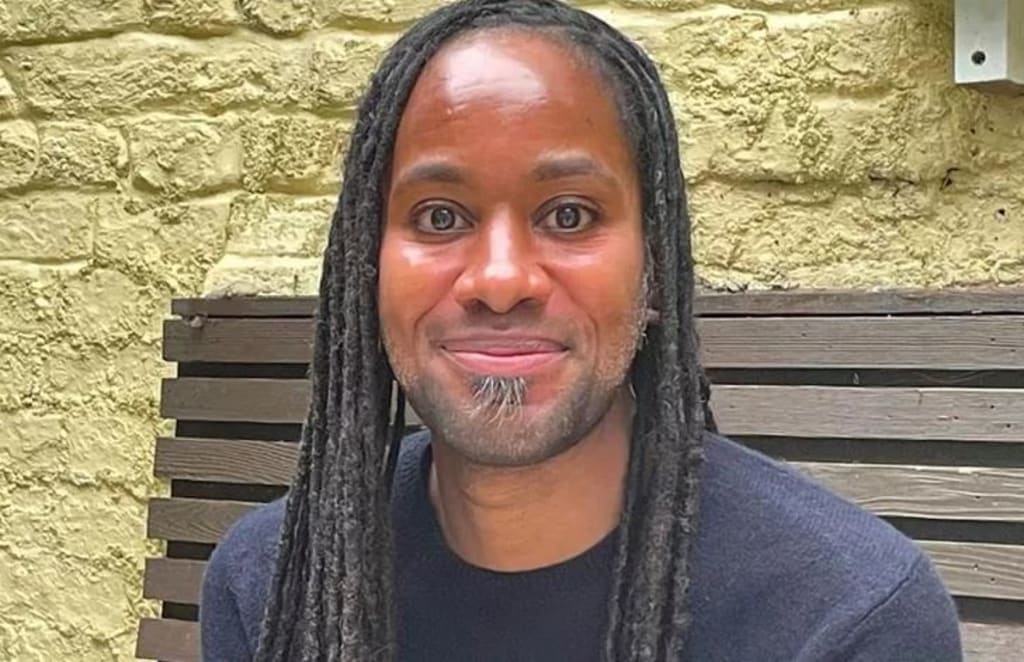
Jason Arday's friend is recalling his last conversation with the professor, which he said took place just hours before his death. On Friday, Aug. 14, the author and academic who made history as the youngest Black professor at the University of Cambridge was found dead at age 41, days after he resigned from the esteemed institution amid plagiarism allegations.
Hours before his death, Simon Baron-Cohen, the director of the Autism Research Center at the University of Cambridge, told BBC Radio 4's Today that Arday told him he was afraid to leave the house because he was being "bombarded" by the media "to paint him as a fraud."
A Friend's Heartbreaking Account
"He really wasn't coping," Baron-Cohen said during the Saturday, Aug. 15, episode of the program. "He was being subjected to relentless scrutiny, including ridicule, discrediting absolutely every detail of his life."
"He was an incredibly kind and gentle and caring and generous man, but he has been portrayed in the media as a plagiarist and a liar and a fraud," he continued. "His last voice note was that he couldn't go on."
Added Baron-Cohen, "We need to let the investigations proceed. We need to understand how this tragedy has happened, but there has to be accountability at lots of levels."
Baron-Cohen's words paint a picture of a man who, despite his academic achievements, was overwhelmed by the pressure of public scrutiny. The voice note, described as his final communication, was a cry for help that went unanswered.
A Historic Achievement Undermined
Arday's appointment at Cambridge was a landmark moment. He was not only the youngest Black professor at the university but also one of the youngest in the institution's history. His research focused on sociology of education, race, and inequality, topics that resonated with a generation of students and scholars.
But the spotlight that came with his historic appointment also brought intense scrutiny. Private discussions about Arday's scholarship began as early as 2023, per The New York Times. Those conversations became more public in July when Nathan Cofnas, a former Cambridge researcher who exited the university in 2024 following protests over his controversial critiques of diversity, equity and inclusion (DEI) initiatives, published excerpts from Arday's 2015 PhD dissertation that were flagged by plagiarism detection software.
The allegations triggered an investigation by the university, which announced it would review the matter "following new information about Professor Arday's academic qualifications and honorary appointments."
A Resignation Under Duress
In a statement released on Aug. 5, Arday announced his resignation, effective immediately. "When I accepted the extraordinary honor of becoming Professor of Sociology at Cambridge, it was, without question, the greatest professional privilege of my life," he said. "Sadly, the years since my appointment have also been marked by an unrelenting level of public scrutiny and personal attack."
He previously denied the plagiarism allegations, but the toll of the investigation was clear. "While criticism is an inevitable part of academic life, what I have experienced has gone far beyond scholarly disagreement," he said.
The resignation was a devastating blow for a man who had dedicated his career to advancing knowledge and fostering inclusion. His departure from Cambridge, just days before his death, marked a tragic end to a journey that had once seemed so promising.
The Broader Context: Black Academics in the Spotlight
Professor of Black Studies Kehinde Andrews echoed Baron-Cohen's statements about Arday, telling BBC Newsnight that he seemed "very down" after resigning from Cambridge. "He was very upset. He felt that there was no way out. He effectively wasn't leaving the house," Andrews said. "There should be a wake-up call to just how bad Black academics actually have it in academia."
Andrews' comments highlight a deeper issue within academia: the disproportionate scrutiny and pressure faced by Black scholars. Arday's case is not an isolated incident; it reflects a systemic pattern in which Black academics are often held to higher standards and subjected to more intense public and institutional scrutiny.
The Investigation and Its Aftermath
The investigation into Arday's work was initiated by the University of Cambridge, which has not yet released the findings of its review. However, the timing of the investigation and its public nature appear to have taken a significant toll on Arday's mental health.
In a statement following Arday's death, Cambridge Vice-Chancellor Professor Deborah Prentice expressed the university's condolences. "We are desperately saddened to hear this tragic news," she said. "Our heartfelt sympathies go to Jason Arday's family and friends at this incredibly difficult time."
A spokesperson for the Metropolitan Police previously told PEOPLE that Arday's death "is being treated as unexpected, but is not believed to be suspicious." The case is being investigated by officers from the Met's Central South Command Unit, and a file will be prepared for the coroner.
A Call for Accountability
Baron-Cohen's call for accountability at "lots of levels" resonates beyond Arday's case. It raises questions about how universities handle allegations against scholars, the media's role in shaping narratives, and the mental health support available to academics under pressure.
Arday's death has sparked a broader conversation about the well-being of academics, particularly those from marginalized backgrounds. Many have called for greater transparency in the investigation process and more robust support systems for scholars facing scrutiny.
A Legacy of Kindness
Despite the controversy, those who knew Arday remember him as a kind, generous, and gentle soul. His contributions to sociology and education, particularly his work on race and inequality, have left a lasting impact on the academic community.
Arday's story is a tragic reminder of the human cost of academic life. His achievements, which once seemed so promising, were overshadowed by the weight of public scrutiny. As the investigation continues, his legacy will be defined not by the allegations against him, but by the kindness and dedication he showed to his students and colleagues.
A Note on Mental Health
This story is a reminder of the importance of mental health support, particularly for those in high-pressure environments. If you or someone you know is struggling with mental health challenges, emotional distress, substance use problems, or just needs to talk, call or text 988, or chat at 988lifeline.org 24/7.
About the Creator
Mark Lim
Hi I am mark an automotive student and a car, tech and food enthusiast ! Im gonna try and post daily & hope you enjoy what I write and do share my page with people you know. I would gladly appreciate it! Cheers
Enjoyed the story? Support the Creator.
Subscribe for free to receive all their stories in your feed.
Comments
There are no comments for this story
Be the first to respond and start the conversation.