
Heavy-Duty Straddle Cranes for Bridge and Infrastructure Projects
High-Capacity Mobile Lifting Solutions for Efficient, Precise, and Safe Bridge Construction and Infrastructure Assembly
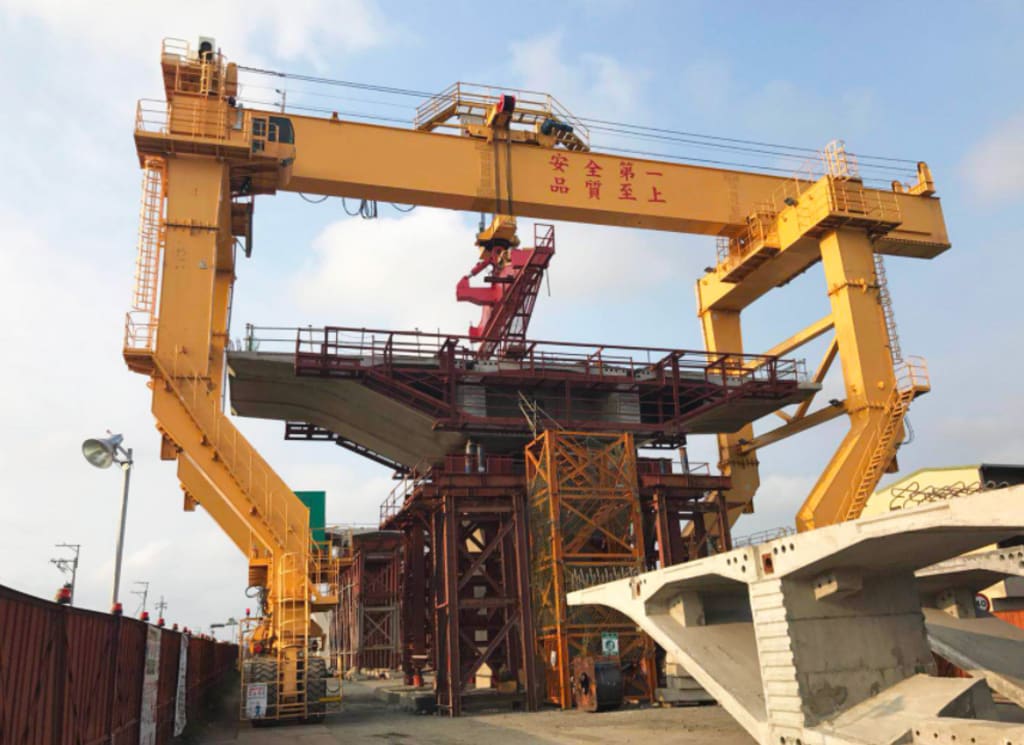
Bridge construction and large-scale infrastructure projects demand lifting equipment that is powerful, mobile, and capable of handling extremely heavy and oversized components with precision. Among the most effective solutions in this field are heavy-duty straddle cranes, which are increasingly used for transporting, positioning, and assembling structural elements in modern civil engineering projects.
Unlike fixed cranes, straddle cranes are designed to move freely across construction yards while carrying massive loads “straddled” between their legs. This unique configuration allows them to handle long and bulky components that traditional cranes struggle to manage.
In this article, we will explore how heavy-duty straddle cranes are used in bridge and infrastructure projects, their technical advantages, typical applications, and future development trends.
1. What Is a Heavy-Duty Straddle Crane?
A straddle crane is a type of mobile gantry lifting system that moves on rubber tires or rails while “straddling” the load between its supporting legs. The load is carried underneath the crane structure, allowing direct transportation without the need for multiple handling steps.
Heavy-duty straddle cranes are typically designed with:
Load capacities ranging from 50 tons to over 1000 tons
Wide spans to accommodate large bridge segments
High lifting heights for stacking or alignment
Advanced steering systems for precise movement
In bridge and infrastructure construction, these large mobile gantry cranes act as primary transport and assembly tools, replacing multiple smaller lifting devices.
2. Why Straddle Cranes Are Ideal for Bridge Projects
Bridge construction involves extremely large and heavy components such as steel girders, precast concrete beams, and modular bridge segments. These elements often require precise positioning over long distances within construction yards.
Straddle cranes are particularly well-suited for this environment because they offer:
2.1 Direct Load Transport Without Rehandling
Unlike traditional cranes that lift and transfer loads through multiple steps, straddle cranes can:
- Lift the component
- Carry it directly to the installation area
- Position it accurately in place
This reduces handling time and minimizes risk of damage.
2.2 High Mobility in Large Construction Sites
Bridge projects often span large geographical areas, including:
- River crossings
- Highway corridors
- Railway infrastructure zones
Straddle cranes can move freely across these sites, transporting heavy components between fabrication yards and installation points.
2.3 Ability to Handle Long and Oversized Components
Bridge beams and girders are often extremely long and difficult to transport using standard cranes or forklifts. Straddle cranes solve this problem by:
- Allowing long loads to be carried between their legs
- Supporting adjustable span widths
- Maintaining stability during movement
This makes them ideal for handling precast concrete girders and steel bridge sections.
3. Key Applications in Infrastructure Projects
3.1 Bridge Girder Transport and Installation
One of the most common uses of straddle cranes is the handling of bridge girders. These components can weigh dozens or even hundreds of tons.
Straddle cranes are used to:
- Move girders from casting yards to storage areas
- Transport beams to erection points
- Position segments for assembly
Their precision control systems ensure accurate alignment during installation.
3.2 Precast Concrete Segment Handling
Modern bridge construction often uses precast segmental construction methods. These segments are manufactured off-site and transported to the construction area.
Straddle cranes help by:
- Stacking precast segments efficiently
- Transporting them across large yards
- Feeding segments into launching gantries or assembly systems
3.3 Highway and Railway Infrastructure Projects
Straddle cranes are widely used in:
- Highway overpass construction
- Railway bridge expansion projects
- Elevated road systems
They provide the flexibility needed to operate in constrained or evolving construction environments.
3.4 Large Steel Structure Assembly
In addition to concrete components, straddle cranes are essential for handling:
- Steel trusses
- Structural frames
- Modular bridge sections
Their high load capacity ensures safe and efficient handling of heavy steel elements.
3.5 Tunnel and Urban Infrastructure Projects
In underground or urban infrastructure projects where space is limited, straddle cranes offer compact yet powerful lifting capabilities, allowing safe material movement in tight environments.
4. Key Advantages of Heavy-Duty Straddle Cranes
4.1 Extreme Load Capacity
Heavy-duty straddle cranes can handle some of the largest loads in construction logistics, often exceeding 500 tons. This makes them suitable for mega infrastructure projects such as long-span bridges and high-speed rail systems.
4.2 High Precision Positioning
Modern straddle cranes are equipped with:
- Hydraulic or electric steering systems
- Load balancing technology
- Anti-sway control systems
These features ensure precise placement of structural components, which is critical in bridge alignment.
4.3 Reduced Need for Multiple Cranes
In traditional setups, multiple cranes are required to lift and position large components. Straddle cranes eliminate this need by:
- Transporting loads directly
- Reducing coordination complexity
- Improving safety and efficiency
4.4 Improved Safety in Heavy Lifting Operations
Safety is a major concern in infrastructure projects. Straddle cranes enhance safety through:
- Stable load support between legs
- Controlled lifting and lowering systems
- Advanced braking and emergency stop features
- Real-time monitoring systems
5. Technical Features of Modern Straddle Cranes
5.1 Advanced Steering Systems
Straddle cranes often include multiple steering modes such as:
- Straight travel
- Crab steering
- Coordinated multi-wheel steering
These modes allow precise maneuverability in complex construction environments.
5.2 Hydraulic and Electric Drive Systems
Depending on design, straddle cranes may use:
- Hydraulic drive systems for high torque operations
- Electric drive systems for energy efficiency
- Hybrid systems combining both technologies
Electric systems are becoming more popular due to environmental regulations and lower operating costs.
5.3 Intelligent Control Systems
Modern cranes are equipped with PLC-based control systems that enable:
- Load monitoring
- Position tracking
- Automated lifting sequences
- Fault diagnostics
This improves operational efficiency and reduces human error.
5.4 Modular Structural Design
Many straddle cranes are built with modular components, allowing:
- Easier transportation to job sites
- Faster assembly and disassembly
- Custom configuration based on project requirements
6. Challenges in Straddle Crane Operations
Despite their advantages, heavy-duty straddle cranes also face operational challenges.
6.1 Ground Condition Requirements
These cranes require:
- Stable and level working surfaces
- Reinforced ground foundations for heavy loads
Poor ground conditions can affect safety and performance.
6.2 High Initial Investment
Straddle cranes are capital-intensive equipment. However, their long-term benefits often outweigh initial costs due to:
- Reduced labor requirements
- Faster project completion
- Lower equipment redundancy
6.3 Operator Skill Requirements
Operating a straddle crane requires trained personnel who understand:
- Load dynamics
- Steering systems
- Safety protocols
Proper training is essential to ensure safe operation.
7. Future Trends in Straddle Crane Technology
The future of heavy-duty straddle cranes in infrastructure projects is shaped by innovation in automation and sustainability.
7.1 Full Automation and Remote Operation
Future cranes will increasingly support:
- Remote control from centralized operation rooms
- Semi-autonomous navigation
- AI-assisted lifting decisions
7.2 Electrification and Green Energy Integration
Sustainability trends are pushing the adoption of:
- Battery-powered straddle cranes
- Renewable energy charging systems
- Regenerative braking technologies
7.3 Digital Twin and Smart Construction Integration
Straddle cranes will be integrated into digital construction ecosystems, enabling:
- Real-time project tracking
- Virtual simulation of lifting operations
- Predictive maintenance planning
Conclusion
Heavy-duty straddle cranes have become indispensable in modern bridge and infrastructure construction. Their ability to handle massive loads, transport long structural components, and operate with high precision makes them a preferred choice for large-scale engineering projects.
As infrastructure projects continue to grow in scale and complexity, straddle cranes will evolve further through automation, electrification, and digital integration. They are no longer just lifting machines—they are becoming essential tools for building the future of global transportation and urban infrastructure systems.
About the Creator
Aicrane01
Welcome to the Aicrane Blog, your practical guide to lifting solutions. Discover articles covering overhead cranes, gantry cranes, winches, steel structures, boat lifts, and more.
Website: https://steelmillcranes.com/
Enjoyed the story? Support the Creator.
Subscribe for free to receive all their stories in your feed.
Comments
There are no comments for this story
Be the first to respond and start the conversation.