
Healthcare has always been one of the industries where innovation matters the most.
There's something almost architectural about a good silver bangle. Where a chain bracelet drapes and shifts with every movement of the hand, a solid cuff holds its shape it sits on the wrist like a decision rather than an accident.

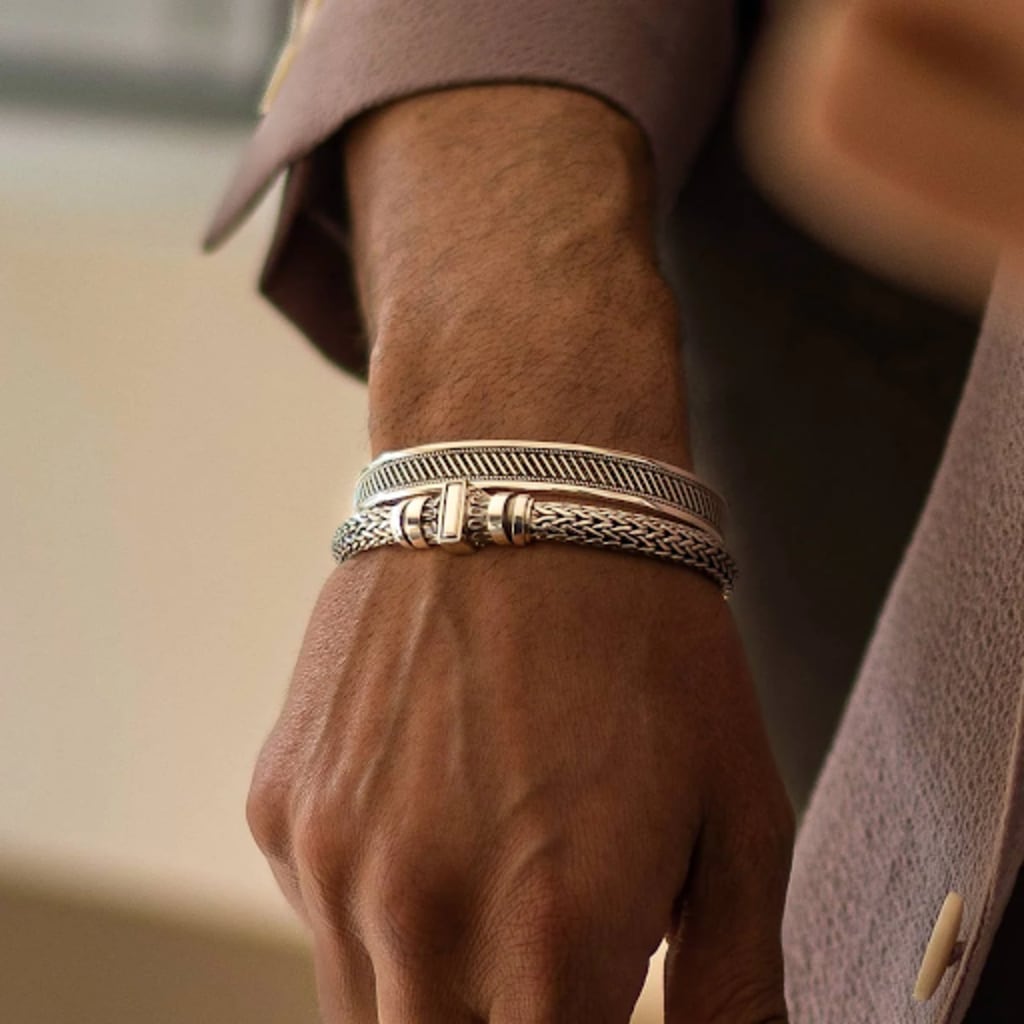
There's something almost architectural about a good silver bangle. Where a chain bracelet drapes and shifts with every movement of the hand, a solid cuff holds its shape — it sits on the wrist like a decision rather than an accident. That rigidity is exactly why it's become one of the more understated status symbols in men's jewelry over the last few years: it doesn't shout, but it doesn't disappear either.
If you're new to wearing one, or just trying to figure out which style actually fits your wardrobe, here's a rundown of the main types worth knowing, plus some practical notes on sizing and pairing that most guides skip over.
The Smooth, Polished Cuff
This is the one most people picture first: a clean, unadorned band with a high-gloss finish and either rounded or slightly squared edges. It's popular with anyone who wears a suit or blazer regularly, mostly because there's nothing on it to catch a cuff or draw the wrong kind of attention. Worn alone, it reads as deliberate and a little executive. Worn with a leather-strap watch, you get a nice tension between the warmth of the leather and the coolness of the metal — a small contrast that does a lot of work.
Hammered and Textured Finishes
For a less buttoned-up look, hammered silver is the better bet. The surface is worked by hand into dozens of small facets, so instead of one flat reflection you get light scattering across the whole piece as you move. It has a rougher, more handmade feel, which is part of the appeal — it tends to look better with age, not worse. This style pairs naturally with heavier fabrics: flannel, cashmere, raw denim. Think of the weekend, not the boardroom.
Engraved and Patterned Bands
Engraving turns a bangle into something closer to a personal object than an accessory. Some men go for Roman numerals or a date; others prefer geometric grooves or traditional motifs with more cultural weight behind them.
Either way, the detail tends to invite a second look, especially against plain clothing — a white linen shirt or a black tee gives the engraving room to actually be seen instead of competing with a busy outfit.
Twisted or Braided Designs
Picture heavy rope, rendered in solid metal — that's roughly the effect of a braided silver bangle, made from several strands of wire twisted together. It has real visual weight and works either as a standalone piece or stacked with something thinner, like a bead strand or a slim leather wrap. If you tend to wear multiple pieces at once, this is usually the anchor of the stack rather than a supporting piece. NineTwoFive tends to be a reliable place to look if you want this style done in solid 925 rather than plated metal, since the weight and finish are what make or break it.
Oxidized, Vintage-Finish Pieces
Oxidizing darkens the recessed parts of a design on purpose, leaving a charcoal patina that makes the raised detail stand out more sharply. The result looks worn-in from day one, which is exactly the point for anyone drawn to a rougher, more vintage aesthetic.
It suits leather jackets, dark selvage denim, and boots — anything with a bit of edge to it already. It's also fairly low-maintenance, since it doesn't rely on staying shiny to look good.
Getting the Fit Right
Bangles behave differently from flexible bracelets, so sizing them takes a bit more care:
Clearance: aim for roughly a finger's width of space between the metal and your wrist bone — snug enough to stay put, loose enough to move.
The gap: since a cuff slides sideways rather than over the hand, the opening should be sized for your wrist's narrowest point, not the widest.
Adjusting it: sterling silver has a little give. If it needs tweaking, apply gentle, even pressure once at the curve — repeated bending will fatigue the metal over time.
A few styling notes worth keeping in mind too: if you already wear a watch, you can either stack the bangle underneath it on the same wrist or balance the look by putting it on the opposite arm. Try to keep other metal on your body — belt buckle, cufflinks, watch case — in the same silver-toned family rather than mixing warm and cool metals. And match the bangle's thickness to your wrist size: thinner wrists generally suit a 4–6mm band, while a broader wrist can carry something 8mm or heavier without looking out of proportion.
The Bottom Line
A well-made silver bangle earns its keep. It's not a trend piece — a smooth cuff, a hammered one, an oxidized one, whatever you gravitate toward, tends to age well and get more personal with wear rather than less. If you're shopping for one, it's worth handling a few in person if you can; the weight and finish of a genuine silver men's bangle are hard to judge from a product photo alone, and they're the two things that determine whether the piece actually feels worth wearing every day.
About the Creator
Enjoyed the story? Support the Creator.
Subscribe for free to receive all their stories in your feed.
Comments
There are no comments for this story
Be the first to respond and start the conversation.