
He Went Too Far. Then He Did It Again: The Eight Days That Ended Wayward’s LPL Career
The indefinite ban looks like punishment for one streamer. It is really the league trying to police a troll culture it spent years feeding.
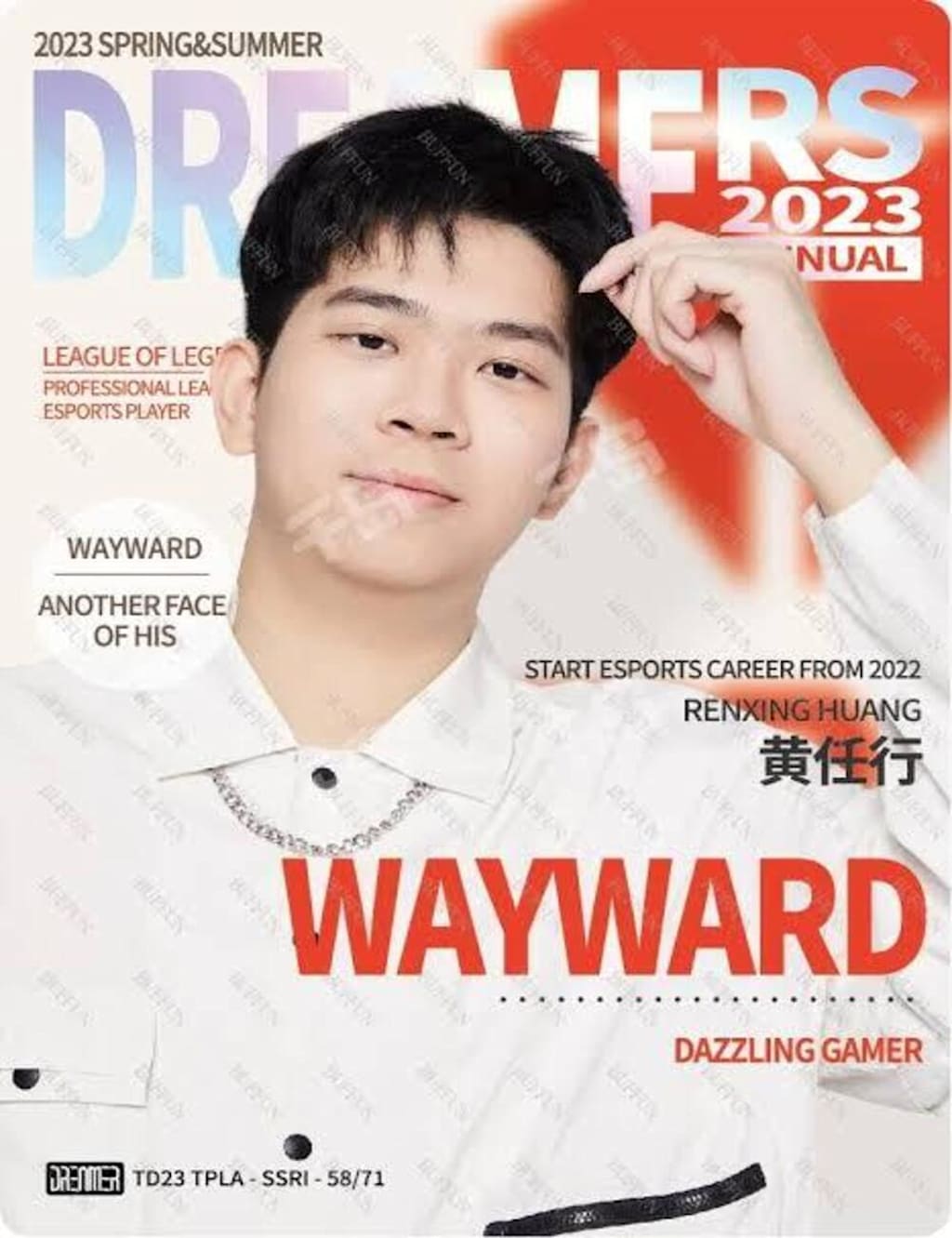
From flame to ban: Wayward and the institutional turn in esports streaming speech boundaries
One
September 8, 2026. LPL playoffs losers' bracket semifinal. IG vs LGD.
3-0. The score carried little suspense. What happened in the co-stream commentary room put the match on trending topics after the game for another reason.
Wayward, Huang Renxing, former TES top laner, retired and moved into co-stream commentary. His stream style was simple: he spoke his mind. Praise when they win, flame when they lose, call out mechanical mistakes directly. That style was common in LPL co-streams. For many viewers, the main stage cannot say what the co-stream can.
That day, LGD top laner Burdol made a mechanical mistake. Wayward over-interpreted it and implied the match was suspected of match-fixing. Clips spread. IG and LGD fans both erupted.
On September 10, Wayward posted an apology on Weibo. He wrote that "the titles of some clips caused many people to misunderstand." He apologized to both clubs. He promised to "strengthen what I say in the stream and avoid causing misunderstanding."
After the apology, the matter looked finished.
Four days later, around September 12, Wayward said in his stream that he had bought a ticket to IG's Regional Finals. He said he would bring "sticky rice and black dog blood, smear it on himself, and prepare a few protective talismans" to the venue.
In esports community context, "zombie" is a public derogatory name for TheShy fans. The combination of sticky rice, dog blood, and protective talismans needed no explanation.
The clip was recorded, cut, and spread. The reaction turned hostile.
On September 15, the agency Yangwang Sports issued a punishment announcement. It suspended Wayward's League of Legends event-related co-streaming and commentary work, and suspended new business partnerships and commercial event bookings. One of IG's shareholders wrote on social media: "First time I've seen a mad dog crazier than me."
In the early hours of September 16, IG club formally complained to the league. LPL event officials decided to indefinitely suspend Wayward's LPL co-stream commentary qualification and impose a fine. Multiple sources said LPL had rarely issued a harsher penalty against a commentator or streamer in recent years.
From apology to crossing the line again: four days. From crossing the line again to indefinite ban: four days. Eight days.
Two
Wayward had been punished for his speech before.
In June 2026, he lost his co-stream commentary qualification for "spreading false claims about the LPL official guest budget." The same month, the league summoned him for talks about "inappropriate remarks comparing LOL and CSGO." Three blowups in one month.
"Second offense while knowingly defying the rules" became the key factor in the penalty being increased to "indefinite."
But reading this only as "Wayward brought it on himself" misses more important information. The 2026 LPL commentary timeline shows penalties escalating step by step.
In early August, official commentator PYL was suspended from commentary for the entire regular season and fined for "drawing talismans" to mock TheShy during a co-stream. In late August, Guan Zeyuan was formally complained about by BLG club for a commercial video involving player Bin in an inappropriate association. The penalty was said to be three times PYL's. In early September, Ning was disqualified from co-stream commentary for IG vs AL after saying in his stream, "If you don't accept it, I'll kill you." In mid-September, Wayward was indefinitely banned. In the same period, Xuanshen, Guan Zeyuan, Ning, PYL, and Wayward were placed on IG's playoff co-stream commentary "blacklist."
Five penalties. Five different people. The same timeline.
The control system had been prepared long before. Starting in 2023, TJ Sports launched the "Commentary Content Compliance Special Action." It required all official commentators, hosts, and program guests not to use insulting nicknames, numeric black names, homophonic derogatory terms, or other expressions targeting active players. All signed commentators must complete the "Event Communication Compliance Required Course" organized by TJ Sports. Those who fail cannot work. They must submit quarterly content self-inspection reports. Bilibili posts and Weibo reposts are included in the "professional conduct assessment." Co-stream commentators must sign a "Content Compliance Commitment Letter." It states that they "may not in any form insinuate about, disparage, or demean active players, coaches, and clubs." Even meme use has an appendix explanation.
By 2026, TJ Sports had established a "three-level review mechanism for commentary content." The rulebook that once no one took seriously is being activated clause by clause.
Three
The league's position is clear: protect players' personal dignity and maintain the league's commercial environment. IG club wrote in a statement about the Xuanshen case: "Cyberspace is not outside the law. Any attempt to gain black traffic by insulting players, inciting fans, and creating antagonism will be suspected of infringement."
But the consistency of punishment standards has been questioned.
Some viewers pointed out that DYS has long commentated in an aggressive style without being punished. Black names such as "Goucao Xiaonaiyou" were reportedly "safe words" communicated with Top Esports. Yet PYL, Guan Zeyuan, Wayward, and others were heavily punished for remarks of a similar nature. That inconsistency weakens the credibility of the rules.
Another view holds that the differences reflect the effectiveness of the complaint mechanism. Guan Zeyuan was punished because BLG club "submitted materials in black and white" and filed a formal complaint. Wayward was banned because IG club completed the full complaint process. The league does not selectively enforce rules against everyone. Clubs' legal capabilities and willingness to defend their rights are rising fast.
In June 2026, IG's lawsuit against Xuanshen for reputation infringement received an effective court judgment. Xuanshen was ordered to publicly apologize and pay compensation for mental damages. Doinb's lawsuit against an esports blogger for reputation infringement also won and applied for enforcement. As clubs begin to use legal tools to protect players, the speech space that no one used to manage is being systematically narrowed.
Four
LPL's viewer base depends heavily on "troll culture." Praise when winning, blacken when losing, insulting nicknames and sarcasm are the norm of community interaction. Co-stream commentary serves this demand.
When the league, for sponsor interests and top player traffic, decides to go against the viewing culture it cultivated itself, the contradiction becomes irreconcilable.
A commentator once did the math: among LPL viewers, eight out of ten are trolls, nine out of ten are individual player fans, seven out of ten are there to vent emotions. These people want praise when winning and blackening when losing. In such an environment, if a player wants to change public opinion, there is one choice: win, keep winning.
But that is exactly what LPL cannot deliver. LPL has gone five consecutive years without an S-series championship. The league's competitive appeal keeps declining. The league relies more and more on top player traffic and fan economy to maintain commercial value. Under this logic, protecting the public opinion environment for TheShy and other players becomes the highest priority.
But suppressing speech with punishment cannot solve the fundamental problem of not being able to win. When viewers' negative emotions have nowhere to go, they turn to more hidden and extreme forms of expression.
After Wayward was banned, TES defeated IG. He posted: "I've been crying... my brothers are so awesome." The comment section immediately filled with "When the royal army northward pacifies the zombie day, do not forget to tell your father at the family sacrifice."
The emotional rebound did not dissipate because of the punishment.
Five
For practitioners, several boundaries are already clear.
Co-stream commentary is no longer a wild zone free of responsibility. Certified work, signed commitment letters, content review: it has been brought into a professional management system. "Program effect" cannot be a shield for crossing the line.
The apology-plus-repeat-offense model will trigger the harshest punishment. Wayward's case shows that the league has very low tolerance for knowingly crossing the line again after a violation. The first time may only be suspension of commentary qualification. The second time is indefinite. Guan Zeyuan deleted the video and apologized, but the league did not buy it. Punishment decisions are no longer based on attitude.
Fan emotion has escalated from bullet-screen culture to organized rights defense. IG club's complaint against Wayward was formally filed with the league. The Xuanshen case went all the way to a court judgment. Streamers face not only platform bans but also legal litigation risk.
The collateral commercial consequences far exceed expectations. In its punishment announcement, Yangwang Sports not only suspended Wayward's co-stream commentary but also suspended all new business partnerships and commercial event bookings. A ban is not something that can be avoided by switching platforms and continuing to stream. The entire commercial chain will be frozen.
Six
Wayward's indefinite ban means LPL's management of commentator and streamer speech has moved from soft constraint to hard institution.
But the cost of institutionalization also deserves scrutiny. The rules themselves lack consistency. Selective enforcement raises doubts about credibility. Viewers' negative emotions turn to more hidden forms of expression because they have nowhere to go. Can banning and fines alone improve the esports public opinion ecology?
Commentators are being pushed from mouthy kings who liven the atmosphere into public roles that must bear legal responsibility. The transition is painful.
LPL needs to answer one question: after gagging, how to rebuild a public opinion space that can accommodate criticism while also holding the bottom line.
A fine is simpler than that answer.
About the Creator
Jin
Writer of reamstories
https://reamstories.com/jin
Enjoyed the story? Support the Creator.
Subscribe for free to receive all their stories in your feed. You could also become a paid subscriber, letting them know you appreciate their work.
Comments
There are no comments for this story
Be the first to respond and start the conversation.