
Green Cement: The Silent Revolution Reshaping Cities
How sustainable materials are quietly transforming global construction
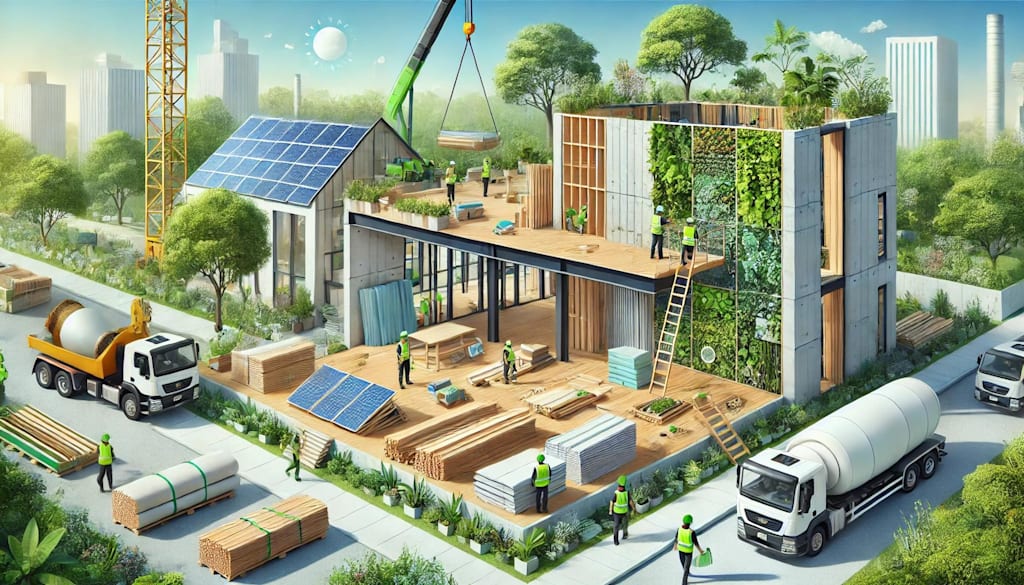
At dawn, the construction site hums to life. Workers move with practiced rhythm, machines grind into motion, and another layer of a future city begins to rise. To the untrained eye, it’s just another building taking shape. Concrete, steel, glass—nothing unusual.
But beneath the surface, something remarkable is happening. The very material holding these structures together is changing. It’s quieter than a technological breakthrough and subtler than a design revolution, yet its impact could redefine how cities are built for generations to come.
The global construction industry, long associated with environmental strain, is undergoing a fundamental shift. At the center of this transformation lies the green cement market a growing segment that is redefining sustainability in infrastructure. Unlike traditional cement, green cement is engineered to significantly reduce carbon emissions while maintaining the strength and durability required for modern construction.
According to Mordor Intelligence, the global green cement market is values at USD 49.46 Billion witnessing steady growth, supported by increasing environmental regulations and rising demand for sustainable building materials. The market is projected to expand at a notable compound annual growth rate (CAGR) during the forecast period, signaling long-term structural adoption rather than a short-lived trend.
The Problem Beneath the Surface
Cement has long been the backbone of development, but it comes with a hidden cost. Traditional cement production is responsible for a substantial share of global carbon dioxide emissions—largely due to energy-intensive manufacturing processes and the chemical breakdown of limestone.
As governments and industries face mounting pressure to meet climate targets, the need for alternatives has become urgent. This is where green cement steps in—not as a compromise, but as an evolution.
Green cement is produced using industrial by-products such as fly ash, slag, and recycled materials. These not only reduce waste but also lower the carbon footprint associated with production. The result is a material that aligns with both environmental goals and engineering standards.
A Shift in Green Cement Market Share
The increasing adoption of eco-friendly construction practices is driving a notable rise in Green cement market share across regions. Europe has been at the forefront, supported by stringent environmental regulations and green building certifications. Meanwhile, Asia-Pacific is emerging as a high-growth region, fueled by rapid urbanization and infrastructure development.
Governments are playing a critical role by incentivizing sustainable construction and mandating the use of low-carbon materials in large-scale projects. From smart cities to transportation infrastructure, green cement is becoming a preferred choice rather than an optional upgrade.
This shift is also being reinforced by corporate sustainability goals. Developers and construction firms are now under pressure to reduce lifecycle emissions, making green cement an integral part of their strategy.
Innovation Driving the Future
Technological advancements are accelerating the adoption of green cement, making it more accessible and cost-effective. Innovations such as carbon capture integration, alternative binders, and energy-efficient kilns are transforming production processes.
These improvements are addressing one of the biggest barriers to adoption—cost competitiveness. As production scales and technology matures, green cement is gradually closing the gap with traditional cement in terms of pricing.
At the same time, research and development efforts are unlocking new possibilities. Scientists are exploring ways to enhance strength, durability, and curing time, ensuring that green cement not only matches but potentially exceeds the performance of conventional materials.
Beyond Sustainability: A New Standard
What makes green cement particularly compelling is that it’s not just about reducing harm—it’s about redefining standards. Builders are discovering that sustainability can coexist with efficiency, durability, and profitability.
Urban planners are incorporating green cement into eco-friendly designs, while governments are aligning policies to support its adoption. The result is a ripple effect that extends beyond construction, influencing supply chains, investment strategies, and even consumer expectations.
As awareness grows, the demand for sustainable infrastructure is no longer limited to niche markets. It is becoming mainstream, driven by a collective realization that the materials we choose today will shape the world of tomorrow.
Trending Articles:
About the Creator
efingutthomas
My expertise is custom research across industries such as aerospace & defense, agriculture, animal wellness, automation, automotive, chemicals, consumer goods, electronics, energy, finance, food & beverages, healthcare, hospitality and ICT
Enjoyed the story? Support the Creator.
Subscribe for free to receive all their stories in your feed.
Comments
There are no comments for this story
Be the first to respond and start the conversation.